Newsletter Issue No. 1238
August 20, 2026
Should You Replace “Old” Carbon Forks?

Jim’s Tech Talk
By Jim Langley
Who knew so many roadies had questions about carbon forks? The fork fun started a couple of Tech Talks ago and a new Q came in this week from a reader named “Steve.” Read more.
What Ultra Riders Can Teach Us About Fueling Long Rides

By Ric Stern
I don’t know how long you’ve been cycling, but for me, this is my 43rd season, having started when I was 14. Realistically, this is totally unimportant, so why am I mentioning this? The answer is nutrition, and it’s our third column in our ultra series. Read more.
Across the Iron Range: Biking the Mesabi Trail

By Sheri Rosenbaum
Last year, I planned a three-day bikepacking trip on the Mesabi Trail in Northeastern Minnesota. Torrential rains created major sinkholes along the trail, forcing us to cancel the trip. The trail remained on my radar, and planning began in early 2026—this time, the group wanted to make it a five-day trip, with out-and-back segments each day. Read more.
Am I a sucker for stopping to help riders with flats?

Question: Last Saturday, I stopped for a guy standing next to his bike with a flat. Nice bike, by the way. Nicer than mine. Turns out he had no tube, no levers, no pump, nothing. So I gave him my tube that cost me $15, helped him mount it, and aired it up with my pump while he watched. He said “thanks, man,” clipped in, and rode off. No offer to pay for the tube, no “can I Venmo you,” nothing. And I rode the last 30 miles with an empty saddle bag, hoping for no flats of my own. My wife says I got played. I say it’s what you do. So which is it? Do you always stop? And is there any etiquette that says the guy who took your tube at least offers to make it right? —Paul D. Read more.
Quick Tip: Get Ready Early for a Big Ride

Some pre-ride nerves are normal. A century, charity ride, tour or race matters to you, so you want it to go well. But you do not need to let last-minute details turn those nerves into worry.
Start getting ready several days before the event. Check the bike. Inflate the tires. Charge the computer and lights. Make sure you have tubes, tools and a pump. If the bike needs work, you still have time to do it or take it to the shop.
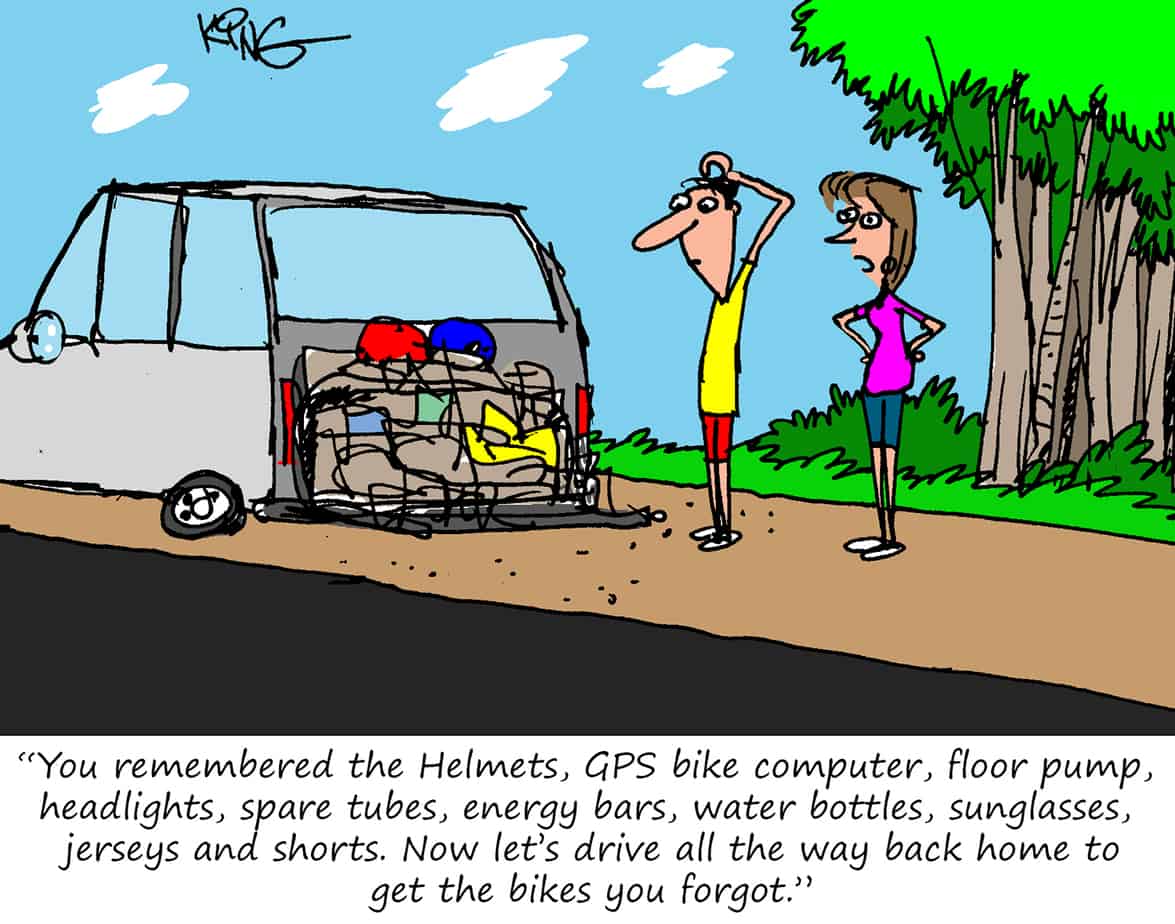
Then take care of yourself. Wash your riding clothes. Set out the kit you plan to wear, including gloves, glasses, shoes and a vest or jacket if the forecast calls for one. Decide what you will eat before the ride and what food you will carry. Check the route, parking, start time and weather. If travel is involved, pack the car the night before.
This may seem like a lot of fuss for a bike ride. It is not. When you wake up on event morning with the details settled, you can eat breakfast, get dressed and ride to the start without rushing around the house looking for a missing shoe or a charged head unit.
Early preparation also gives your mind a chance to settle down. You have done what you can do. The weather, wind and other riders are out of your control. Your bike, clothing, food and plan are not. Taking care of those details early is one way to reduce the anxiety that can come before a big ride.
The night before, make one last check of your list. Then stop thinking about it. Get some sleep. Tomorrow, you get to ride.
Readers, do you get pre-ride jitters or do you have a specific method you use to get prepared? Leave a comment.
Other Cool Things to Read
Canadian Cycling Magazine: Michael Woods finished 14th in his first mountain-bike race, riding a 32-inch prototype bike at Leadville
Cycling Weekly: Why sweaty indoor sessions can be as effective as altitude training
Deseret News: Matthew Lefthand averaged more than 30 mph for 200 miles, breaking six world records on a standard upright bike
YouTube: How to Change Your Cycling Cleats Perfectly | Bike Fitter’s Secret Method Using Play-Doh!
CBC: This pet hamster is probably logging more kilometers on Strava than you
Question of the Week
Have you ridden any events this year?
Most Clicked Last Week
Tech Q & A: “I’ve Been Afraid of Carbon Forks”
End Notes
I am going out on a limb, since I have no knowledge of the process used in aircraft parts, but I would assume that “carbon” is pretty much “carbon.” If that is true, the fact that carbon is being used in the infrastructure of high performance aircraft, I would feel more than secure with carbon bicycle parts. This assumes a routine maintenance of parts of your bicycle for damage or wear.