Tech Q & A: “I’ve Been Afraid of Carbon Forks”

Jim’s Tech Talk
By Jim Langley
You may have noticed that we’ve added a nice feature to the end of a few of our columns recently: a form that makes it easy to submit questions to the writer. A reader named “Keith K.” used it to send in this week’s technical question. He has another query about forks, which were the topic of our last Jim’s Tech Talk, too: Will Changing The Fork Ruin Jo’s Ride? But Keith’s has to do with whether all fork materials are equally safe, which is a great question and one that some of you might have too.
Keith wants to know
“Regarding the post about swapping forks, I was hoping you would address replacing a carbon fork with a steel fork. A friend had a serious accident a few years ago when his carbon fork failed (he was going fast). He had no issues with his titanium frame. Ever since, I’ve been afraid of carbon forks.
I’m considering purchasing a new bike, but most (even titanium, steel, and aluminum frame bikes) seem to come with carbon forks. I get that carbon has some nice properties and is easy for manufacturers to shape as they like, but I’m leery of their fragility.
Can I swap out the stock carbon fork on a new bike for a steel fork? What would I be giving up, other than a few ounces?”
Steel forks
To get an expert’s take on the availability of a custom steel fork to take the place of a carbon stock fork on a bike, I called my friend and framebuilder Paul Sadoff of Rock Lobster Cycles here in Santa Cruz, California. Before he went into framebuilding, I worked in The Bicycle Center with him where he was another mechanic at the time (1980). He’s been building custom frames for over 40 years now in steel and aluminum and most go out with carbon forks.
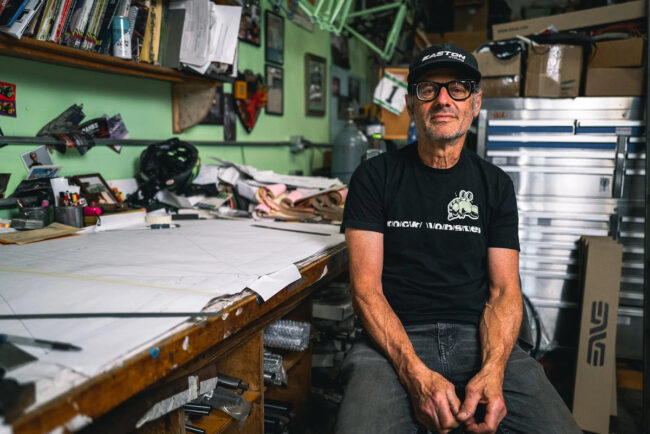
Paul told me that he doesn’t get many orders for custom steel forks (about 20 in recent years), but that he can make them if a rider wants one. He said the reasons these cyclists typically want steel is because it’s what they had or that they want a fork with multiple braze-ons (for racks, lights, fenders, etc.), or because they believe that the steel fork has ride characteristics they prefer and that they feel are superior to the ride of carbon forks.
So, you should be able to get a steel fork that’s built right to fit and ride correctly on whatever bicycle you buy, Keith, and Paul could build it for you.
Paul did point out that when bikes have tapered head tubes it means steel forks become significantly heavier due to the tapered steerer (top tube of the fork). But he said that these riders aren’t always that concerned about extra weight, especially if the bike is already running extra wide tires, a wide-range drivetrain and going to be loaded down with bags anyway.
Regarding types of steel, Paul says “he has sourced steel tubes from all over the world for decades. In the changing times manufacturers have come and gone but I have always tried to use as much domestically produced materials as possible. What is available now are tubes from Velo-Spec, a Taiwan based company that has bought a huge consignment of USA steel from the former tubing supplier True Temper.
I also use tubes from Vari-Wall, a company in Ohio. When those tubes are not available or are incorrect for a particular build I will source metal from Columbus or Dedacciai in Italy or Reynolds in the UK. Much of my frame building hardware comes from Paragon Machine Works right here in California. [Editor’s note: sadly, Paragon recently went out of business (but Paul might still have parts).]
Paul continues, “Wherever my materials come from, they do have to be of a certain quality or I will not use them. When one purchases a custom frame, the materials cost is not a large percentage of the price so upgrading to really high quality tubing is a relatively inexpensive thing to do and the benefits are tremendous.”
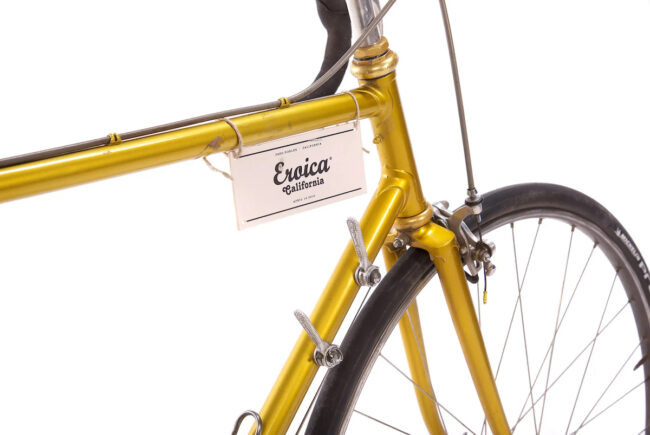
In the photo here you can see a steel fork Paul built for a classic-style road bike used in the vintage ride Eroica. He can build whatever type of fork you require too.
Are carbon forks fragile?
Since you’re afraid of riding on a carbon fork Keith, I think you should get a steel fork. Because you won’t be able to enjoy riding when you’re worrying the whole time.
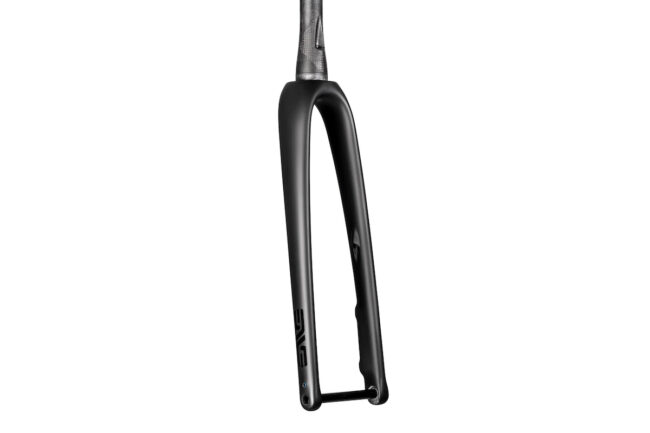
But, I don’t think of carbon forks as fragile and neither does Paul Sadoff. He says that with modern carbon forks, in a crash it’s more likely you’ll damage the carbon frame than the fork because they’re so overbuilt. Which is why almost all of his new frames and bikes go out with carbon forks. He uses Enve carbon forks and says they made awesome forks and have an excellent warranty too.
Paul says that sure, if it’s a very old carbon fork that has been beat-up and abused, scratched and knocked around – and especially if it’s so old it has a 1-inch steerer, then yes, you would be well advised to replace it (maybe that’s why your friend’s failed?). But you could say that about older steel forks in that condition too.
What are you giving up going to steel
You said that you understand and aren’t worried about the minor weight difference of a steel fork Keith. The other characteristic of carbon forks you might miss is the vibration damping of carbon. But bicycle ride quality is extremely subjective and you might not even notice the damping. Plus, if you’re running wider tires at lower pressures or considering suspended components such as a fork, stem or seatpost (you didn’t say what type of new bike you’re looking at), then these can override anything you’d gain from the fork.
While you might need a custom built fork for the bike you buy in order for it to fit and work correctly for you, you might want to know that stock steel road forks are still available from companies such as Surly, Tange, Ritchey, etc. and likely at a lower price than a bespoke fork. Just be sure you can get exactly what’s needed for your new bike before ordering.
Jim Langley is RBR’s Technical Editor. A pro mechanic & cycling writer for more than 40 years, he’s the author of Your Home Bicycle Workshop in the RBR eBookstore. Tune in to Jim’s popular YouTube channel for wheel building & bike repair how-to’s. Jim’s also known for his cycling streak that ended in February 2022 with a total of 10,269 consecutive daily rides (28 years, 1 month and 11 days of never missing a ride). Click to read Jim’s full bio.
Having experienced TWO steering tube failures at the fork (steel) crown on the same brand tandem, a year apart, and presently riding an S-Works Roubaix almost daily with the same carbon fork for 14 years after a 2012 pothole crash that trashed both wheels – steel vs carbon is not a simple answer. That tandem, a Schwinn Paramount had never been in an accident other than the fork failures. The contributing factor – very, very beefy fork blades and stiff 48 spoke wheels that concentrated the stress at the fork crown. A more flexible fork, of whatever material, might well have prevented those occurrences. This tandem was ridden a lot – I dare say much more daily mileage than a typical tandem would ever see, hence Schwinn probably never had another report of such a failure. Mind you, Schwinn replaced that first frame (although fine except for the fork), knowing the specific nature of the failure, and that replacement failed again one year later in exactly the same way. On the third attempt, Schwinn brazed in an additional reinforcing sleeve at the fork crown, but we sold it and had Colin Lang build something lighter and more lively (with a steerer sleeve too).
My Roubaix with its carbon fork, survived the pothole crash, although it made a very disconcerting squeak as the wheels were being destroyed. I’m still regularly riding that bike, with its original carbon fork, 14 years later (it’s never been out of the frame). One of the tandem fork failure crashes, at very low speed, and the Roubaix crash (its only crash to date over 20 years), each left me with a fractured left clavicle. If that clavicle, now titanium plated, had been made of carbon, perhaps it would not have broken – I’ll have a talk with the manufacturer.
It’s the implementation of the material, not the choice between carbon or steel, that makes for longevity. Don’t make any part of a bicycle overly stiff, unless perhaps you are sprinting on a velodrome. Have your frames built by someone who does yoga, not a powerlifter – they probably have a greater understanding of the importance of “give”. That my S-Works frame was a Roubaix, built to handle cobbles, may be why it survived a wheel destroying event.
I have a Merlin titanium Bicycle for almost 20 years with a fork of metal in the tube and base and legs of Carbon fiber. no problem up to now. For me the handlebars must be always of aluminum or any other lightweight metal. I had a crash many year ago and the carbon handlebar broke went it hit the ground. metal will bent and your injuries will be less complicated.
I too don’t trust carbon. I’ve had steel, aluminum, AND a ti frame break. And not by crashing, either. I’d be shocked if a carbon fork or frame lasted me a month!!!
My road bike is a steel Gunnar with disc brakes. With disc brakes you need a beefier fork to withstand the torquing force braking at the axle puts on the fork. Even such, I thought the straight bladed fork built for the bike was overly noncompliant. I switched in a steel Soma disc fork with a some curve and rake. With supple sidewalls on my 35mm tires I find the ride cushy!
Thanks for mentioning Soma forks Dave! I forgot to mention Soma in my list of steel forks.
Thank you!
Jim
All comments will be highly controversial, including mine. Rivendell did a video called “Fork Wars”, it’s still on their website, but they have a “sword” fight with steel vs carbon forks, and every single time the CF forks broke and the steel forks weren’t even damaged in the slightest. There are several You Tube videos one entitled “Carbon Fiber-the Truth”; “Carbon Wheels-the Truth”; Webpage called “Bike Retrogrouch Carbon Forks-No Way”; there was an article called “Carbon-fibre bicycles in the frame for rising number of injuries” in the Irish Times. You can also do ask Co-Pilot about CF bikes durability vs aluminum vs steel vs and titanium. There are major issues with CF handlebars in particular failing due to incorrect torque setting used, problem with that is whenever there is a bar failure, the manufacture uses that excuse every time and thus no warranty or lawsuit for injuries sustained or worse.
There is a bike group consisting of 9 to 10 riders that I know of where about 18 months ago one of the riders was riding with the group 2 abreast on a country road, he was riding on the left side, his partner on the right. My friend was riding an all carbon bike with carbon wheels. For some unknown reason the bike he was on disintegrated in many pieces including the wheels, frame, and fork. He was instantly rendered unconscious, one of the riders in that group is a doctor and saved his life, but my friend was in a coma for 12 weeks and was told he will never ride again. A lawsuit is pending; I haven’t heard if they determined the cause because it is all hush hush till after the lawsuit is settled which could take several years. Several investigations of the crash site reviewed no road conditions like a pothole or crack in pavement that would have possibly caused the problem relieving the county from any liability, none of the riders saw anything, all they heard was a crack, what broke first remains the question.
Having said that, my Lynskey has a CF fork, but before I took possession of the bike back in 2013 it came with a stock Lynskey CF fork, of which they would not tell me who made the fork or where it was made but I know Lynskey didn’t make it, so I had it swapped for a Enve 2.0 fork which at the time was the strongest fork on the market. Enve did say this: Enve 1.0: Suitable for most riders, including heavier ones, but Enve’s own advice is that riders over 185 lbs who want the optimal stiff fork should prefer the 2.0, I weigh 175 while the 1.0 would have been fine I still went with the 2.0.
Am I a bit concerned about CF anything related to cycling? YES! which is why I went with an over engineered CF fork vs the lighter Lynskey fork or the lighter Enve 1.0 fork.
Jim – Thank you for taking on my question and for providing such a thoughtful and well-researched reply and for sharing your wisdom and that of your colleagues. The replies from readers have been helpful too. I have learned a lot and still have much to learn. Thanks all!
Keith K.
Wow, my comments were deleted from yesterday.
I haven’t deleted any comments. Looking to see if they are stuck in spam or something, but are you sure they fully submitted yesterday?
I am searching.
—— update, I found it and several other comments. Will try to figure out why the filter got them. Thanks for letting me know with the follow up comment because I would have missed it otherwise.
P.S., My son, who is a bike mechanic, says we should be taking our carbon forks out for inspection regularly and probably not planning on getting 20 years out of either the fork or the frame. I guess the bike industry is fullfilling it’s dream by making young riders feel that things like forks and frames need to be replaced regularly. 😉
I concur with Glenn Wenig – still riding circa my early 2000’s S-Work Roubaix. Only one crash (pothole), but trashed both aluminum rimmed wheels. The fork is original and has never been out of the frame. I remember Bernard Hinault commenting in his book about the steel frames of the time. After a year of racing he felt that lost their rigidity and performance. I suspect carbon may fatigue less, if the last gram of weight has not been squeezed out of the design.
I have a 26 year old Serotta Ti Legend with carbon forks. Over 108,000 miles, a couple of crashes, and tons of potholes on that bike with the original Trek carbon fork.