Am I a sucker for stopping to help riders with flats?

Question: Last Saturday, I stopped for a guy standing next to his bike with a flat. Nice bike, by the way. Nicer than mine. Turns out he had no tube, no levers, no pump, nothing. So I gave him my tube that cost me $15, helped him mount it, and aired it up with my pump while he watched. He said “thanks, man,” clipped in, and rode off. No offer to pay for the tube, no “can I Venmo you,” nothing. And I rode the last 30 miles with an empty saddle bag, hoping for no flats of my own. My wife says I got played. I say it’s what you do. So which is it? Do you always stop? And is there any etiquette that says the guy who took your tube at least offers to make it right? —Paul D.
RBR’S STAN PURDUM REPLIES: The guy could be a jerk, but it’s also possible he is socially awkward or so stressed by his tire problem and so embarrassed at being unprepared that doing more than saying thanks does not occur to him. And if he’s a new enough rider to not think to carry a tube and the necessary tools, it’s also possible that he has no idea how much a tube costs these days.
I can remember when tubes were $3.75 and our local bike shop ran coupons in the area bike club newsletter that enabled us to buy one and get one free. Back then, it didn’t seem like that much of a sacrifice to give an occasional tube away. But today’s economy has made that good deed more costly.
You are not a sucker for helping another rider — that’s part of the cycling culture — and most of us who are long-time cyclists have ourselves occasionally been on the receiving end of help from a fellow rider when we had a mechanical for which we are unprepared. Nonetheless, if you decide to hand over a tube or other bike part, it is neither unkind nor rude to first say something like “This tube cost me $15, and it’s my last spare, so I’d appreciate it if you can reimburse me.” And if he says he’s not carrying any money, it’s not impolite to suggest Venmo or PayPal. If he agrees to that and then doesn’t follow through — and assuming he’s not impoverished — then yes, he is a jerk.
If you haven’t asked for reimbursement, basic etiquette from the recipient is to offer payment or at least to buy you a coffee. But the very essence of good deeds is that they are tendered without expecting recompence, so if nothing more than “thanks, man” is forthcoming, it’s no discredit to you.
If you prefer not to bring up the cost of the tube and not to accept repayment, you could, should the helped rider offer to pay, say something like “Don’t worry about it; just make sure you help the next rider you see in trouble.”
Regarding helping riders where what’s required is not handing over a part but advice or hands-on assistance, it’s not usual to expect more than a thanks.
Some years ago, I was pedaling on a rural road and saw a young man dressed in street clothes tinkering with a bike turned upside down on the side of the road. I stopped to see if he needed help. He did. He explained that he really didn’t know much about bikes but had decided to give it a try. He’d pumped up the tires on an old 10-speed he had in the garage and set out. He had gotten as far as we were before “something got screwed up,” and he couldn’t figure it out. I took one look and realized his rear derailleur had rotated 180 degrees out of position. I had enough tools with me to help him get it back in place and tightened down enough that he could probably get home on it. And he thanked me profusely.
But here’s the thing: The ride he’d had that far had gotten him hooked. He talked enthusiastically about it and how much he enjoyed it until the mechanical problem occurred. He agreed when I recommended he take the bike to a bike shop and have them tune it up. He asked questions about what I was riding, and I was glad to tell him, but I also advised him not to rush into an immediate purchase. Ask questions at the shop and of other riders and learn a bit about what he liked and didn’t like on the bike he had.
I felt good about both the help I’d rendered and the advice I’d given. I was confident that if he talked with other riders, a lot more good advice and encouragement would be willingly given.
That’s the nature of the cycling community.
Stan Purdum has ridden several long-distance bike trips, including an across-America ride recounted in his book Roll Around Heaven All Day, and a trek on U.S. 62, from Niagara Falls, New York, to El Paso, Texas, the subject of his book Playing in Traffic. Stan, a freelance writer and editor, lives in Ohio. See more at www.StanPurdum.com.

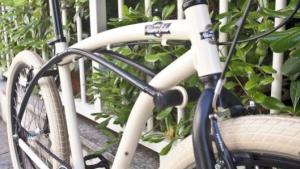

I have an e bike for commuting the 16 mile distance to work. Flats involving the electric hub are more complicated–I don’t fix them.
The “nice”, upscale bike place installed Tannus Armour. 175 bucks. It didn’t last 10 miles. They are charging just under another hundred. They typically do not give me back any of the parts they replace.
How wrong is this?
Any time I pay for a new part, I always tell the person installing the new part, with a polite smile, “I’d like to keep the old part for tinkering. After all, it IS mine!” They always oblige without question, and I usually get a chuckle from them, too. (Exceptions are “core exchange” parts, like car batteries, starters, etc., whose failure to leave with the shop incurs a “core charge.” Such parts are “recycled” through an industry-wide process of “reconditioning to new,” certified by the manufacturers of those parts.) When I had my roof replaced, I had the roofer leave all unused new shingles and starter shingles with me. He seemed surprised, but obliged. He’d ordered them for MY job (and marked them up, no less!), and I’d paid for them, after all. Did the same with wood scraps from some fascia repair, and later put that wood to good use.
I gave up giving away tubes…after many give aways and promises of repayment, I gave up. Then as now, I usually carry 2 spares. Maybe I am the jerk. I still always stop to help and I have a small patch kit and hand pump. (Can’t give away tube AND canister, right.)
couple thoughts:
i take actually 3 tubes.
for me.
but i rarely need more than one.
so i might do what you did.
although mine tend to have up to 8 patches already on them.
[cheapness/efficiency minded]
i might try to select the worst one to give away 🙂
then if the other person offered to pay, i might or might not accept.
yes if the person was a bit jerky or arrogant or something else, but usually i wouldn;t accept.
if i saw an ebike person with a rear flat [ i had this happen to me while the ebike was still running ]. i would definitely stop and help if there was time.
because it is SUCH A PAIN .
and the first time you are just lost.
i would not have a tube for them though.
and i would ask that first,
because there is no point taking the whole thing apart since it will need a tube or a truck or something anyway to get home.
Yes, hub motors used on some ebikes complicate fixing flats on the wheel with the motor. That’s one of reasons I prefer a mid-drive motor, which powers the chain rather than the wheel directly. I also prefer ebikes that use the same size tubes as road bikes use.
Agree completely with article.
I always stop to help when I see another rider in distress. And, I always carry two tubes just in case.
I also repair bikes for those in our large community. I do not charge for my time but will charge for parts needed. The most often repair is for a flat….and I normally ask if they want a patched tube (no charge) or a new tube (for which I charge).
As a friend who both owned a construction company and a bike shop once said: “when I had a construction company, I had lots of money and no friends; when I owned a bike shop, I had no money but lots of friends.”
What works for me is to avoid thinking about the recipient if s/he isn’t reacting the way I would – and generally expect others to do. It makes me feel good to be able to help & with a little practice over the years, that feeling comes easily to me. Lots of people have helped me (on the bike, it’s probably a guy with stronger hands who can help get the tire off & on more readily than than this little old lady), so I figure I’m just paying it forward. Is this saintly thinking? I don’t think so. It serves me well – makes my day better than worrying about possibly having helped someone who, perhaps, didn’t quite deserve help.
I carry 1 tube for my Cannondale ebike, fits both wheels (700X32). I also carry some repair patches for quick fixes. I certainly would have offered a patch, and would subtly tell him to do the pumping. If i am with my bike group and someone needs a tube, i would consider providing my sole tube if near end of ride.
Exactly. I have helped people with the Park patches I carry, but I am not giving away my tube.
Yes, it is always proper cycling etiquette to help another cyclist in need. The caveat is: not at the expense of your own preparedness later in the ride. If the other cyclist has the tools or at least a spare a tube, but simply doesn’t know how to change a tire yes, lend a Hand. If not, then tell them they’re gonna have to make a phone call and wish them luck. I know that sounds cold, but you riding away with an empty saddle bag is not a comfortable feeling. I know someone mentioned carrying more than one tube and I always do that. Mainly for my own sake, but also if someone else needs it. And, I think the suggestion that that person pay it forward is also proper cycling etiquette. I believe it would be very awkward to request reimbursement while on the road. I should add that proper cycling etiquette is offering reimbursement, but if someone doesn’t have the experience to bring tube and tools with them, they’re not gonna think of offering reimbursement either.
I have mostly always helped other riders who look like they need it, or at least offered help. 95% of the time that means a flat or a chain issue. Once a teenager had a pedal fall off that was stripped so I just pushed her a couple of miles back to her friend’s car. I’ve never asked for money for a tube or anything else and never felt played either. I have occasionally declined to help; most recently when a fully kitted roadie with a bike twice my cost managed to steer his front tire into a sidewalk gap a few feet from the bench I was sitting on enjoying a view of the Queen Mary. The tire came off the rim with a bang. While commiserating with him I noted no pump, seat bag, or bulging pockets. Also no water bottle. But he had a cellphone. I wished him luck and headed home.
This kind of happened to me on a club ride. I gave someone my tube who flatted. I told him upfront how much I wanted for it. He told me he doesn’t have cash oh him; he’ll send me a check. A month goes by and two emails later I finally received the check from the person. Made me feel like I was the bad person to keep asking for the money. As the article states, tubes and CO2 cartridges are not cheap anymore. Some of these cyclists don’t believe in carrying tools or tubes with them because it is a “weight penalty.”
I ride with 2 tubes and a patch kit. Many rides I have handed out both tubes and hoped the patch kit was enough. Fwiw, I rode many brevets and BMB multiple times. I do not recall being comped for the tubes and when offered, said pass it on, please.
I was on a 30 mile ride without a saddle bag. I just finished rebuilding a used bike, and the this was the first time riding it. During the rebuild the rim tape looked good so I didn’t replace the rim tape. Halfway through the ride I got a flat. A couple of riders asked if I needed help which I replied Im fine. I didn’t want to interrupt their ride. Someone else stopped and stated his car was near by. He also stated that he had recently switched to TPU tubes and had extra rubber tubes. We installed the first tube which had a hole in it. I offered to pay for the tube which the good Samaritan declined. I started walking back to where I was parked and he followed the bike path via the road. He stopped and yelled to me he had another tube. I walked up the embankment to his car. The next tube held air (which he used his tire pump again). Again I offered to pay which he refused. He stated ” just pay it forward”. Now I carry an under an seat bag with a tube and tools. I did stop to help someone with a flat but my tube would not fit his bike. He stated that he called his wife and would be ok.
In the good old days, most riders took on the responsibility to know how to do typical roadside repairs, and carry whatever was necessary to do them. That’s been my practice for more than 50 years.
Times have changed. Too many riders understand little or nothing about the mechanics of their bikes, and the only “tool” they carry is a cell phone.
I have trouble understanding this. Bikes are easy and fun to work on. They don’t burn your hands like cars. Beginner repair classes are everywhere.
Given all this, I would stop and help if I were in the mood, or if the person with the repair problem had real distress. And yes, I would insist on payment for the inner tube!
I’ll guess that the person described here didn’t care that he was taking advantage of the letter writer.
Not only don’t you burn your hands on bike repairs, but most of the moving parts are right out in the open where you can see them — another advantage over auto repair. But the growing complexity of bikes — electronic components, etc., is scaring some riders off of doing their own repairs, which I understand. But it’s still wise to learn how to do such basic repairs as fixing a flat.
Three tpu tubes will fit anywhere. My buddy and I sequentially hit a brick hidden in a shadow and blew both front and rear tubes. Four tubes gone! Then we still had spares for the rest of the ride home. My electric pump is good for several inflations so I haven’t used my standard pump for a while. It is still on the bike though. The helped rider is usually impressed and it is fun to see their expression while the pump is buzzing away.
Fussing over handing over a spare tube seems pretty weak to me unless it happens often and you only carry one spare. Pay it forward so the next time you blow out your one spare after a pinched tube that guy or girl will help you out!
I’ve never had to do it, but I recall reading some where, that if you don’t have a choice, you can fill your tire up with dirt, leaves, sticks, whatever to get you back.
I’m 78 years old, over the last 60 years or so I’ve helped a lot of people with flats and other repairs, but I have only once gave someone not only a spare tube, but I used to carry a spare tire back in those days.
I lived in the Mojave Desert of California and rode into the mountains all the time. This happened before cell phones. One day I’m coming down the mountain when I see a guy carrying his bike, I stop and ask what happened, he hit a rock and split the tire which in turn cut the tube, but he had a tube just no spare tire. So, I gave him my spare tire I carried due to riding in remote areas, both were used so it wasn’t that big of a deal. A real nice and grateful guy who asks me for my address so he could send me back my tire, I gave it to him but he had nothing to write it down with so I knew I would never see the stuff again, I told him not to bother because it was used stuff. About a week later I get a box, in the box was TWO brand new very nice tires and tubes with a very nice thank you card from a grateful doctor in town.
Except for that one time with the tire, I will never give someone my spare tube, I will instruct them on how to fix it using a patch, I let them do most of the work and just talk them through it.
We should always stop and ask a person if they need help, sure today we have cell phones, but a ride could be an hour from happening, we need to show compassion towards others without expecting anything in return.
Stan, maybe you were “played”. But it was probably just bad manners of the other rider. You’re showing good spirit to help someone in need and it doesn’t go unnoticed. Thanks for putting positive energy into our world!