
How Can I Keep My Face From Freezing During Winter Cycling?

QUESTION: I don’t mind bicycle riding in cold weather, but I can’t keep my face warm. Shoe covers work for my feet and heavy gloves keep my hands toasty. But my chin and cheeks freeze. I wear a “skull cap” under my cycling helmet. Any ideas? — Barry M.
RBR REPLIES: You need more than a skull cap, Barry. You need a balaclava – one of the handiest pieces of cycling apparel you can own if you live in a place with real winters.
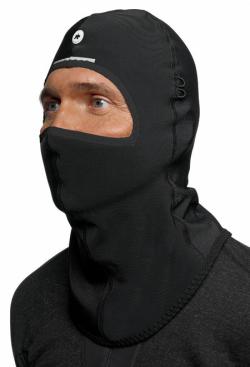
A balaclava is a cover that fits snugly over your head and neck with a cutout for your face. A good one for cycling will be long enough for plenty of overlap with your turtleneck or other base layer so there’s a tight seal against drafts. See the photo, an Assos model.
The best balaclava material is one that wicks moisture from your skin to keep it drier and warmer. Good choices are polypropylene, Thermax or other high-tech synthetics.
The fabric should be thin enough so your helmet will fit without removing pads or changing their size. A balaclava doesn’t need to be very thick to keep you warm. In fact, a thick one (like some wool or fleece versions) is likely to cause overheating. Excess heat needs to radiate to prevent a sweaty head.
If your face is cold, you can pull the balaclava up to just below your lower lip, covering your chin. Or raise it more to cover your mouth, or even your nose and cheeks so only your eyes are uncovered. Breathing through the fabric helps warm the air going into your lungs.
If it’s not quite so cold, keep the balaclava under your chin. It’ll still seal around your face to protect your neck and keep your ears out of the wind.
If spring arrives in the middle of a ride, roll the lower part of the balaclava up to turn it into a skull cap under your helmet. Or pull it off and tuck it in a pocket.
Balaclavas aren’t expensive, but they’re priceless for the comfort they provide on winter rides. You can get one in bike shops, winter sports or outdoor stores, or online.


I would counter the balaclava with a neck gaiter paired with a cap that had some ear coverage. These things are amazingly flexible and way easier to adjust while riding. I feel trapped in a balaclava and the hole for my eyes is never large or flexible enough to pull down the month on an ascent.
I have a smart wool cap and gaiter that have not let me down.
When playing outside (hiking/walking, shoveling, skiing, etc) when it is below 20 degrees F, I put a layer of petrolatum (“Vaseline”) or a stick-type sunscreen on my cheeks and nose. It really cuts the wind chill!
Aquaphor is great too. Layer it on !
My LLBean Polartec Windblock balacalava is a must on windchilling days. It protects my face and throat areas. In addition, I often use a pair of earmuffs over the balaclava to keep my ears toasty warm. One may also find balaclavas using Gore Windstopper fabric.
I find that on days below -5 – 10 C a ski goggle helps cover the rest of the face. I have been out in temps as low as -28 C quite comfortably. Shaded goggles work fine in bright daylight but if cloudy, twilight, or dark an amber goggle works much better and is safer to use. During those temperatures I will also use a thin toque to keep my head and ears warm.
I use a Buff, which is a tube of material, combined with a beanie. The Buff can be used solely as a neck warmer or pulled up over your head and covered with the beanie to form a balaclava. If it’s really cold I’ll wear a balaclava. Mine is a Seirus, a brand I bought for skiing. The Assos depicted above is ridiculously overpriced; you can buy a ski brand for 1/3 to 1/6 its cost.
I have a Smartwool neck gaiter that can be pulled up, if I need the balaclava function, or left just on the neck. If it gets too warm it easily stretches to come off over my helmet. It is my FAVORITE piece of winter biking apparel, so adaptable! I have an old balaclava that is fleece on the neck and thin on the hood. It is good for townie riding, but too warm for more serious riding. If it’s winter out and you’re still riding, this one piece will make your riding much more enjoyable!
Some of the items I use during Chicago’s cold winter months are products I’ve reviewed for RBR.
The Ultraband from Headsweats I use a lot to cover my face at the beginning of a ride and then pull down as I warm up. I’ve used down into the teens
https://www.roadbikerider.com/headsweats-super-duty-shorty-cycling-cap-and-ultra-band-review/
Pair the Ultraband with Castelli’s Difesa Thermal hat
https://www.roadbikerider.com/castelli-difesa-2-cap-and-difesa-thermal-cap-review/
Weatherneck’s hat and balaclava combo
https://www.roadbikerider.com/the-weatherneck-system-modular-balaclava-d5/
Fleece headbands are super easy way to add a few degrees to the balaclava or tuque warmth. They also work around the neck to seal the neck/top of the jacket from the wind & cold,
Spin inside
In a word – Silk! Cheap, extremely light, and amazingly effective. My silk balaclava covers my face and ears and neck. No need to spend lots of dollars on brand name stuff
A dirt bike (motorcycle) helmet with googles. Go online and look for a cheap / discontinued model.
Goretex also has a “Windstopper” fabric that is available in balaclavas:
https://www.rei.com/product/137777/gore-wear-gore-windstopper-balaclava
I used to walk to work several miles in temperatures down to -20 F. I wore glasses at the time. Covering my face with cloth so that no skin was exposed quickly resulted in my glasses freezing over. What I found that works well is a thick layer of “grease” on my cheeks, nose, and over my upper lip. “Vaseline” or, when skiing, a stick-style sunscreen, have always worked well!
Neoprene facemask and Ski googles for me. ?
Breathing holes or ‘chutes’ in neoprene are the best combo when it’s below 20F here in Wisconsin – all other material gets soggy then frozen, including fleece. Seirus makes the best products I’ve found, with a variety of combinations of material and thickness, which keeps the sweat level down – again, any moisture will freeze: https://www.seirus.com/dynamax-combo-clava.html
Well, Balaclava is the best way to protect yourself from the freezing wind as described above.
Would Definitely be Recommended to buy the Cycling Balaclava
I grew a beard this year and found it helpful on cold, windy days.
I think Balaclavas are too hot. Mountain Warehouse had (or had) neck gaiters, marketed for ‘woman runners’. They are well under $10. 93% Polyester and warm enough but not hot.. What makes them different is that they have about 50 little holes by your mouth so you can breathe and converse, and not fog your glasses. They can cover your nose and ears. They also have a circle of reflective material around the top, which can’t hurt. I have used them in Canada under freezing temperatures, cycling and X-C skiing.
The Weatherneck is a bicycle-specific head and face covering in 2 pieces that works down to about 15 degrees, which is the temp at which the precipitation from breath freezes just about any fabric.
Tifosi’s clear goggles are great for winter eye protection, wrap around style.