Xnito eBike Helmet Review


Price: $129
Sizes: M (54-58 cm ) / L (58-60 cm) / XL (60-63.5 cm)
# of vents: 10
Weight: 375 g
Colors: 9 color variations
Integrated rechargeable lights: Front white light, rear red light with 3 modes
Certifications: CPSC, CE, NTA-8776
Strap closure: Fidlock magnetic buckle
Accessories: Detachable visor
Availability: Online
Obtained by: Company sample
RBR advertiser: No
Protection for E-Bike Riders Up to 28 mph
As Class 3 eBikes continue to rise in popularity, even post-pandemic, it’s crucial for riders to understand that not all helmets offer adequate protection at higher speeds. During a meeting at CABDA Midwest, Ben Dai, CEO and Founder of Xnito, shared with me that he started the company in June 2020 to address this gap. He noted that conventional bike helmets fall short of providing the necessary protection for faster e-bike riders.
Understanding Helmet Certifications
Bicycle helmets have certain certifications and requirements to be sold in specific countries. Here are three certifications the company secured for their Xnito helmets.
NTA 8776 – Established in 2016, this Dutch standard requires helmets to pass a higher drop test, simulating higher speed accidents. Helmets with this certification offer greater coverage than regular bike helmets. The Xnito helmet provides more coverage to the temples and brain stem but lacks rotational protection.
CPSC – The Consumer Protection Safety Commission (CPSC) standard uses a lab test drop of 2.0 meters on a flat anvil and 1.2 meters on a hemispheric and a curbstone anvil. Hot, cold, and wet helmets must pass, with the head form sensor registering less than 300g. The CPSC rating is required for helmets manufactured for sale in the US after 1999.
CE – Conformite Europeene (European Conformity) designates the manufacturer to ensure the helmet meets EU safety requirements.
However, Xnito has not yet undergone third-party testing like Virginia Tech, which would benefit the company’s safety claims. Also, there’s no rotational protection like MIPS, another feature the company might want to consider in future versions of their helmets.
Xnito Helmet Test Rides
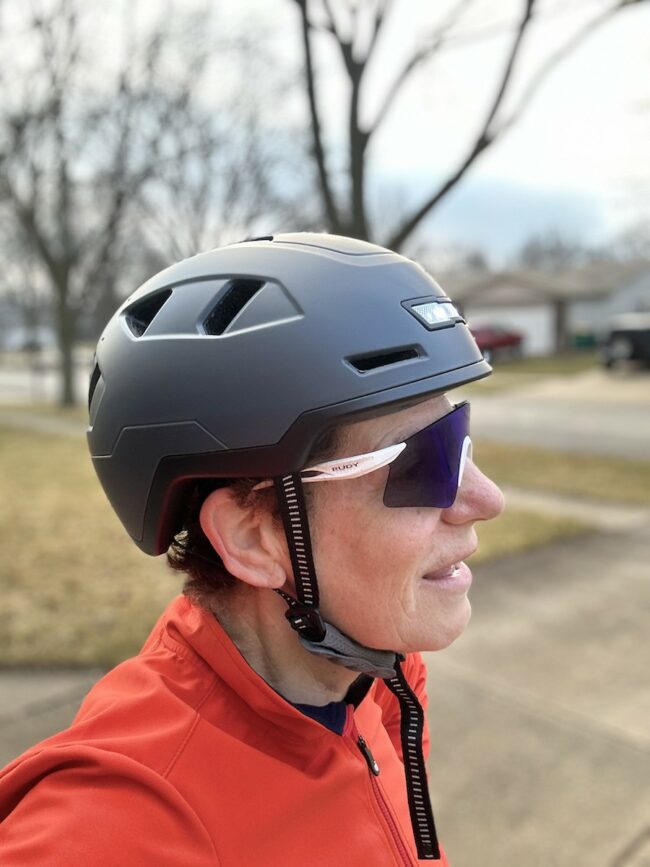
Xnito helmets are available in medium, large, and XL sizes, with no small option. Despite typically wearing a small, I found the helmet’s padding, rear dial adjustment, and narrow shape provided a good fit. The helmet offers significantly more coverage than standard bicycle helmets. Adjusting the side straps was straightforward with the sliders, and the Fidlock magnetic buckle made for easy one-handed operation. A padded chin guard also enhances comfort. Weighing 375 grams, it is heavier than a standard helmet but lighter than many other models. While I noticed the extra weight, it was not uncomfortable.
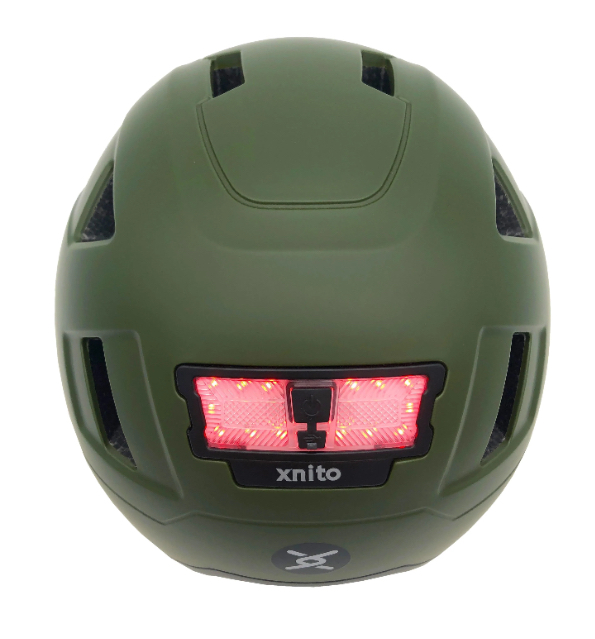
My initial test ride took place before dawn. The helmet’s built-in front and rear lights increased my visibility to drivers but were not overly bright. The front is a solid white light, while the rear red light has three modes – solid, flashing, and wavy. Both lights are rechargeable using a single USB-C port, and according to the company, they last up to 10 hours on one charge, with my experience being similar.

A solid white front light increases the rider’s visibility to drivers.
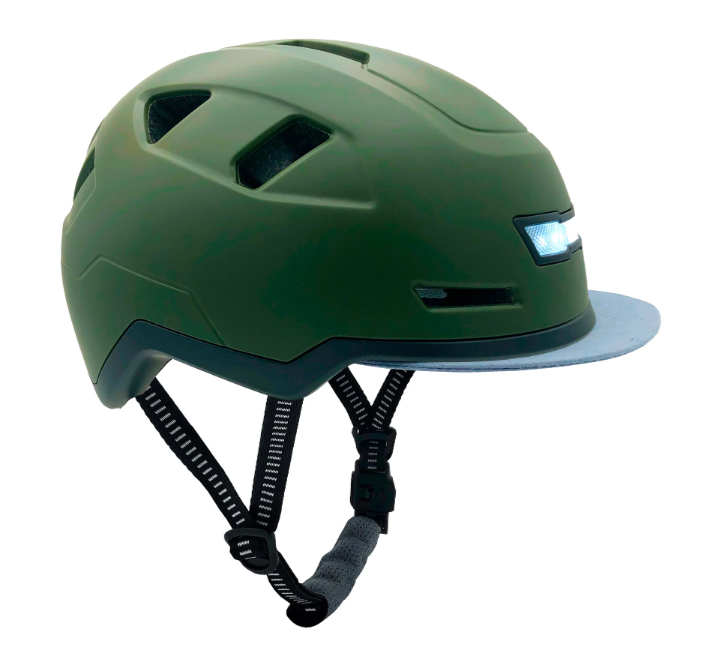
The ten vents are more than a typical commuter helmet. When riding at higher speeds, air flowed over my head, helping me stay cool. However, at slow speeds, the helmet was a bit warm. There’s an optional sun visor that uses Velcro-like tabs to attach. Xnito is available in nine basic color variations.
Bottom Line
E-bike cyclists must consider additional protection when riding at higher speeds. The Xnito helmet provides more coverage of the rider’s head. At $129, it is in line with a typical bike helmet and an NTA 8776 rating, protecting a rider up to 28 mph. The company’s free accident replacement also adds value so you can buy confidently.
Sheri Rosenbaum regularly contributes articles and reviews products for RBR. She’s an avid recreational roadie who lives in the Chicago area and a major advocate for women’s cycling, serving on the board of directors and volunteering with the Dare2tri Paratriathlon Club. Click to read Sheri’s full bio or visit her web site sunflowersandpedals.com.


So how does the USAC and UCF justify pros wearing the same bike helmets we do? They regularly exceed 28 MPH and crash way more that we do. But they all wear standard bike helmets. This helmet looks like a solution looking for a problem.