Tips For Rim Brakers

Jim’s Tech Talk
By Jim Langley
The last two Tech Talks have been about disc brakes on road bikes & disc brakes on tandems. You can skid to a stop now to go back and read those articles here: Do You “Need” Disc Brakes Now? and Discs Brakes On Tandems & A Reader’s Epic Story.
This week I want to be fair and add some tips for riders with rim brakes. Because with so much hype about disc brakes, rim stoppers can tend to get a bum wrap.
For example, while there were plenty of pro rim-brake remarks among the many comments dropped (thank you for commenting readers!), there were multiple pro-disc themes too, including: rim brakes make your hands tired, rim brakes don’t work with carbon rims, you can’t run wider tires with rim brakes, rim brakes wear out rims and all bikes will be disc brake soon.
It concerns me that these ideas – that you might hear even at bike shops now – could scare a new rider away from buying a used or new bike with rim brakes. Or someone with a rim brake bike might worry about riding it. So, today I’ll offer some tips on all these issues.
Rim brakes have been around for well over 100 years and there’s a lot to know about them – and to like about them. They’re also simple to adjust.
Is it Disc or Disk?
First, for the sake of clarity – and maybe you’ll find it interesting, the correct spelling is “disc” brakes with a “c” not a “k.” “Disk” with a “k” is one of those things you put in a CD player or old fashioned computer.
Discs Affect on Wheels
Second, I want to share my friend and master wheelsmith Charles Wells of Jet Bicycle Wheels’ Custom hand built bicycle wheels | United States | Jet Bicycle Wheels comment because he pointed out something about disc brakes no one else did.
Charles wrote:
“I appreciate disc brakes mostly for the variety of wheel and tire sizes they support, especially on my gravel bike, but it is true to some degree on the road bike as well.
That said, as a wheel builder, I don’t appreciate all the extra work the spokes have to do. Spokes fatigue much faster as a result of the added torsional loads the disc brakes introduce to the wheels. I believe it warrants a few extra spoke to get similar longevity to what we can yield with a rim brake wheel.
I’m still excited though to see brands that still include rim brake bikes among their offerings. Hoping this will be the case for many years to come.”
Tips for Rim Brakers
Rim Brakes Make your Hands Tired
This can be an issue, however, it could also be a result of poor brake adjustment, brake levers that are too large for your hands or bad brake pads. Also, aluminum rims brake better than carbon.
Regarding adjustment, rim brakes need to have an easy, smooth pull and release. They should never be adjusted so close to the rim that there’s almost no lever travel. Yet, that’s a common adjustment you see out there.
Also, for some riders the levers can be too wide for their hands. If it’s difficult to operate the levers, look into levers with adjustable reach or smaller levers compatible with your brand and model of brakes.
Hard brake pads are a common source of hand fatigue. Try replacing them with softer pads. And don’t assume that the stock pads that came with the brake are the best for you. The company Kool Stop has a wide selection of replacement brake pads. Rim Pads – KOOLSTOP
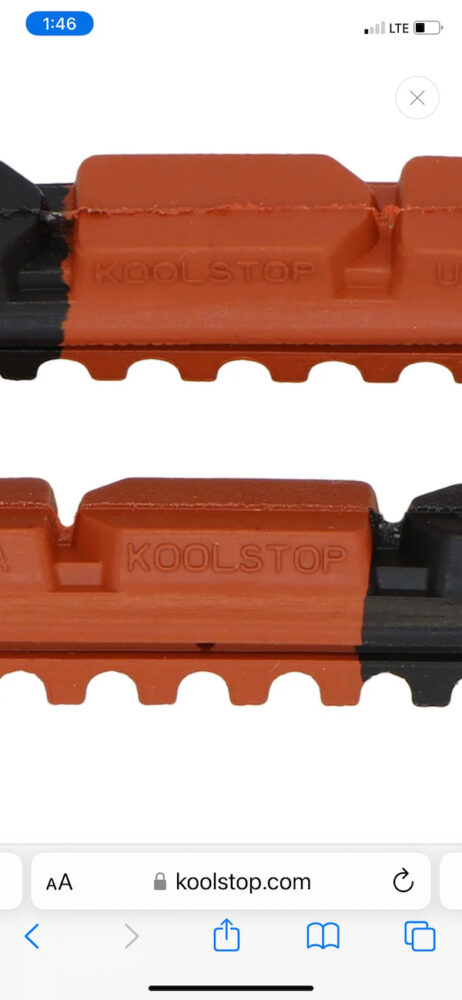
Note that you might have rim brakes with brake shoes that are open on one end. That’s so that you can simply push out the brake pad (the rubber part) and push in the replacements. That way there’s no need to change the brake shoe alignment, which can be a tricky job.
Rim Brakes Don’t Work with Carbon Rims
This was a problem with the first carbon rims. Today you should be able to find pads that work a lot better than the early carbon pads did.
If your brakes aren’t working well enough, reach out to the manufacturer of your carbon rims for a suggestion for the best brake pads. They should know and they might even sell the pads.
You Can’t Run Wider Tires with Rim Brakes
This isn’t really true. What’s true is that most road bikes with rim brakes for many years have been made to fit 23-28 (sometimes only 25c) tires. That’s why this theory is out there.
But, there were rim brake road bikes with wider tires than that way back. The frames had more clearance and so did the rim brakes because they were cantilever brakes not the sidepull brakes that became the standard, and that limit tire clearance.
Rim Brakes Wear Out Rims
This is absolutely true, it can happen. It’s caused by brake pads picking up grit. Once embedded into the faces of the pads you’re grinding away the rims every time you slow or stop.
The wear and tear is much worse when riding regularly in the rain, snow, mud and worse.
The thing is that if you don’t ride in those conditions, and if you take care to check the pads frequently and pick out all abrasive bits in them, rim wear can be slowed so much that you might never wear out any rims.
Do You Brake Too Much?
Related to wearing out rims and hand fatigue when braking is how much you use the brakes. You have to use them enough to stay safe and comfortable.
But some riders brake a lot less than others. You learn that quickly when you start racing. Some people consistently open gaps by staying off the brakes around parts of the course that cause others to put on the stoppers.
It’s the same on descents. Some people aren’t concerned a bit descending at 50mph and corner fearlessly while others scrub off speed all the way down the hill.
Again, you have to use the brakes how you need to. But, if your hands tire on long hills, maybe you could learn not to ride the brakes and pump them occasionally instead. That’ll give the hands a rest and reduce rim and pad wear too.
Plus, if you can relax and let the bike roll down hills only braking when absolutely necessary, you should save energy on rides and probably feel fresher too since you’re not clamping the brakes so much. But definitely do whatever you feel is safe for your roads and abilities.
All Bikes will be Disc Now
If you’re shopping for a new high quality carbon road bike with the latest components, it’s going to come with disc brakes. So you can say that discs have taken over.
Luckily, you can still find high quality carbon used bikes with rim brakes. One source is the Pro’s Closet.
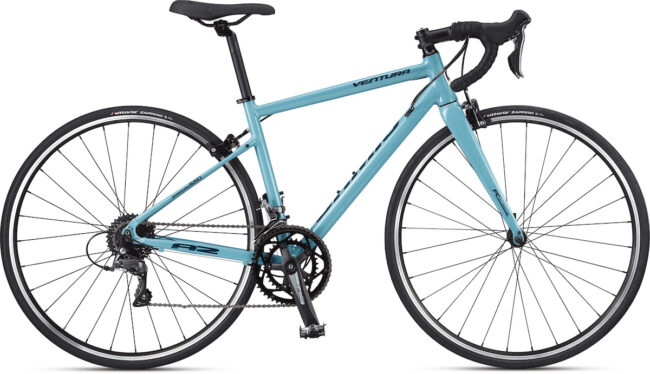
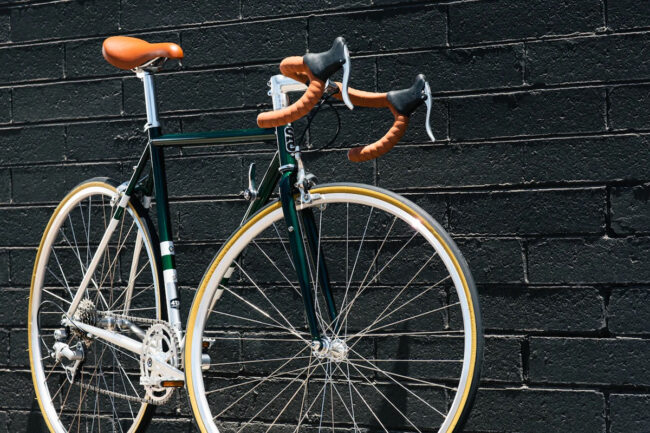
And some companies make entry level road bikes with rim brakes such as Jamis’s Ventura and State Bicycle Company’s 4130 Road Bike. Another is Rivendell. I’m sure there are other brands making nice rim brake road bikes too. So be sure to search if you’re in the market.
Your Turn
Please share your rim brake and braking tips and advice. Thanks!
Jim Langley is RBR’s Technical Editor. A pro mechanic & cycling writer for more than 40 years, he’s the author of Your Home Bicycle Workshop in the RBR eBookstore. Tune in to Jim’s popular YouTube channel for wheel building & bike repair how-to’s. Jim’s also known for his cycling streak that ended in February 2022 with a total of 10,269 consecutive daily rides (28 years, 1 month and 11 days of never missing a ride). Click to read Jim’s full bio.


An outlier to be sure, but my rim brake bike has been the best traveling companion for nearly 15 years. No fuss, no fluids, no ding ding ding, no problems whatever in remote places without bike shops around.
Not to mention the interchangeability of all my rim brake wheels…lighter weight, easier service, and no lateral loading on the frame/fork –which needs to be stronger to deal with the brake loading…no caliper adjustments, fluid changes & bleeding, or rotors out of true. Just another marketing gimmick answer to a question no one was asking…like electronic shifting!
Very interesting and needed article.. My mountain bike and my steel touring bike both have discs. My carbon road bike and aluminum light touring bike both have rim brakes. The road bikes are both 15 + years old. If I ever purchase a new road bike it will have disc brakes. I rent road bikes when I travel which have disc brakes. The disc brakes are just easier to brake with, and I like the peace of mind that comes with the extra braking power.
i hardily agree that kool stop pads are a must for rim brake users, as is frequent replacement if riding many miles
>> “Disk” with a “k” is one of those things you put in a CD player or old fashioned computer. <<
This is manifestly incorrect. Here is a link to the logo for Compact Disc Digital Audio (the full name of a CD):
https://duckduckgo.com/?q=compact+disc+digital+audio+logo&t=vivaldi&iax=images&ia=images
Jim was, however, correct about the old fashioned computers. It’s been a long time, but I put many floppy disks into disk drives.
Rim brakes do wear out rims although, as you say, this can be a very slow process. No matter how clean you try to keep your rims, road dirt and grit accumulates on them. Take a clean tissue or paper towel, dip it in a little alcohol or degreaser, and rub it along the braking surface of a rim brake bicycle. Unless the rim is brand new or preternaturally clean, you will generally find the tissue picks up significant black dirt, and it’s very difficult to eliminate this abrasive material entirely. The rim, after all, is only a few centimeters away from the dirty road surface, and the movement of the bike kicks up the dust and grit that can adhere to the rims.
A few other bits about rim brakes-
1. Riders should periodically clean (and inspect) those rims & pads. Dirty or seriously worn rims/pads impair stopping power. Of course, contamination with lube is a no-no for both rim and disc brakes.
2. Carbon rims need carbon-specific pads. The wrong pads not only affect stopping power, but can quickly destroy expensive carbon rim-brake wheels.
3. Rim QUALITY is a huge factor in stopping power. Some cheap rims never brake well even with good break-in. OTOH- I’ve got some 15+ yr old Mavic SSL SLs still rival disc braking power with over 15,000 DOCUMENTED miles and rims still in great shape with much original ‘ribbing’ (Mavic classic fans know what I mean). Most road riders will never wear out top quality rims (gritty desert use excepted).
I have a Bianchi ultra XR4 with rim brakes I bought new in 2022, so there were still some high end rim brake bikes bikes around two years ago
I’m visiting in Colorado’s Summit County this week and was pleasantly surprised to note that about 85% – 90% of the bikes I’m seeing other riders on are rim brake bikes (self and spouse included). We’re not dead yet and I honestly believe that at some point a balance will be achieved (after all of the hoopla is over) that will see bikee manfs offering both rim and disc brake road bikes. I’m in the camp that off-road bikes (including gravel) are better off with disc brakes but, road bikes can go either way and function just as well. The only advantage I see to disc brakes on road bikes is riding in rain. My commuter has disc brakes and that makes a huge difference when commuting in the rain. I don’t take out my road bike in rain, unless I get caught out on a ride, by surprise.
I also agree with the statement about torsional stress on the entire wheel from disc brakes. I hope industry isn’t myopic about disc brakes and can embrace both brake worlds. There are a lot of beautiful bikes out there with rim brakes and they are by no means obsolete.
I live near the Blue Ridge Mountains, so big climbs and big descents are frequent in this area.
My Kool Stops on SRAM rim brakes (the latest of many variations) are properly adjusted and maintained. In 40 years of riding in this area I’ve never had any significant brake pad or rim problems. Then again, I’m not one who brakes when they don’t have to. They work great even in the rain and on carbon rims (Hunt’s) if you scrub off water before areas where high stopping power is needed.
My mountain and gravel bikes have disc brakes and they work well.
IMHO, on a road bike they are overly complicated, finicky and prone to squeaking.
Just another unnecessary end of an era in bike evolution.
Thanks for your great coverage.
Although disc brakes are inevitable if manufacturers stop making rim brake bikes, the 100 years of successful rim brake technology works for me. Spending top dollar on a carbon bike with carbon Campy Record back in the day, keeps me going with what I have and I’ll not give in to the “must have the latest”. On a lighter note, I’m glad I’ll age out of cycling before I need a new disc brake bike.
I have a 1988 Schwinn with a Shimano 600 group set I have at least 20K on the bike and I still have the original pads.
Today, Pro’s Closet announced they’re going out of business. Unfortunately, they will no longer be a source for used rim brake bikes..
Correction on the comment on disc brakes on Santana tandems, Their web site stated that the 1st brake they tested had the plastic in the caliper melt. My Santana tandem has a 260mm, 10 inch Rotor (disc) the mechanical caliper requires adjusting each pad separately, a pain in — every night on Bike Colorado, tried to keep the speed below 45mph until I could see the bottom of the mount.
Modern disc brakes give you a choice in pad material, organic or metalic which maybe noisy but most of the time its one finger on the brake.
1. For many of us, deep dish carbon wheels are unnecessary as we don’t go fast enough to justify them (some manf. say 18 MPH or above)…but for those that are using them to our advantage, read on: a carbon rim-brake wheel under wet or raining conditions is down-right scary. THAT is were disc brakes excel.
2. Note to the author of this blog/site: Many years ago, as a newbie to the cycling world, I was a bit confused by the nomenclature of road tire and tube sizes. Some tire packaging labels or websites (like yours) incorrectly call a 28mm-wide 700c tire a “700 x 28c.” The correct labeling should be ”700c x 28mm.” Jan Heine (of Seattle WA), has been espousing “wider is better” for some time now and his site and his brand of tires, Compass, use the later or preferred method (700c x 28mm): https://janheine.wordpress.com/2015/08/12/compass-tires-and-tubeless/. QBP, the largest bicycle parts distributor in the U.S., also uses the latter for the nomenclature on their site and for use on their branded tubes. For me that makes the most sense — after all, would you call a 42 mm wide 650b tire a “650 x 42b?” No, of course not. Logically it would be called 650b x 42 mm. I’d love to see your site conform to this “common sense” standard.
I like rim brakes. But I ride folders a lot and 20″ or 16″ rims do not disperse heat as well as regular rims. Descending long hills with the rim brakes applied can lead to overheating, which can lead to a blow out! Not what you want when descending. I have even seen it happen with a 700c wheel. I had just descended a steep hill with a Rando friend and when we stopped at an intersection at the bottom to check directions, her RIM blew apart. There MUST have been some fault. Maybe a stone embedded in the pad wore a weak spot in the rim? I don’t know.
So when I descend on any size wheel, I pump the brakes alternately to allow some cooling. And I sit up as erect as possible to catch more wind. There was a time I loved descents (Mt. Baker, Mt Ranier) but no more!
My rim brake story: I was participating in Levi Liephiemer’s Gran Fondo with my brother and his brother-in-law some years ago. The course was 100 miles and went from Santa Rosa CA over the coast mountain range, down to the Pacific on Highway 101, then back up over the coast rang and back to the start. Both the decent to the Pacific and the climb back up were very steep. We had been warned to brake intermittently to avoid over heating our rims. I knew how to do this, but even so my rims got hot enough to sizzle water when I took a break from the miles long descent and poured water on them.
Other riders apparently did not comprehend. They dragged their brakes rather than braking hard intermittently. As we descended I kept hearing loud bangs coronavirus the umber covered roads above. About 35 people over heated their rims so much that the tubes blew up, often taking the tires off the rim!
The tire and wheels sag wagon ran out of pre-built wheels with mounted tires, and had to start cooling off rims and replacing the tubes and tires.
I don’t totally agree with the statement that aluminum rims brake better than carbon. My experience with having both, are quite similar. I find that my carbon rims stop better in dry conditions but aluminum better in wet conditions. I have a pair of Reynolds full carbon wheels with carbon specific pads. I ride anywhere from 3.3k to 4.5k a year. I’m still on the same wheels with the same original pads for the past 8 yrs. That’s pretty remarkable in my book. Now I believe that this has been possible due to how I use my brakes. Hard braking is always going to wear your pads much faster. As for disc brakes, these are the best thing that came to the mtb world,