Should You Consider a 1X Drivetrain on Your Next Road Bike?

Jim’s Tech Talk
By Jim Langley
In case it’s a new term for you, “1X” is slang for a single-chainring drivetrain without a front derailleur and without front shifting, too. “2X” is slang for a double-chainring drivetrain with a front derailleur and with front shifting.
There aren’t that many to select from yet, but 1X road bikes are starting to become a thing. So I thought I’d try to get ahead of the trend and look at a couple of models to share how the 1X drivetrains I could find now compare to the traditional 2X drivetrains on the similar model from the same company.
For this discussion talking about drivetrains, we’re going to focus on the gearing on the bicycle (not the specific components). Because it’s the gearing that determines if a cyclist has the right range of gears to ride the terrain they choose to cover. What’s right for one rider might not be right for another because people have different preferences in how they ride and pedal and different fitness and ability levels, too.
I’ll also add some thoughts on how to decide if a 1X drivetrain could work for you and quash a few myths about 2X drivetrains that you may hear when shopping for a new road bike (or even a gravel bike).
Your take on drivetrain gearing choices is as valuable as mine. So, after reading this, please share your advice and tips on what you use and would recommend to other readers in the comments below.
Two 2026 1X road bikes from major bike companies
I picked two 1X 2026 bikes, one from Trek and one from Cervelo. I was looking for similar drivetrains not similar models of bikes so the price points vary and they fall under different categories. But, there are more 1X bikes to choose from by these companies if you’re interested and you can find them online to compare different models in the same bike category and specifications level.
The bikes I chose are a Cervelo road racing model and a Trek endurance bike (these have a more upright position than a road racing design). Since there’s usually an option to buy the 2X model of the same bike and the price might even be identical, we’ll look at the gearing on those, too.
That way you can see the gearing difference on the 1X versus the 2X model because that’s the key difference between the bikes. [NOTE that for the Trek bikes comparison, I could only find a similar 2X model at a lower model level but the gearing should be the same.]
Under each bike is the gearing chart. The chainrings are on top and the cassette cogs are on the left side. The numbers in the middle are the gear inch numbers. The lower the number the easier the gear is to pedal and the higher, the harder. Looking at the charts you can tell which bikes have the lowest and highest gearing and you can also compare the numbers to get an idea of how much the gear inches increase or decrease with each shift down or up the cassette.
Ideally, when you’re at speed you want closer spacing between shifts so that you can fine tune your effort. When the going is tougher, such as on climbs, larger spacing between shifts makes sense because you’re slowing down and need a much easier gear, not just a little easier.
1X versus 2X shifting
With a 1X bike, the gearing and shifting is simple because there’s only 1 chainring. To shift, you move the chain up or down the cassette, that’s all there is to it. Both the 1X bikes here have the same 13-speed cassette. That’s because with only a single chainring, that extra cog allows a wider gear range, or it could be used to narrow the gap between one of the jumps on the cassette. In the case of the 10-46 13-speed cassettes on the bikes here, I believe SRAM’s goal was to ensure you have a low enough climbing gear and tighter jumps.
With a 2X bike, the gearing and shifting is complicated because there are 2 chainrings and a front derailleur. To shift you move the chain up and down the cassette, plus you have the option of changing between the front chainrings too.
The advantage of having 2 chainrings and the ability to shift between them is that those front shifts make a significant change in the ease or difficulty of pedaling, whereas with 1X gearing to make the same amount of change in the gear, you would need to make multiple shifts.
Whether that 2X advantage matters depends entirely on how you ride. Mountain bikers have pretty much gone completely to 1X because it’s a simple system that works on all types of off-road terrain. The necessity to shift a lot to change gearing significantly isn’t considered a drawback because of the slower speeds and typically steeper and more technical terrain.
For road, gravel, touring, bike packing – and especially racing or competitive riders, 2Xs may be the better choice because they give you the ability to hit the best gear more quickly. And, always being in the right gear should provide a competitive edge and energy savings. For a racer or weekend warrior for example, with one front shift to a much higher or lower gear to launch an attack down or uphill you could open a race-winning gap while the 1X rider is still shifting.
How the gearing compares on our example bikes
I think what you can see from the gear charts is that the 1X gearing with the extra 13th cog makes it possible to get almost the same lowest and highest gears as what you get on the 2X bikes. Because Trek went with a 44-tooth chainring, their 1X offers a slightly lower lowest gear (25.8 to 26.25) while it loses about 11 inches on the highest end of the gear range (129.6 to 118.8).
Cervelo chose a 48 tooth chainring on their 1X, which matches the 48 large ring on their 2X so both have a highest gear of 129.6. And even with a smaller 10-33 versus the 10-36 cassette on the Trek, the 1X Cervelo’s 10-46 cassette gives a tiny edge to the 1X on the lowest end with a 28.2 versus a 28.6 on the 2X.
Considering how closely the gearing matches, deciding which is right for you really comes down to personal preference. It’s unlikely you’ll feel like you’re missing something unless you’re used to 2X shifting, in which case, I think if you shifted your front derailleur regularly before, you will likely miss that option on a 1X. But only you can decide if it matters for how you ride or not.
The example bikes
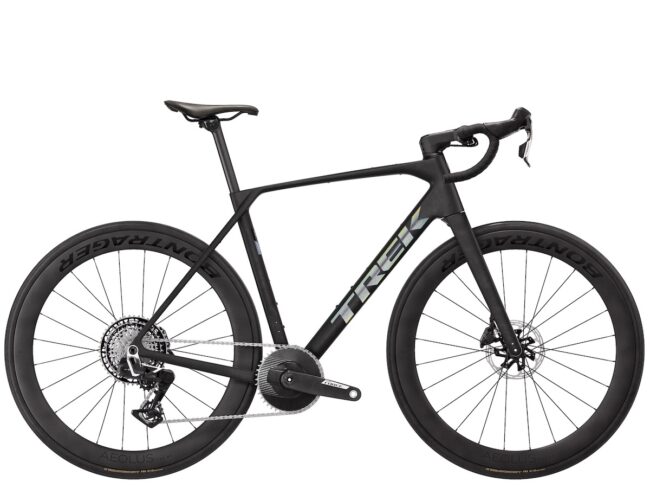
1X MODEL: Trek Domane SL7 AXS 1X Gen 5 ($6499.99):
Gearing: 44-tooth chainring with 10-46 13-speed cassette
| Trek Domane 1X | 44 |
| 10 | 118.8 |
| 11 | 108 |
| 12 | 99 |
| 13 | 91.4 |
| 15 | 79.2 |
| 17 | 69.8 |
| 19 | 62.5 |
| 21 | 56.6 |
| 24 | 49.5 |
| 28 | 44.4 |
| 32 | 37 |
| 38 | 31.3 |
| 46 | 25.8 |
2X MODEL: Trek Domane SL6 AXS Gen 5 ($4199.99)
Gearing: 48/35 tooth chainrings with 10-36 12-speed cassette
| Trek Domane 2X | 35 | 48 |
| 10 | 94.5 | 129.6 |
| 11 | 85.9 | 117.8 |
| 12 | 78.7 | 108 |
| 13 | 72.7 | 99.7 |
| 15 | 63 | 86.4 |
| 17 | 55.6 | 76.2 |
| 19 | 49.7 | 68.2 |
| 21 | 45 | 61.7 |
| 24 | 39.4 | 54 |
| 28 | 33.75 | 46.2 |
| 32 | 29.5 | 40.5 |
| 36 | 26.25 | 36 |
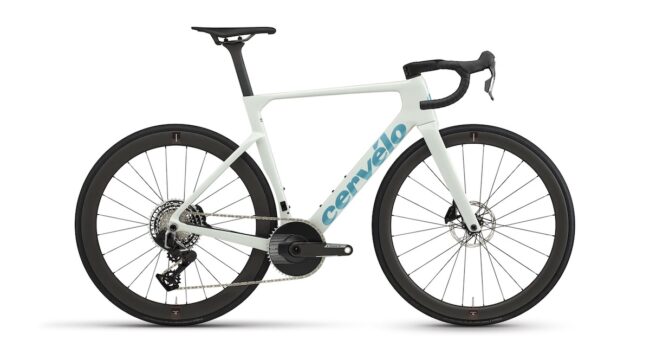
1X MODEL: Cervelo Soloist AXS 1 ($8500)
Gearing: 48-tooth chainring with 10-46 13-speed cassette
| Cervelo Soloist 1X | 48 |
| 10 | 129.6 |
| 11 | 117.8 |
| 12 | 108 |
| 13 | 99.7 |
| 15 | 86.4 |
| 17 | 76.2 |
| 19 | 68.2 |
| 21 | 61.7 |
| 24 | 54 |
| 28 | 46.2 |
| 32 | 40.5 |
| 38 | 34 |
| 46 | 28.2 |
2X MODEL: Cervelo Soloist AXS ($8500)
Gearing: 48/35 tooth chainrings with 10-33 12-speed cassette
| Cervelo Soloist 2X | 35 | 48 |
| 10 | 94.5 | 129.6 |
| 11 | 85.9 | 117.8 |
| 12 | 78.7 | 108 |
| 13 | 72.7 | 99.7 |
| 14 | 67.5 | 92.6 |
| 15 | 63 | 86.4 |
| 17 | 55.6 | 76.2 |
| 19 | 49.7 | 68.2 |
| 21 | 45 | 61.7 |
| 24 | 39.4 | 54 |
| 28 | 33.75 | 46.2 |
| 33 | 28.6 | 39.2 |
Addressing some common myths about 2X drivetrains
The popularity of 1X drivetrains has resulted in some negativity towards 2Xs in various publications and social media, etc. Here’s my take on some of the myths you might read or hear when shopping for bikes.
Myth: Front derailleurs throw chains
Fact: There are 2 reasons that this can happen and neither is the fault of the front derailleur. Derailleurs that throw chains either were not adjusted correctly or may have gotten bent somehow.
More: You could argue that since front derailleurs need to be properly adjusted to work right and can get bent, that’s enough reason to do away with them. But people who appreciate front shifting would argue that if you keep your bike properly adjusted you’ll never have a problem.
Myth: By getting rid of the front derailleur, second chainring, cable/housing and shifter you save a lot of weight
Fact: If the 1X matches the gearing range on the 2X, it’s because of an oversize cassette, which requires an oversize derailleur to shift it, and it might need a longer chain too. All these add weight so the bike might not be much lighter at all.
More: With wireless electronic drivetrains there are no cables or wires to add weight.
Myth: 1X drivetrains are more efficient than 2X drivetrains
Fact: It’s almost too close to call but because there are greater crossover angles on a 1X and you spend more time in them, the 2X is actually slightly more efficient – but nothing you’d probably notice.
More: Some electronic 2X bikes won’t even let you use the crossover gears.
Your turn
If you’re hunting for the perfect new road bike it would be interesting and helpful to learn if you’re considering going to a 1X and why. If you are a gearing aficionado with advice on how to choose what’s best, feel free to weigh in too. Thanks!
Jim Langley is RBR’s Technical Editor. A pro mechanic & cycling writer for more than 40 years, he’s the author of Your Home Bicycle Workshop in the RBR eBookstore. Tune in to Jim’s popular YouTube channel for wheel building & bike repair how-to’s. Jim’s also known for his cycling streak that ended in February 2022 with a total of 10,269 consecutive daily rides (28 years, 1 month and 11 days of never missing a ride). Click to read Jim’s full bio.


