Trek Ion R and Flare R City Light Set Review


Price: $44.99 (headlight or taillight individually); $84.99 (set)
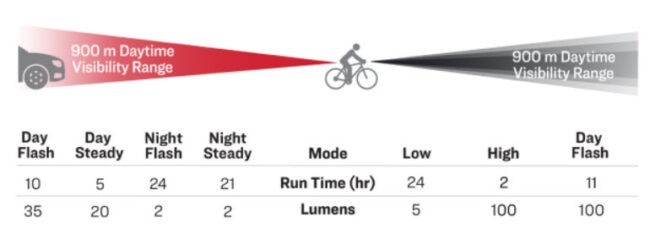
Front Light Lumens: Low – 5, High, and Day Flash – 100
Rear Light Lumens: Night Flash and Night Steady – 2, Day Flash – 35, Day Steady – 20
Front Run Time: Low – 24 hours, Day Flash – 11 hours, High – 2 hours
Rear Light Run Time: Night Steady – 21 hours, Night Flash – 24 hours, Day Flash – 10 hours, Day Steady – 5 hours
Front Light Modes: Low, High, Day Flash
Rear Light Modes: Day flash, Day steady, Night flash, Night steady
Battery gauge: Yes, four-bar LED readout
Ideal Use: Urban riders/Commuting
Availability: Online and retail
How Obtained: Company sample
RBR Advertiser: No
Why Daytime Running Lights are Important
To improve visibility to others and safety, cars have daytime running lights (DRLs). So, it only makes sense that cyclists use them, too.
No matter the type of riding I’m doing, my bike always has DRLs attached and on. I can attest that DRLs have saved me from being hit more times than I care to count. They help drivers see me coming and better judge my oncoming speed so they don’t pull out in front of me.
According to Trek, DRLs matter because:
- You are 240% more noticeable with DRLs
- When used, 33% fewer collisions happen
- 80% of accidents happen during the daytime
- You are 700% less visible than you think
Making City Riders Safer
On September 4, 2025, Trek launched an updated version of its front and rear bicycle lights specifically for city riders. With daytime visibility from 900 meters, the Trek Ion R and Flare R City lights now boast 28% longer runtimes, faster charging with a USB-C cable (2 hours), and a sleeker, more rider-friendly design.
Other key upgrades include an improved hood design that prevents glare and has visibility from the side, making intersections safer for the rider. In addition, the front and rear lights are straightforward to differentiate. The front is clearly a white light and lens, and a green fuel gauge (25-100%). In contrast, the rear is distinctive, featuring a red lens and a red fuel gauge.
Both lights are Blendr compatible and can attach to your seat post, handlebars, fenders, saddle, or helmet. One issue I have with the rear light is that there isn’t a clip to attach it to a saddlebag. If you use the strap, as I’ve seen riders do, the light hangs down and doesn’t work as it’s designed.
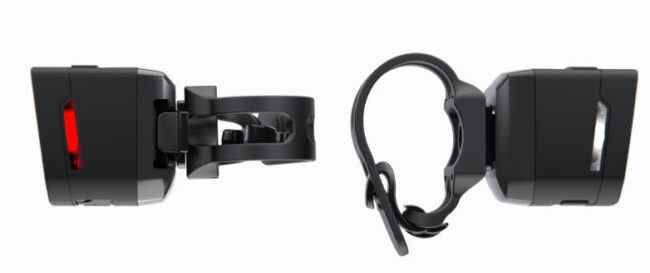
In the box are the lights, quick-connect bracket/straps, and USB-C cable.
Bottom Line
At $44.99 for either the headlight or taillight, or save $5 when purchasing the set, Trek’s new and improved city lights will keep you visible day or night when biking urban roads. With a longer battery life, there’s less of a need to worry about charging your light after one ride. Simply check the battery gauge to know for sure.
NOTE: These lights are designed for urban riding and commuting. The Trek Ion 200 and Flare RT have longer visible ranges and are therefore recommended for open road riding. Another option for urban or open road riders is Trek’s CarBack rear radar, which alerts you when a vehicle or cyclist is overtaking you.
Sheri Rosenbaum regularly contributes articles and reviews products for RBR. She’s an avid recreational roadie who lives in the Chicago area and a major advocate for women’s cycling, serving on the board of directors and volunteering with the Dare2tri Paratriathlon Club. Click to read Sheri’s full bio or visit her web site sunflowersandpedals.com.
I use a flare taillight (a bontrager, now being rebranded as trek) and am very happy.
I tried to buy a new one yesterday but it was all sold out.
Mine is many years old and with cold temperatures returning, I wanted to get one with a fresh new battery.