
Sustainable Water Bottle Options for Cyclists

One of the major environmental concerns is the staggering amount of plastic bottles that end up in the ocean. It is estimated that over 8 million metric tons of plastic bottles are in the sea, causing significant harm to marine life and ecosystems.
In response to this issue, companies have been actively working towards more sustainable water bottle options, including those made from durable materials such as stainless steel. Some companies even offer insulated water bottles, which help keep drinks cold, promote reusable bottles and reduce waste.
Here are three water bottle options for cyclists looking to make a more eco-friendly choice. They all work well, depending on an individual’s preference for insulated vs non-insulated, cost, material, and weight.
Trek Voda Bio Water Bottle

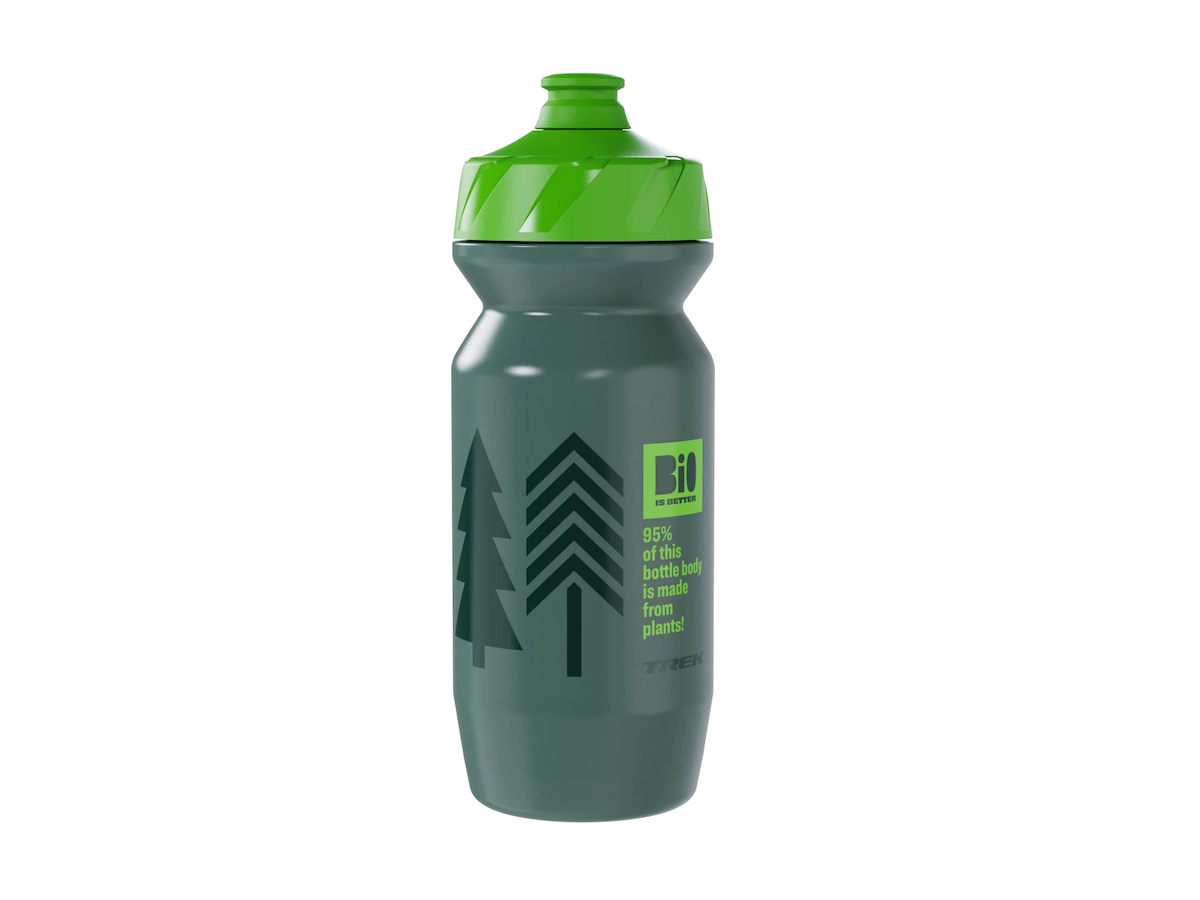
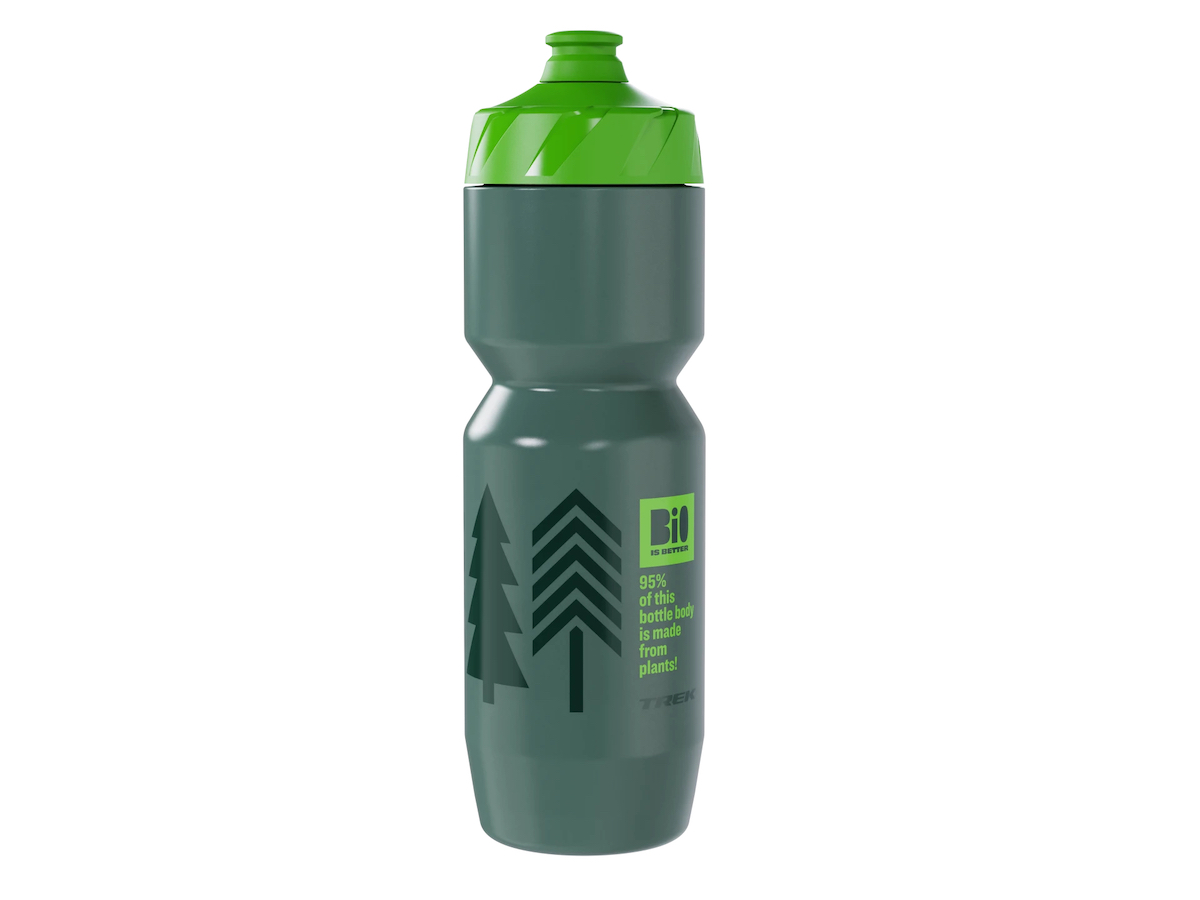
Price: $$11.99 (21 oz); $12.99 (26 oz)
Sizes: 21 oz and 26 oz
Materials: 95% plant-based materials (bottle), 20% plant-based (cap), 30% plant-based (popper)
Color: Bright green cap and dark green body
Weight: 89 g (21 oz)
Dishwasher safe: Yes, top shelf
Fits in bottle cage: Yes
Availability: US and Canada
Trek recently introduced a new water bottle that is environmentally friendly. This innovative product is made from 95% plant-based material, with the cap being 20% bio-based and the popper being 30% bio-based.
Before the official launch, the product marketing team sent me a couple of these 21-ounce bottles to test out. I decided to pop them on my gravel bike and take them for a ride. I was pleased to find that the bottles easily fit into the cage, and thanks to their scratch-resistant design, there were no signs of wear on the graphics or the bottle itself. I particularly liked the combination of a squeezable body and a large spout opening, which allowed me to hydrate quickly and easily.
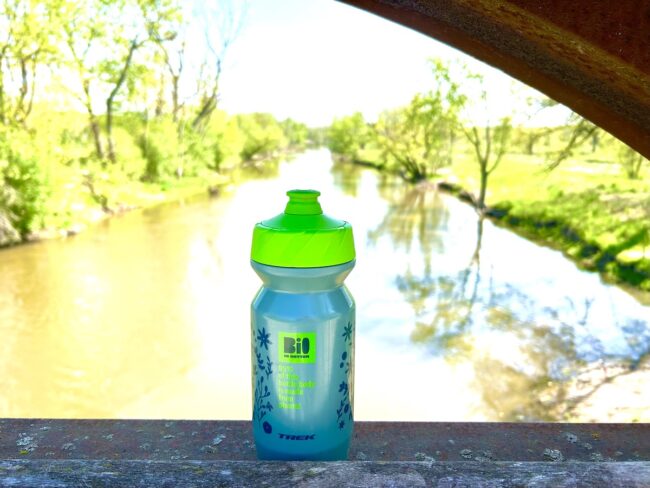
Trek’s Voda Bio is an excellent alternative to traditional plastic bottles for riders who prefer lightweight, soft-sided water bottles. It comes in two sizes, 21 and 26 ounces, and can be purchased online or in retail stores in the USA and Canada.
Bivo Trio Mini
Bivo Trio Mini Insulated Water Bottle
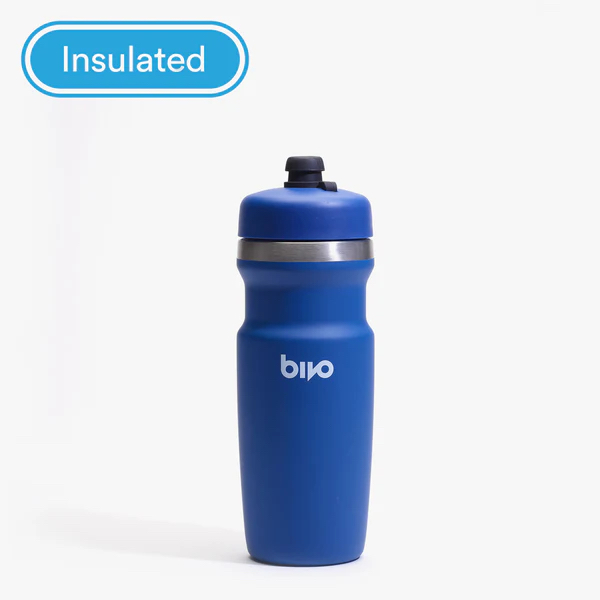
Price: $39
Sizes: 17 oz
Materials: Stainless steel, silicone exterior
Color: Black, True Blue, Flamingo, Mango, Cactus, Raw
Weight: 240 g
Dishwasher safe: Yes
Fits in bottle cage: Yes
Availability: Online
In December 2022, I had the opportunity to review the Bivo non-insulated bottles, and since then, the company has introduced insulated versions. Most recently, they’ve launched a 17-ounce insulated bottle – the Trio Mini. This insulated feature allows the bottle to keep liquids colder for an extended period, with the company claiming it can maintain colder temperatures for up to 12+ hours.
I put the Trio Mini to the test during my trip to Sea Otter Classic. Throughout the three-day event, I carried the bottle in my backpack and was pleasantly surprised to find that my water stayed cold all day. The optional $5 dust cap kept the spout clean and debris-free.
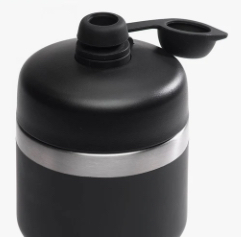
Keep the nozzle clean with Dusty the dirt cap.
One of the standout features of Bivo bottles is their gravity flow technology, developed by an ex-NASA engineer. This technology ensures that liquids flow evenly and allows for quick hydration. The Trio Mini is available in five vibrant colors, as well as a raw stainless steel option. The color versions come with a silicone exterior coating, providing a better grip and eliminating any annoying rattling noise when placed in a cage.
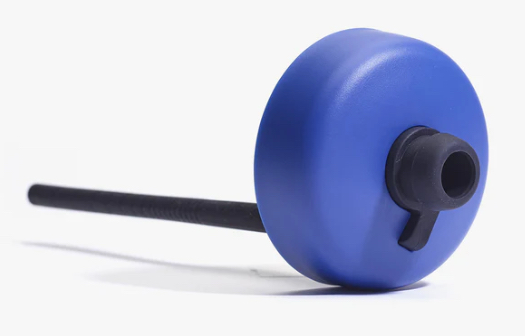
The tube inside the bottle uses gravity to flow the water through the spout.
Included in the box are low-profile bottle cage screws, which can be swapped out to reduce the risk of scratching the bottle. Also, there was what I believe to be a rubber straw cleaner to fish through the straw to rid the inside of any residue.
CamelBak Podium Water Bottle
CamelBak Podium Insulated Water Bottle

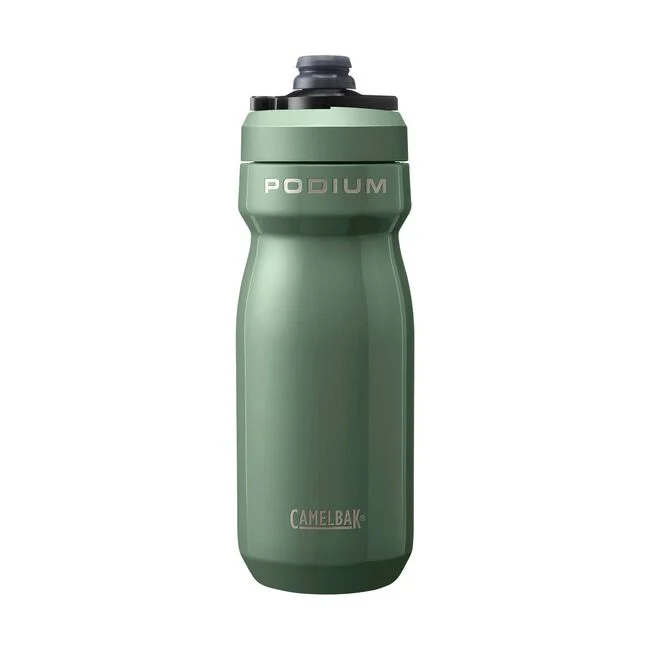
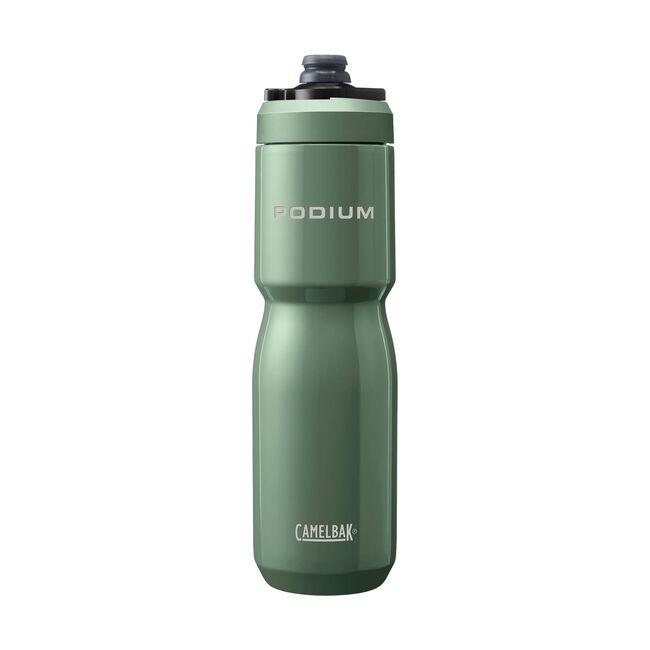
Price: $35 (18 oz.); $40 (22 oz.); $100 titanium (18 oz.)
Sizes: 18 oz. or 22 oz.
Materials: Stainless steel and titanium versions
Color: Black, Moss, Pacific, Stone, Violet, Stainless
Weight: 300 g (18 oz.); 354 g (22 oz.); 236 g (titanium)
Dishwasher safe: No, bottles should be hand washed. Caps can go on the top rack of the dishwasher.
Fits in bottle cage: Yes
Availability: Online and retail
CamelBak introduced their new Podium bottles in two sizes, 18 ounces, and 22 ounces, at Sea Otter. The 18-ounce bottle is available in stainless steel or titanium for those willing to splurge. The 22-ounce bottle is only offered in stainless steel.
The Podium bottle features a leakproof lockout spout that, when twisted, locks and prevents any spills or unlocks for drinking. However, unlocking the bottle with one hand while riding can be challenging. I couldn’t find a dust cap to purchase to keep the spout clean.
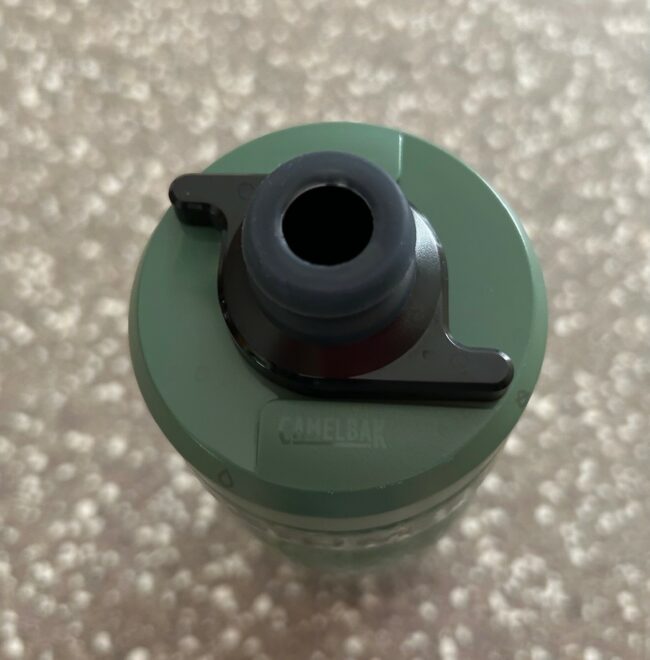
Leakproof lockout spout twists to unlock / lock.
Both bottle sizes utilize a vibrant blue vent tube inside, which enables a high flow rate when the bottle is tipped upside down for drinking. The vent tube allows air to enter the bottle, displacing water as it flows out. This concept is similar to the Bivo bottles.
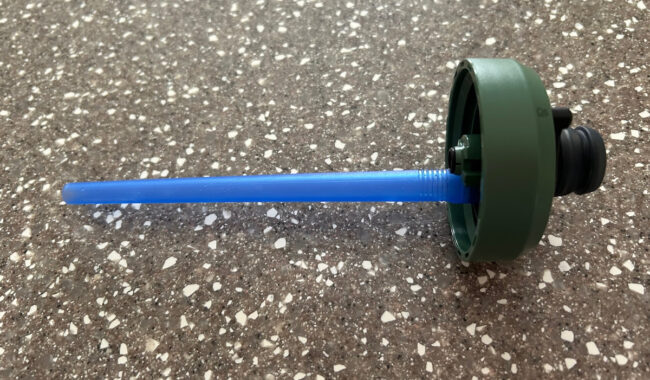
The blue vent tube inside enables a high flow rate.
According to the website, each bottle type has a different chill rating. The titanium version has the shortest chill rating of 7 hours, while the 18 and 22-ounce stainless steel bottles have chill ratings of 14 and 18 hours, respectively — my experience with the Podium 18-ounce bottle aligned with the company’s claims.
The company recommends hand washing the base of the Podium bottle, but to clean the top safely, it should go on the top shelf of the dishwasher.
On a side note, the packaging could use some improvement. The outer label is firmly glued to the bottle with a vertical strip, making removing it difficult. Moreover, I almost missed a small information pamphlet wedged at the bottom of the bottle, which required using a wooden chopstick to retrieve. Other users might overlook the pamphlet and unintentionally wash or use the bottle without realizing it’s there.
Sheri Rosenbaum regularly contributes articles and reviews products for RBR. She’s an avid recreational roadie who lives in the Chicago area and a major advocate for women’s cycling, serving on the board of directors and volunteering with the Dare2tri Paratriathlon Club. Click to read Sheri’s full bio or visit her web site sunflowersandpedals.com.



Those Camelbak spouts are very difficult to clean.
I’m a fan of simple stainless steel Kleen Canteen bottles. No difficult to clean straws, easy to open Sports spout. Mine are several years old with no issues. Some dents from dropping them off the bike, but they have more character that way!
ELITE has been making bottles from “easily” degradable plastics for several years.
More marketing virtue-signaling. The waste plastic problem is overwhelmingly due to modern society’s “throw=away” mentality, including single/limited use items. While many common plastics can (in theory) be recycled, the true key is minimizing the avoidable production/use of new plastic items. Most cyclists I know have a cabinet full (lifetime supply!) of bottles already. The REAL Earth-friendly action is to keep using whatever bottles you have until they crack/leak instead of running out to buy the next “sustainable” product to impress your ‘green’ friends.
Thank you! I had the same thought as I was reading through the bottle reviews.
But keep in mind that ingesting microplastics (and smaller plastic particles too) is a real problem to human health which is not yet fully investigated (for length of time or breadth of impacts). What we know so far says do NOT use black plastics at all (lots of bike water bottles + to-go food containers still use this) for any of your food/drink. And avoid putting all plastics in microwave or dishwasher or heating on stove. So yeah, maybe virtue signalling in this article (and most certainly affiliate marketing), maybe not (neither authors nor commenter make clear they considered impact of plastic ingestion on human health), but both titanium and steel water bottles are much safer for human health from ingestion perspective.
More interesting to me are those bottles not mentioned here which use silicone liners.
From the perspective of environment, yeah, just don’t buy plastic. And if it’s not for human consumption container, reuse it until it’s holy (like for plastic bags).
Agreed.
There’s a lot being written about the potential effects of micro or nano plastics. The metal alternatives shouldn’t be a problem. What about the non- metal alternatives?
Thanks.
There are some water bottles out there with silicone liners which should be much safer. IIRC, they still have plastic tops. so not perfect, but much better for human health most likely. But, I think they’re not squeezable, like soft plastic is, so not as easy from which to dispense, esp for sport.