Mix and Match Cycling Gearing – Can It Work?

By Jim Langley
Jim’s Tech Talk
How to optimize your gearing is always a popular topic since our needs vary based on our fitness, our age, the roads we ride and gear we carry. So I’d like to introduce you to a reader named David who we corresponded with this week. Please read his questions and our replies and if you have any suggestions, leave them in a comment.
David’s first email
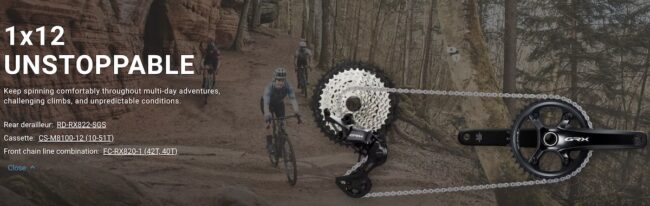
“I would love to read an article about the latest 12-speed and 13-speed gravel groupsets and what gearing is possible beyond the published limits. Just sharing what the manufacturing specs say is of little benefit. Questions like, can I put a smaller or larger chainring on a Campagnolo Ekar crankset? Who makes such options? Specialites TA used to be a good source for these options on road drivetrains. Another question might be, can you mix the GRX 1x rear derailleur with the 2x front chainring thereby allowing you to use a 11-46 or even an 11-51 with a double chainring? Problems with small-small or large-large gearing are red hearings as you shouldn’t be cross-chaining.”
My first reply
Thanks for the questions David. I understand you’re interested in going beyond what’s offered, but I think it’s important to know that the manufacturers want you to stick with the chainring and cassette combinations they offer. The reason is that they spend a ton of engineering on trying to optimize the shifting with features like ramps, gates and sometimes pins on the cogs and rings.
When you switch out to a different brand chainring or cassette, you are using something that the manufacturer would tell you is incompatible with their shifting system. Now some riders don’t care how well their bike shifts as long as they can get the gearing they want. And that’s fine.
I might be able to offer more help if you could be more specific in what it is that you are looking for that you can’t find from the available gravel groupsets? Our readership might be able to help too.
I have written about my Trek Checkpoint lower gearing mod, however, I do put up with having to stay out of the big/big combination, which I don’t mind as it gives me the low gear that I wanted. If you’re interested in that article it’s here: Going to Lower Gearing on My Gravel Bike.
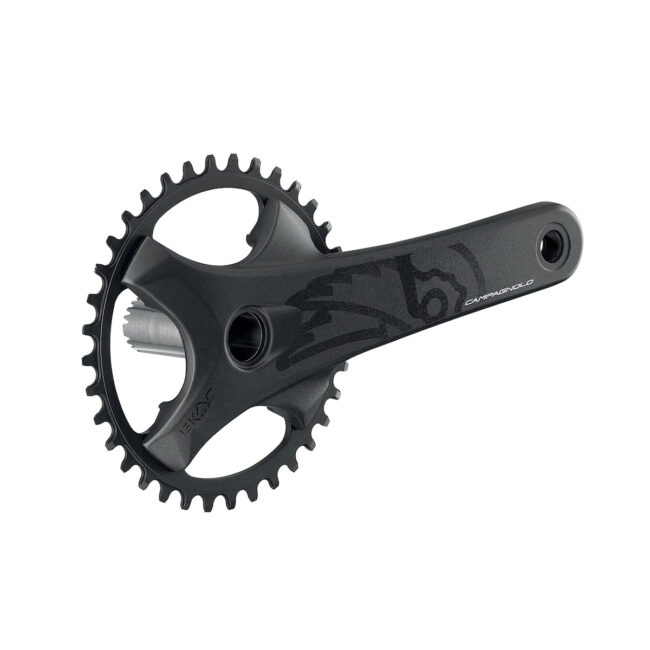
It did look quickly at the Campagnolo Ekar specs and on first blush it looked to me like they didn’t offer as low a gearing as is available with Shimano.
If you can explain a little more what you’re looking for maybe I can help and I can also turn it into a article that readers will likely comment on too.
David’s reply
“Your Trek Checkpoint article hit a lot of the key points. Your experience using a standard setup and then wanting more is where I’m at. I’ve done it before and simply want to find the “more” option before I buy. Knowing how I tend to keep my bikes for years, I’m inclined to want 12-speed or 13-speed to avoid the issue of having to replace a groupset because 11-speed parts are no longer available. My last preference, although I’ve almost given up, is that I would prefer cable-actuated disc brakes versus hydraulic. It just doesn’t make sense to use something that’s hard to fix when touring.
My bike setup and use is all-road, actually, all-path. Tires will change from 32 to 42s depending on the adventure, or local club ride, all of which include climbs in the 15% range. I prefer to spin the gears versus grinding. Have knee issues too. Yes, losing a few kg from the current 88kg (194 pounds) level would help, but having the easiest gears possible is the goal. Straight MTB setup wouldn’t have the high end needed to keep up with the group on the flats. Thus, I think gravel groupsets hold the most promise.
My current SEVEN uses a Chorus triple that I’ve been able to adapt to a 22-50. The cassette uses an 11-32 with a Chorus long cage. Yes, large large is a problem but there isn’t a scenario where I’ve been in the 32 and reached for the chainring shifter by mistake. I’m right-thumb dominant. :-). This groupset started as a 10-speed and a change of shifters, two chainrings and cassette created a well running 11-speed. But these parts are difficult to find now. Hence, it’s not an option for the new Equilibrium Brutalist frame being built: https://en.equilibriumcycleworks.com/gravel.
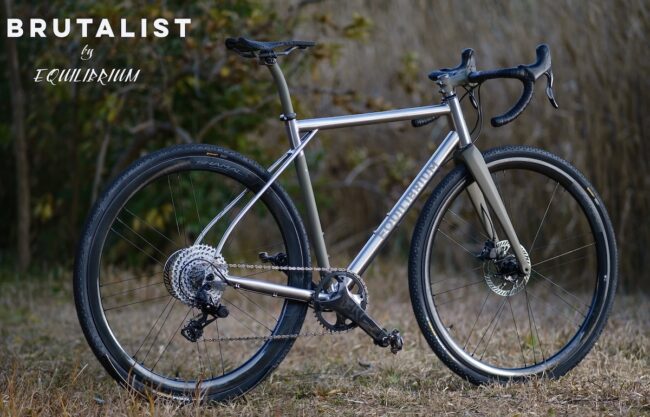
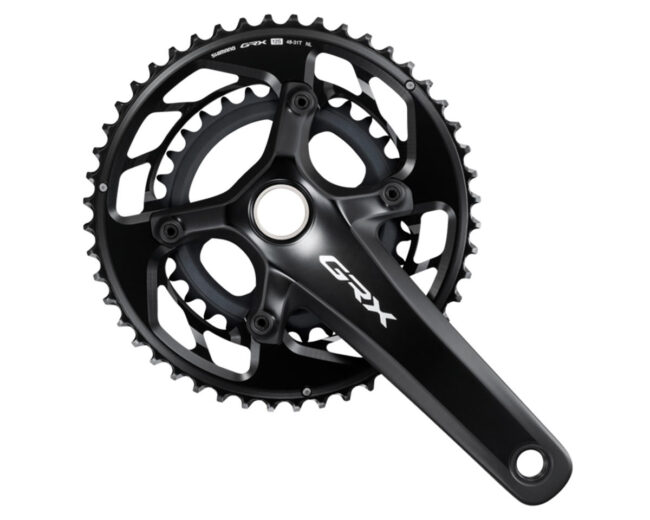
My thoughts are to combine the 2x GRX 600 series with the 1x GRX rear. It doesn’t need to be the 51, but the 48? Cassette should give me the low end I want. To accommodate the mixed setup, I thought the clutched rear derailleur used for the 51 would make sense giving the wiggle room and extra margin of safety around a large large mistake. So far, all the online material I read makes suggestions for 11-speed, but advice for 12-speed sticks to manufacturer’s guidelines.
My alternative setup is a Campagnolo Ekar 13-speed and swap out the chainring when I know a given ride will be more flat or hilly. An aftermarket ring with more or less than standard could be even better. I’ve heard and read comments about the jumps between gears being a concern. But this is usually by roadies that prefer a tight range on their cassette. I don’t have that concern as I almost always shift 2 or more gears at a time. Call it bad technique but it’s a habit developed over 40 years. Doubt it will change. Old dogs…….
I just learned of an 11-speed Ultegra 2x setup using an MTB derailleur. It would also have cable brake levers, allowing me to run cable disc brakes. The only concern is how long will these parts be available?
Long story, but hopefully it explains the rationale for my desire to push the limits on current 12/13-speed offerings.”
My Thoughts
Thanks for explaining more David. What I’ll do is turn our correspondence into this week’s Jim’s Tech Talk column. I’ll add a few thoughts for you and ask readers for theirs.
As you know, the thing about gearing is that what the manufacturers say isn’t always the case. But the only way you can be sure an unusual mix of parts will work adequately is to try everything together. When I was working in bike shops I could pull parts off the shelf and try them out to determine if things worked okay or not. I don’t have that access to a variety of drivetrain components anymore.
But it’s possible some readers might have tried some of the components you’re asking about. So we might hear from them. As just one example, you may have seen in my Trek gearing story that a few readers recommended the Wolf Tooth derailleur hanger extender as a way to make “incompatible” components work just fine. That’s something you might consider. https://www.wolftoothcomponents.com/collections/derailleurlinks
On Replacement Chainrings
Regarding other companies providing replacement chainrings for a Campagnolo Ekar 13-speed group, I wasn’t able to find anything with a quick search. You mentioned TA, the company that used to be a great source. They appear to still be in business but I can’t tell exactly what they’re offering as their site is in French. Wait! I just remembered that Peter White Cycles sells TA. Here’s his site: https://www.peterwhitecycles.com/tach.php.
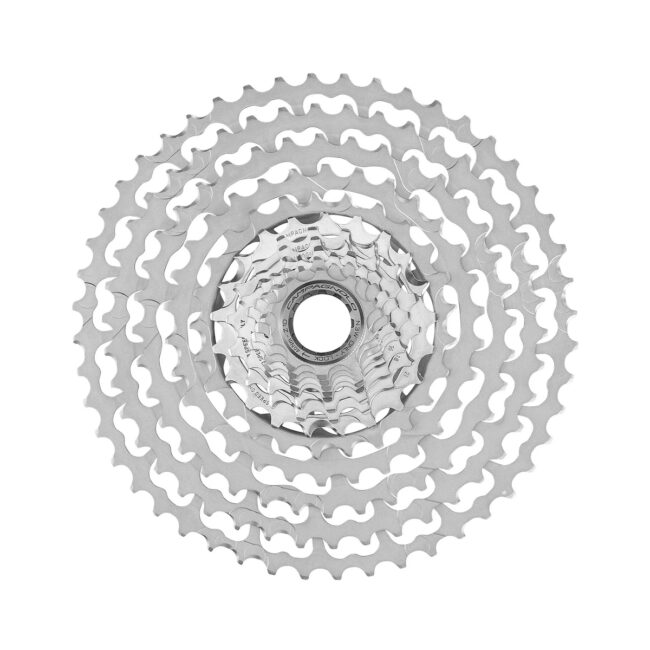
The Ekar 1x crank chainring options go down to a 36 tooth though. Pairing that with their 10-48 13-speed cassette (10-11-12-13-14-16-18-21-25-30-36-42-48), would give you a 20.25 inch lowest gear. That’s not as low as the 18.56-inch gear you have on your SEVEN’s triple drivetrain now with its 22/36, but it’s not that far off.
That’s the beauty of the granny chainring on a triple crankset. It gives you the super lows while also keeping the cassette small, which saves weight – especially compared to the giant cassettes out there on 1xs.
The thing is that there could be a 36-tooth limit on the Campagnolo Ekar due to the bolt hole placement (BCD for Bolt Circle Diameter determines how small you can go). I looked for information on this on Campy’s Ekar pages but only found their disclaimer to please stick with the products they make that are compatible with their drivetrain components.
On Parts Becoming Obsolete
You mentioned the issue of previous drivetrains, such as 10- and 11-speed becoming obsolete. I don’t see this as as big of an issue as it can seem to be. One option is to buy what’s available right now (for example the 11-speed components you’re considering) to have a stock of replacement parts to last as long as you feel you will need it.
But what tends to happen is the parts keep being available and once they start to go away someone steps in and starts making replacements. Ebay is still a good source for finding new old stock parts too. It is true that you can’t find everything you might want to find and especially when you need it. But you can usually get by.
The other point is that judging by what’s happened already, who’s to say that the 13-speed parts you buy today won’t become obsolete sooner or later too?
On Cable-actuated Versus Hydraulic Disc Brakes
My last thought is about hydraulic versus cable-actuated disc brakes. You said you found a Shimano Ultegra 11-speed setup with them, which sounds like a great option – at least if you decide you can find or stock 11-speed replacement parts.
But, there is the argument worth thinking about that hydraulic disc brakes shouldn’t be any more likely to need repairs than cable-actuated ones. The main thing to wear out is the brake pads. Cables are more likely to break (and stretch) than hydraulic lines/hoses, which are made of tougher materials than cable housings.
Still, if you were to suffer a bad crash and break a lever or line or fitting, you would lose fluid and need to replace the broken parts plus bleed the brakes. Not an impossible repair on the road but not easy without the tools, fluid, line and fittings.
That’s it from me. Readers, any advice you have for David will be greatly appreciated by David and any other roadie like him. Thanks!
Jim Langley is RBR’s Technical Editor. A pro mechanic & cycling writer for more than 40 years, he’s the author of Your Home Bicycle Workshop in the RBR eBookstore. Tune in to Jim’s popular YouTube channel for wheel building & bike repair how-to’s. Jim’s also known for his cycling streak that ended in February 2022 with a total of 10,269 consecutive daily rides (28 years, 1 month and 11 days of never missing a ride). Click to read Jim’s full bio.

In my experience drop bar hydraulic brakes are more susceptible to damage than cable brakes. My wife fell and knocked her rear brake lever in-board (11 speed Ultegra). This caused a leak at the hose attachment and loss of rear brakes.
IMO this is a design deficiency and Newer brake levers may be designed to preclude this failure.
On a drop bar touring bike I’d probably use cable actuated disc brakes.
I had Campy Hydraulic Disc brakes which worked great on my 2018 Giant Defy. My next bike was Trek Emonda with all internal cabling. Issue became Campy hydraulic tubing I could not find in length needed. A friend had Cable pull TRP Spyre brakes for sale. It was time to replace old shifters. Saved money on cable pull shifters. I find the TRP’s as good if not better. Simple to maintain, on TRP I can adjust how fast the brakes grab. Self adjusting seem to bind occasionally. I use for road. Off road hydraulic may work better?
Here is a nice, easy way to figure out a system with lower gears. If you go to Performance Bike and search for
“mullet groups,” they offer several complete set-ups (except crank & a couple things, your choice) of SRAM 1x from $$$ Red to $ Rival. I bought the pieces separately and substituted Force AXS power meter dub crank, for ex., since good weight savings over Rival there. I am someone who would NOT open to going to 1x and always a Shimano person. But had an old custom sized Lynskey road frame that was Ultegra and didn’t use much as heavier than my other bikes. After being unable to sell on eBay without giving it away, got a wild hair to rebuild it 1x. With the 40 chainring and 10-52 crank, I have an incredible gear range (as good as my double road bike with 44/28 and 10/36), and the shifting is so easy and trouble free. Although the jumps may be a little bigger, I noticed it makes me a little more open to spinning at higher rpm if there is a choice of a little too hard or a little too easy. And that bike now weighs slightly less than my other bikes, helped by the big cassette looking to be aluminum. Of course, you can just buy these parts at best price or used if you want. I bought most from Performance and when had a question nobody else could help, got an answer in 2 days from the mechanics there! https://www.performancebike.com/sram-rival-axs-mullet-gravel-groupset-black-1-x-12-speed-1052t-sramrivalaxsgrp1-bdl/p1556617
Thanks for the awesome tip Crystal, I had no idea Performance was doing this. Thank you for sharing!
Jim
Why not stick with rim brakes unless you are bicycle touring in the Alps? Who needs the additional complexity, weight, noise, and cost of disc brakes for most riding situations? Call me old school, but aluminum wheels and 2×10 do the job. I won’t go one iota faster on a $10K heavier bike with more gear choices.
Spot on, Michael. I have had disc brakes on my MTB for (too many!) years, but have stayed with rim brakes on my roadies. For a flat-lander like me I see no deficiency to rim brakes (assuming proper maintenance and good rims). Sad to see rim brake options now limited to lower-end groupos, but that’s business.
I’ve “personalized” my gearing on my “Terminal””bike several times, especially as I have aged. My Campy set up might not be the latest and greatest, but I can ride where I want with no problem. I’ve used IRD Cassettes with my Campy crank set/derailleurs and only had to make sure the rear derailleur was long enough to match the cassette. Michael P’s remarks are pertinent, in that updating to whatever is the latest craze is fine if it matters to you, but realize that a 20yr old setup will probably get you where you need to go with no problem and be able to be customized easily with aftermarket replacements/upgrades.
I have a SRAM 46-33 x 10-33. SRAM also makes a 43-30 x 10-36. Is it feasible to swap in the larger cassette and use the 10-36 on a 46-33 chain ring? Would that require changing or adjusting anything else?
According to SRAM that setup is supposed to work fine Mel. See this page: https://www.sram.com/en/life/stories/force-etap-axs-wider-gearing-guide
Whenever you go to a larger cassette, chain length can be an issue so you’ll want to check that. If the chain is still in good condition and it needs lengthening you can add links. Or you could go with a new chain. But maybe your chain will be long enough as is. You might need to fine tune the rear derailleur too, but it shouldn’t take much.
Hope this helps,
Jim
Thanks for the great comments everyone!
Jim