Better Sunscreens Are Finally Coming to the US, But You Don’t Have to Wait

By Lars Hundley
Here’s something most American riders don’t know: for the past two decades, cyclists in Europe, South Korea and Japan have been using sunscreens that are better than anything sold in an American store. Better protection against the UV rays that cause melanoma, and so much nicer to wear that you’ll actually reapply them at the rest stop. American brands couldn’t make anything like them, because the modern UV filters those sunscreens are built on were never added to the FDA’s approved list.
That finally started to change this summer. And in the meantime, the overseas originals are a few clicks away on eBay, where sellers ship them in from Korea and Europe every day. I’ve been ordering one myself.
The news: the United States just approved its first new sunscreen ingredient since the 1990s
In June, the FDA added bemotrizinol to the list of permitted sunscreen ingredients, the first new UV filter allowed in American sunscreens in more than 25 years. Europe approved the same ingredient in 2000, and it’s been a workhorse filter in Asian and European sunscreens ever since.
To be clear about the scope: this is one ingredient, not a floodgate. The other modern filters that make Korean and European sunscreens so good, with names like Uvinul A Plus, Tinosorb M and Mexoryl 400, are still not on the US list. So the foreign favorites in this article remain order-from-overseas products for now. What the approval means is that American-made sunscreens using bemotrizinol are expected to start appearing in late 2026 or 2027, and the maker of Neutrogena and Aveeno has already announced plans. Think of it as the start of catching up, with the good news that you don’t have to wait.
Why this matters more if you ride
Cyclists get extreme sun exposure, and it’s worth pausing on how extreme. When researchers put UV dosimeters on riders at the Tour de Suisse, a single mountain stage delivered more than 17 times the dose that causes sunburn, exceeding international UV exposure limits by up to 30 times. Your Saturday century isn’t a Tour stage, but it keeps you outside through the peak UV hours of late morning and early afternoon, weekend after weekend, all season long. And our habits don’t match our exposure: in a survey of professional cyclists, only 60 percent regularly applied sunscreen before riding, and just 8 percent reapplied on long rides. If the pros skip it, plenty of us do too.
What makes the foreign sunscreens better
Two things: deeper UVA protection, and formulas you’ll actually want to wear.
SPF only measures protection against UVB, the shorter rays that burn you. UVA rays penetrate deeper, drive skin aging, and contribute to melanoma, and they’re sneakier, passing through clouds and never giving you a warning burn. The older filters American formulators are limited to are strong against UVB but comparatively weak against UVA. The Environmental Working Group has found that many top-selling US sunscreens would fail Europe’s UVA standard, which requires UVA protection of at least one third of the labeled SPF. The modern filters used abroad are photostable and cover UVA deeply. That’s the protection gap.
The wearability gap might matter just as much. The new filters produce sunscreens that are light, non-greasy, invisible on the skin and far less likely to sting your eyes when you sweat. Dermatologists repeat the same line for a reason: the best sunscreen is the one you’ll actually use. A formula that feels like nothing at 7 a.m. is a formula you’ll also reapply at mile 60.
American zinc oxide sunscreens, to be fair, do provide real broad-spectrum protection. I know because I’ve used them. At the start of the Dirty Kanza 200 one year, I slathered on a mineral sunscreen to get me through a full day in the Kansas sun, and the white cast was heavy enough that a guy at the start line asked me if I was supposed to be The Joker. Embarrassing! But I also didn’t burn that day, which tells you everything about the trade-off: the old technology works, it just makes you choose between protection and dignity. The new filters don’t ask you to choose.
A word about safety
These filters are new to the US list, but they aren’t new. They’ve been used by millions of people across Europe, Korea, Japan and Australia for 20 years and more, under regulators whose cosmetic ingredient rules are often stricter than ours. My personal take is that a sunscreen considered safe by the European Union and South Korea is plenty safe for me, and I use one on my face, arms and neck whenever I’m going to be outdoors for an extended period. You should weigh that for yourself, and if you have sensitive skin or a condition you manage with a dermatologist, that’s the person to ask. The main potential danger I see would be buying a counterfeit product instead of the real thing.
How to read a foreign sunscreen label
Overseas labels carry ratings American products don’t:
SPF means the same thing everywhere: UVB protection. SPF 50+ is the standard for long days in the sun.
PA++++ is the Korean and Japanese UVA rating. More plus signs mean stronger UVA protection, and four is the top grade. This is the number missing from American labels.
UVA in a circle on European products means the formula meets the EU’s UVA standard.
One more thing to check: the manufacture or expiry date, usually stamped into the crimp at the top of the tube. Buying from overseas sellers means you should confirm you’re getting fresh stock.
Three ways to spot the international version. Several of these brands now sell US-market formulas in near-identical packaging, so check before you buy.
First, look for a Drug Facts panel in the listing photos. That panel always means a US-market formula, because the FDA regulates sunscreen as an over-the-counter drug, and the international versions don’t have one.
Second, read the active ingredients. If you see Diethylamino Hydroxybenzoyl Hexyl Benzoate (Uvinul A Plus), Bis-Ethylhexyloxyphenol Methoxyphenyl Triazine (Tinosorb S) or Ethylhexyl Triazone, you’re looking at the international formula. If the actives are only zinc oxide, titanium dioxide or avobenzone, it’s the US version.
Six international sunscreens, from Korea to Denmark
The usual disclaimer: I’m describing what these products are and what their makers claim. Where I have personal experience, I’ll say so.
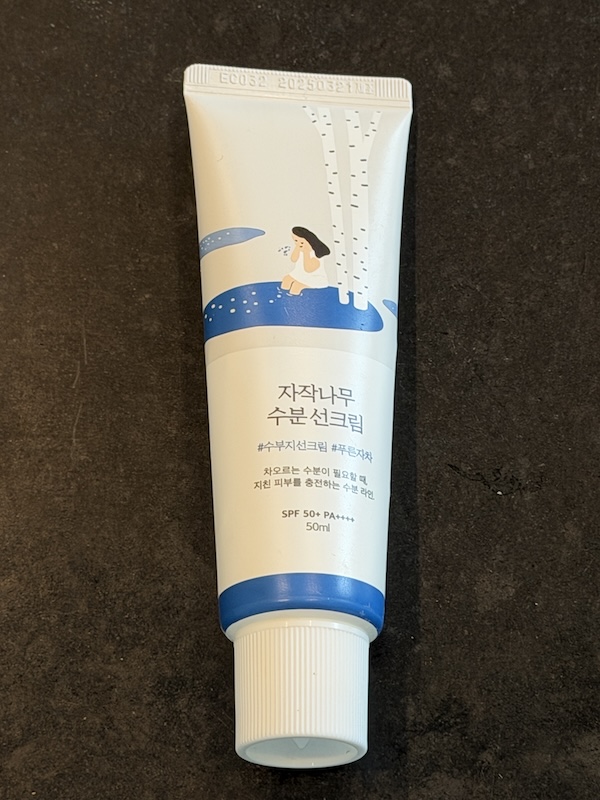
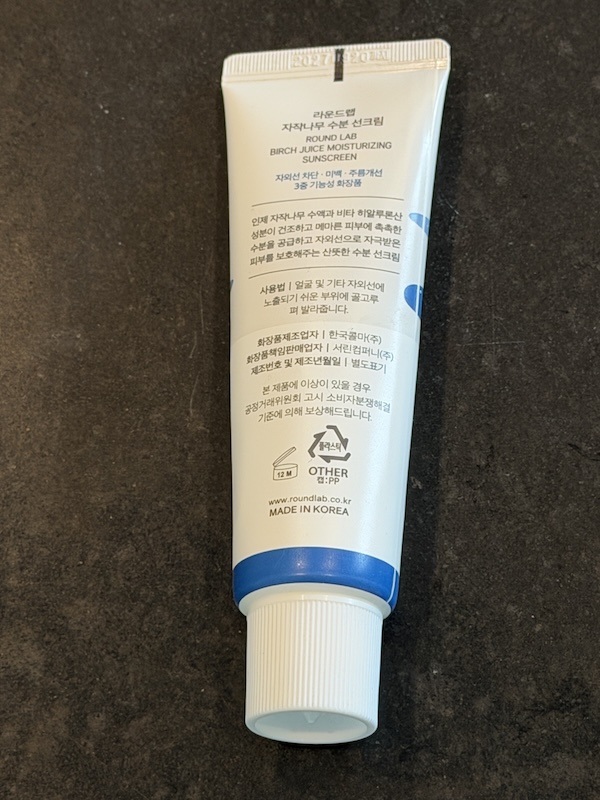
Round Lab Birch Juice Moisturizing Sun Cream (Korea). My personal favorite, and the one I can vouch for. It’s SPF 50+ PA++++, built on four modern filters none of which are in US sunscreens, and in independent lab testing it exceeded its labeled protection for both UVB and UVA. The birch in the name is real birch sap, paired with hyaluronic acid, and it goes on like a light moisturizer. No white cast, no grease, nothing running into your eyes. I put it on when I’m going to be out in the afternoon sun and forget I’m wearing it.
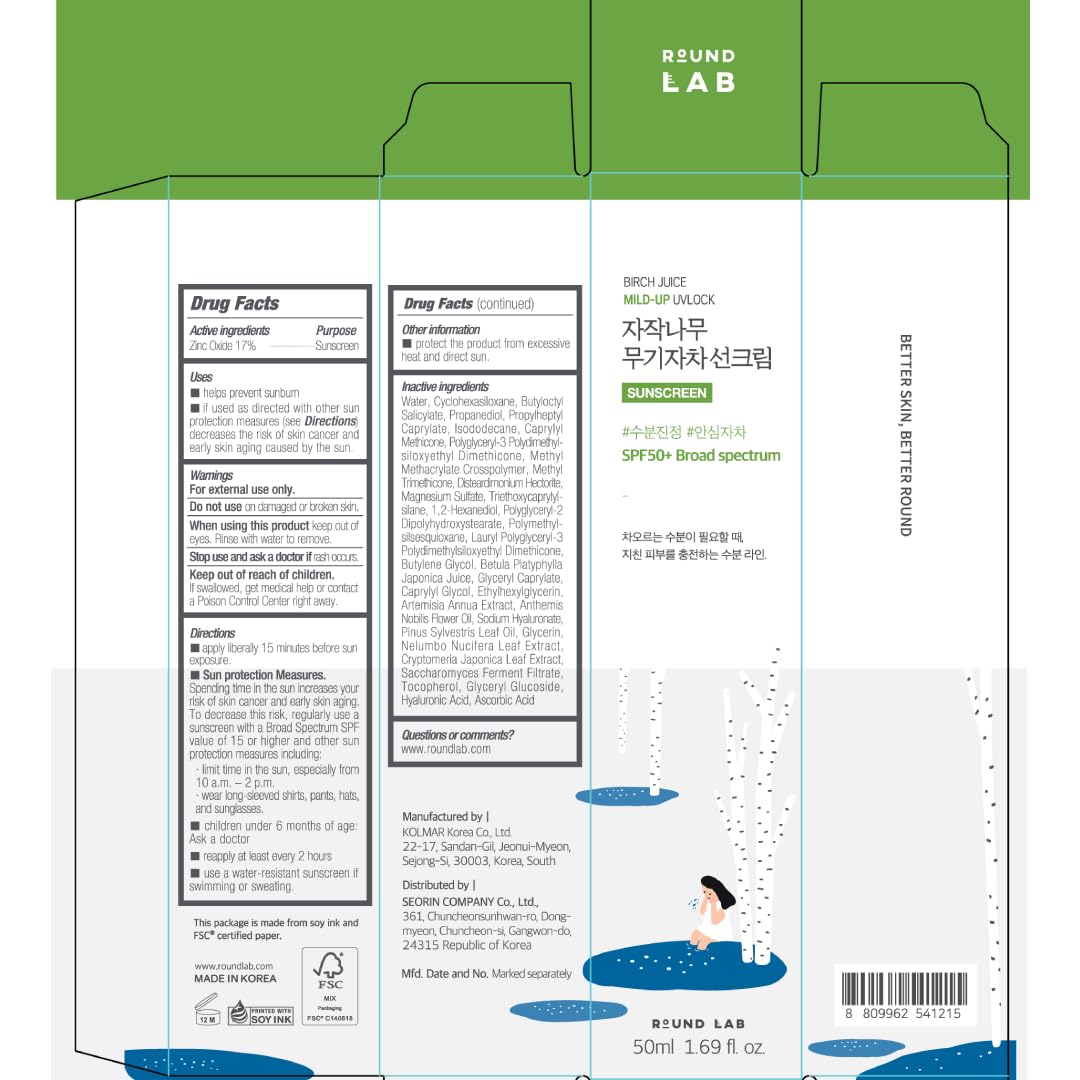
Now the trap. Round Lab also sells English-language versions in American stores under the UVLock name, in near-identical packaging with the same birch tree illustration, and even the same birch sap and hyaluronic acid inside. They are not the same sunscreen. To be sold here legally, the UV protection had to be rebuilt from FDA-permitted ingredients.
The Birch Moisturizing Sunscreen UVLock on Round Lab’s US site runs on avobenzone, homosalate and octisalate, the same older filters as any drugstore sunscreen, at SPF 45 with no PA rating. There’s also a mineral Mild-Up UVLock version built on 17 percent zinc oxide. In other words, the skincare survived the trip across the Pacific, but the filter chemistry didn’t, and the packaging won’t tell you. The tell is the Drug Facts panel: the US versions have one, listing their active ingredients, because the FDA regulates sunscreen as a drug.
The Korean version has no Drug Facts panel at all. If you want the original, buy the tube marked Made in Korea with Korean text on the front. And notice it was never the birch juice that was restricted. Birch sap is just skincare. It’s the UV filter chemistry the FDA hasn’t caught up to. (See the photos of the front and back of the Korean version I use and compare that to the packaging with the US label.)
Beauty of Joseon Relief Sun: Rice + Probiotics (Korea). Probably the most famous Korean sunscreen on the internet, SPF 50+ PA++++, with a similar stack of modern filters and a finish reviewers describe as moist, non-sticky and castless. Like Round Lab, the brand sells a US-compliant version here, so the same label-reading rules apply. One extra caution: its fame has made it one of the most counterfeited sunscreens anywhere, so buy from a seller with a long track record and check the lot number and expiration date printed on the box when it arrives.
Bioré UV Aqua Rich Watery Essence (Japan). Made by Kao, one of Japan’s largest consumer products companies, and a fixture on Japanese best-seller lists for over a decade. It’s SPF 50+ PA++++, and reviewers consistently describe the same thing: a thin, watery gel that absorbs quickly and leaves no visible residue.
Anessa Perfect UV Sunscreen Skin Care Milk (Japan). Shiseido’s flagship sport sunscreen, SPF 50+ PA++++, and arguably the most cycling-specific pick on this list. Anessa claims its protective film actually strengthens when it contacts sweat and water, and resists friction, so it survives a face wipe with a glove. Japanese outdoor athletes treat it as standard equipment for exactly the kind of hot, sweaty hours we put in.
La Roche-Posay Anthelios UVMune 400 (France). The European heavyweight. Its Mexoryl 400 filter is the first to cover ultra-long UVA out to 400 nanometers, the deepest-reaching part of the UV spectrum, and no other filter in the world currently gets there. The La Roche-Posay products on American shelves are different formulas without it, including zinc oxide mineral versions on Amazon that carry similar Anthelios branding, so this one too comes from overseas sellers.
Riemann P20 (Denmark). The oldest product on this list, sold in Europe since the 1980s. P20 combines the modern UVA filter Uvinul A Plus with three older filters (octocrylene, octinoxate and homosalate) in an alcohol-based liquid that dries into a film on the skin. That film is the basis for the company’s distinctive claim: up to 10 hours of protection from a single morning application, with very high water resistance. European long-course triathletes and randonneurs use it for events where reapplying isn’t realistic. Two practical notes: the alcohol base means it goes on more like a liquid than a lotion, and it has a reputation for staining light-colored clothing yellow.
Where this is headed
Over the next year or two, American sunscreens should start closing the gap, one new ingredient at a time. Until then, the originals that riders in Seoul, Tokyo and Paris take for granted are widely available on eBay and importer sites, usually for the price of a couple of espressos, and they’ll protect you better this July than anything at the drugstore.
Do you already ride with an international sunscreen, or have a source you trust for ordering them? Or are you sticking with USA products only? Do you prefer sunscreens from Japan, Korea, Europe? Tell us in the comments.
This article is well written but research should have been done before publishing as to legitimate sites to get these from.
Thank you, good point.
I didn’t really feel comfortable endorsing any specific sources because I have personally only bought mine on eBay.
Maybe some other readers will share any reliable sources they use.
Who do you get it from on e-Bay? Doesn’t have to be an endorsement, just helps us reduce the odds of a scam
I just looked it up and it wasn’t showing any available from the last seller I purchased from, but I would look for a seller in South Korea with enough feedback, like this one.
https://ebay.io/m/r9W0y6
would be nice to know where to get these from the writer’s own experience if not from research
Round Lab, Ulta Beauty, Target, YesStyle, Olive Young US are all legit retailers and carry Round Lab products. Should be similar for Beauty of Joseon products, etc.
I agree with the author that endorsing specific retailers can be problematic and these are not difficult for readers to source.
You can get them on amazon as well, except all of those sources will only have the U.S. version that do not have all the ingredients.
I have skin that burns quite easily and have been using these types of products for quite a while. Here’s how I approach the problem:
Many retailers (now) DO have the Korean/nonUS fomulations, For example, this specific Olive Young US listing us.oliveyoung](https://us.oliveyoung.com/products/UA15185983 looks like the **Korean-market formula**, not a U.S.-reformulated sunscreen.
Here’s why I take this viewpoint:
– Olive Young US is explicitly marketing it as a K-beauty/sun-care item, not as a U.S. OTC sunscreen.
– The product description highlights the Korean-style positioning and does not present it like a standard U.S. sunscreen listing.
– The listing itself warns that ingredient lists can change and tells you to refer to the packaging, which means the authoritative formula is the box/tube you receive, not just the webpage.
(To be completely sure whether it uses the Korean sunscreen filters you are hoping for, check the “Full Ingredients” section on the page or the product packaging once received.)
I personally prefer brand-owned stores or retailers that clearly identify themselves as authorized sellers. On eBay, only buy from sellers with a long sales history, strong feedback, clear product photos, and a return policy. Be wary of prices that are dramatically lower than the same item on trusted retailers.
If you really want to take additional steps to verify authenticity, check batch codes, packaging details and seller location before buying. Places like YesStyle and Olive Young are usually safer than open marketplaces because they function more like curated retail channels. Still, it’s smart to check the exact listing, regional version and ingredient panel since not every item sold there is necessarily the exact same formulation.
To verify a non-US formulation, check the listing for clues like:
* “Korean,” “HK edition,” “JP edition,” etc, or “OTC” labels.
*PA ratings such as PA++++, which are common on Asian-market sunscreens.
*The ingredient list, especially whether it contains newer filters like bemotrizinol or Uvinul-type filters versus U.S.-style OTC actives.
*If the listing says “Broad Spectrum SPF” and does not show PA ratings, that is often a sign it may be a U.S.-market formulation.
Sorry this is so long! I really like these products & while they are tilted towards beauty & playing well with cosmetics, there are some sports formulations, too. I’m also thrilled to see this important topic covered in RBR!
Thanks! This is great information. I hadn’t considered they’d be selling them here just in a way that doesn’t mention sunscreen information at all to avoid all the things related to making sunscreen claims.
The prices are all over the place. How do you know which ones are counterfeit?
Are any of these considered reef safe, so they can also be used on trips to like Hawaii?
Andrew Lessman,procapslabs.com, Sole non-nano zinc oxide sunscreen. hypoallergenic, broad spectrum.
The best. American made.
Thank you for covering this important topic. I’ve had 7 skin cancer lesions removed thus far, including basal, squamous, and pre-melanoma (melanoma in situ). I’ve been using Bioré UV Aqua Rich Watery Essence (Japanese version) from eBay for years on my face, and it’s a fantastic product with regard to ease of application, sun protection, and serving as a protective and somewhat moisturizing face lotion. And it has no scent or chemical taste or smell. It does burn my eyes if I accidentally get some in them. I reapply every 1 to 1.5 hours. The US version of this product is quite different, with a chemical scent and taste, and is not labeled as water-resistant.
I’ll try one or more of the products you mentioned for comparison.
I hope the newer ingredients are proven safe in the long term.