Best Cheap Road Tires: Readers’ Picks

Jim’s Tech Talk
By Jim Langley
In a past column I told you about the cheap folding clincher road tire that I think provides a lot of bang for the buck, Schwalbe’s Lugano II. It’s a standard, not tubeless or tubeless-ready tire. Sometimes I can find them for about $20. If you missed the column, here it is: Schwalbe Luganos – Cheap Road Tires I Like.
Defining “Cheap”
At the end of the story I asked you to recommend your favorite cheap road tires. I hoped to hear about other $30 or less tires. But “cheap” means different things to different roadies, so I expected some recommendations for tires that I might not consider that affordable.
To draw the line somewhere, a maximum of less than $40 feels about right to me. I personally don’t want to pay even that much for training tires, but from last week’s comments it sounds like some roadies are okay with it – even $50. But to me $50 is just too much for a single training tire.
Still, since the goal here is to list tires YOU like, I have included your picks up to about $50 max. I’m going by the average price I find when searching online for the tire.
My Budget Tires Wish List
I’m looking for cheap tires that perform as nicely as high-end models. I want budget tires that last, that resist punctures, that aren’t heavy (not more than about 395 grams), that are easy to install and remove from wheels and I even want them to look good.
The most important criteria in my book, though, is the ride quality. I want tires that are fast; grip well on dry and wet roads; that corner great and that are compliant enough to smooth rough pavement for comfort and control on even the longest rides.
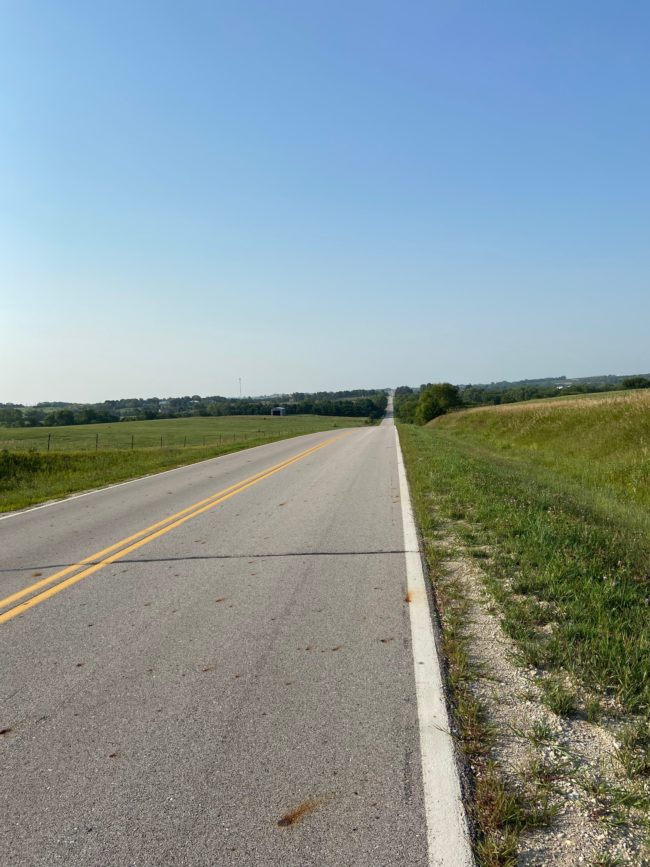
Comfort is something you feel. I think you can hear it, too. I like tires that “sing” when you’re cruising down a nice rolling blacktop ribbon over some lovely countryside – like here in Lincoln, Nebraska where we’re camped as I type this (photo). “Singing” is that ringing noise or hum that righteous rubber makes. Maybe you call it something else, but I bet you enjoy it as much as I do.
I give Schwalbe’s Luganos high marks on all these things.
Tires You Like
Next up are the tires you like. If you didn’t have a chance to comment with your favorite tires last week, please do so this time around. That way, this article and last week’s will be a valuable resource for finding great cheap road rubber for any roadie in need.
First to comment was George Straznitskas, who said “I’ve had Conti Ultra Sports on a training bike for >1,000 miles. No flats, decent ride, less than 30 bucks each on Amazon.”
My feedback: I searched for them on Amazon and found a pair of Continental Ultra Sport II folding tires, currently at $52.99 on Amazon ($26.50 each). Here’s the link: https://amzn.to/3BCrbYK. I could not find individual tires on sale at that low price. But that sounds like a nice choice, George.
Tire buyer tip: After looking online at many tire “stores” it looks like you can often get the best deals by buying pairs of tires.
A reader going by just “C,” wrote: “I have been using Continental Gatorskins and Specialized Armadillos on the winter and training bike.”
My feedback: The focus on both those tires is flat resistance, “C” – and they’ve been popular choices for that for a long time. In my opinion, the ride quality dips slightly as a result. But they are a fine choice for frequent flatters who need extra protection, which you do in the winter. It looks like Gatorskins go for about $36 each, so it’s definitely a cheap contender. Specialized Armadillos or more like $45 a pop, so to me they are not cheap enough.
Jack Hohag said: “After years of experimenting with various brands of tires, (recreational club rides,) I always return to the Continental Grand Prix 4-Season Road Tire. For a few years, the Continental Grand Prix 4000 was the choice; good cornering, smooth ride, but they were vulnerable to punctures, even with their Vectran puncture protection. The Grand Prix 4-Season tire also rolls and corners well, and has been almost bullet-proof for me. They also won’t break your bank; often on sale for under $50.” Another reader, Michael Grimes agreed.
My feedback: The 4 Seasons tires have a great rep for durability and decent performance, Jack – they’re just a bit pricey to make the cut.
NJgreyhead opined: “I ride training tires exclusively and have had very good luck (no f-l-a-t-s) on Maxxis Re-Fuse clinchers.”
My feedback: That’s a new one for me and at just a wee bit over $40 it almost makes the cheap tire cut. Here it is on Amazon where it gets great reviews: https://amzn.to/3zFZoVl.
“John” has another favorite. He commented, “Agree 100% that training tires should be reasonable cost. It is NOT just tread wear cost/mile but also the very real risk of a road hazard destroying a tire early in its tread life. I run Conti GP’s on my ‘event’ bike, but too $$$ for everyday use IMHO (road hazard $$ loss after just 200 miles of use is not my idea of a good day!).
My fav training clincher had been the prior generation Vittoria Rubino Pro Slick (excellent durability and typically got 3-4 k miles on rear as a 175# rider on typically bad Midwest chip/seal roads) and bought several when they were being closed-out. I’m now down to my last ones & looking for new go-to trainer. Not sold on Vittoria’s RP redesign. NOT a fan of Conti’s UltraSport (puncture-prone) or their Gatorskins ($$$ & too slow rolling though very durable). May give the Luganos a try.”
Ken Vining also likes this tire. He wrote, “I moved from model to model over the years, but I too bought a bunch or Rubino Pro Slicks a couple of years ago, making this about 6 years as my go-to tire. Great price, rarely issues with flats, no construction issues, and good mileage. Also, I purchased tubeless-ready rims a couple of years ago but haven’t made that jump yet — I like the Rubino Pro Slick too much.”
My feedback: Over the years I have ridden a few different Vittoria tires including the Rubino Pro Slicks and I agree that they are really nice tires. If you’re looking for them, they still might be available on eBay.com – where bike shops and individuals often offer previous or old model year items.
Final Word
Lastly, I’d like to close with some nice tire tips from frequent contributor Kerry Irons. He said,
“I regularly get around 4,000 miles out of a Coni GP 5000 rear tire. That’s to the point of the casing just about to show (as measured by the Conti “wear dots”).
Tire wear is a function of power transfer through the tire, so a more powerful rider will wear out tires faster.. Front tires DO NOT wear out, if your definition of wearing out is rubber loss. I have put over 6,000 miles on a front tire with no measurable rubber loss. A worn tire typically loses 30 grams or more before it’s done, obviously dependent on how thick the tread is.”
Thanks everyone for your tire recommendations and tips! If you’ve got a favorite cheap tire that wasn’t mentioned, please comment with the brand, model and current price.
Jim Langley is RBR’s Technical Editor. A pro mechanic & cycling writer for more than 40 years, he’s the author of Your Home Bicycle Workshop in the RBR eBookstore. Tune in to Jim’s popular YouTube channel for wheel building & bike repair how-to’s. Jim’s also known for his cycling streak that ended in February 2022 with a total of 10,269 consecutive daily rides (28 years, 1 month and 11 days of never missing a ride). Click to read Jim’s full bio.
I ride 2500 miles a year on my best bike. I don’t ride cheap tires. Like with beer, life’s too short for cheap or uncomfortable tires, which means no Gatorskins which give a very harsh ride. I ride Rene Herse tires and replace the rear once a year. I do ride Gatorskins on my commuter bikes where transportation alone is the goal. I NEVER buy tires (or anything) from Amazon, preferring my LBS whenever possible. RBR used to promote supporting local bike shops but it seems that has changed.
Thanks for commenting, Doug. Regarding supporting bike shops RBR and I have always and will always support bike shops. Please note that many Amazon and eBay sellers ARE bike shops.
When recommending products it’s assumed you’ll check with your LBS first. Yet everyone does not have a LBS unfortunately.
Thanks again,
Jim
Jim, here’s your next article … On a group ride, should the group stop and wait for a tire change from ‘that guy’ that rides his race-day ultra-light tires then easily flats?
Great idea!
Ha, ha – good idea, Rick ?
The Continental Lugano is an attractively priced tire. However, in the bike shop I have seen many original equipment Lugano tires with tread separation early in their service life. I could not recommend them. I would recommend tires from Serfas. The tires offered under this brand can be had for the price of the Lugano with better flat resistance, approaching the Gatorskins.
Thanks for recommending the Serfas tires, Tom. I did a quick search and found some right away for under $20 here: https://amzn.to/37juWEB
Thanks again,
Jim
I ride Continentals GP4000. Buy them on sale. Just had to replace my front one after 10,000 miles. Yep, I wasn’t sure either, so I went back and checked my records. 10,000 miles.
Got 10,000 miles on the previous front one, too.
This last one had a cut in the tread at about 5,000, so I booted it with Duct Tape. Got another 5,000 to get to the 10,000 mark.
My rear Continentals get about 3500 to 4000 miles per tire.
So I guess you could count these as cheap tires, since the fronts last 4 times as long as usual $20 tires.
I’ll stick with Panaracer Paselas.
Add me to the list. Serve this old man well.
My favorite cheap tires are the ones I buy that cost $75 and up a tire that I get on closeout for around $25 a tire, and I will usually stock up on a couple of pairs when those great deals come along.
I had a pair of Conti 4000s tires, and never came close to 10,000 miles, got about 5,000 on the front, but around 4,000 on the rear using 25c tires. The only tires I’ve ever had or seen that can last 10,000 miles and maybe a bit more are touring tires. I have a set of Schwalbe Almotion tires that have 5,000 miles on them, and they’re not even half worn yet, and that’s using them with a load which wears out tires faster. There are even longer lasting Schwalbe touring tires than the ones I got, but they don’t roll as fast and are heavier, so I decided against that type of touring tire. But road bike tire wise, I never had a tire get more than 6,000 miles, and in 50 plus years of riding I tried a lot of different brands. The road tire that did go 6,000 miles was a Specialized Armadillo All Condition Pro, highly flat resistant, very thick rubber tread, but was harsh and heavy riding, never went back to them once I left goathead city.
After reading your article, I went on Amazon and Google. Found these 28’s on sale for $16.99 at BikeInn!
I’ve found the best way to save money on tires is actually to order them from European dealers like Bike24.com. In many cases, we pay around double what the same tires sell for over there, so even with the extra shipping, it’s possible to save a fair amount as long as you’re not buying just one tire. Continental is the worst offender in this regard, but unfortunately, it appears that they’ve stopped shipping of tires from Europe to the US. Schwable tires are still available at great prices, so once I wear out my last Conti, I’ll be switching brands.
When I wear out a rear tire, I always put the new tire on the front and move the front tire to the rear. The tire coming off the front will have very little wear. This way I never have a questionable tire on the front and I just need to keep an eye on the rear tire.
Same here.
The article on cheap tires was helpful but I think one element might have been missing which can make a difference, size. Side walls on 700X25 are certainly shorter than on700X38 which opens up the possibility for more side flats. Add to that more surface on a wider tire the same might apply. I’ve not tested this thought so I speak without any empirical proof or data.
Thanks for the article.
Mike
No.
Hi! Inventor of dynamic modeling for pharmacokinetics here.
The math is wrong.
It’s Wow! Wrong! for ebikes, but it’s just wrong. You don’t want an absolute number for cheap, you want cost per mile. This is sorta true if you bicycle 2000 miles a year but Wow! is it true once you start going over 7000 miles a year. The pair that came on the bike went from very knobby off road to sorta bald by 5000 which is a bit disappointing. Some thoughts.
Why does a tire on a > 1 ton vehicle last 10x longer than a bike tire? I only get flats on the back tire holding the weight. 4 out of 4.
I had my first flat on a Tannus it was after 2400 miles and I had flats every 800 mile x 3 without Tannus. But the numbers are not robust–maybe I did something really stupid to get the flat on the Tannus?
Is there a 200 dollar tire that goes 10,000 miles and is as likely to get a flat as my car tires (every 25,000). Probably not. The road is probably > 10 times cleaner than the shoulder.. But if this tire went ten times further than a 20 dollar tire it would clearly be far better. AND if you put any price on hassle, then, you’d never buy a cheap tire. So the real equation is decrease in aggravation per dollar.
Here is the model
lame ride which is a scalar. A great ride doesn’t change cost. the worst ride is 10 times the cost to me YMMV. Yeah, the ride equivalent of riding on a flat all the time I’d pay 10 times more to not have.
total cost which includes the labor cost of changing tires and flats ALSO the cost of having to use the car which the Federal Government costs out at 0.75 cents per mile.
(lameride(1 to 10)) x [cost + labor + MileStuckDrivingx0.75] x [1/miles I get on bike]
my current tires are a bit lame, they go flat every 2000 miles costing 70 bucks and making me drive another 200 miles and are replaced about every 4000 miles. they are 35 bucks.
(1.1) x (35 + 70 + 15) divided by 4000 miles or 132/4000 = 3.3 cents per mile good,
But the real savings is from super good tires without aggravation.
(1) x (70bucktires)/tenthousandmiles is under a penny per mile if they go ten thousand miles and never go flat.
But what’s the Cmax and volume of distribution?