
Do You Need to Bed in New Disc Brakes?

Jim’s Tech Talk
By Jim Langley
Before we hop onto the saddle here, I want to thank everyone who offered help to David – there’s been a steady stream of comments coming in since last week! David wrote in asking for suggestions for his next bike. He had a very specific wish list and you gave him excellent tips and recommendations. If you missed the article, here it is with all your great comments at the bottom: Can You Help David in His Quest for a New “Analog” Bike.
Andy’s question
Today’s topic comes from a reader named Andy. His question is:
“I am getting a new Specialized road bike with SRAM brakes. I have been given various advice concerning “breaking in” new disc brakes. What are your thoughts on this? Also, I live in Ohio and it’s cold already; would cold weather have any effect on how you break in the brakes?”
My Reply
In case you don’t know what Andy means by “breaking in” new disc brakes, another term you might have heard for the procedure is to “bed in” the brakes. Or you say you’re “bedding in” disc brakes. This term is used for bicycles and motor vehicles.
The process of bedding-in heats up the brake components and transfers some of the material from the brake pads (which are inside the brake caliper) and transfers it to the rotor (which is attached to the wheel). This makes for better operating brakes and can help prevent brake squeaking too.
I did a little Googling to answer if the weather affects the process and what I learned is that unless it’s very cold, the bedding in process should warm up the brake parts sufficiently to get the desired result.
Did the bike shop already do the job?
Since you said that you’re getting a new Specialized road bike, there’s a chance that the bedding in process was already done. I don’t think that the factory would do it, but it’s possible that the bicycle shop mechanic who assembled the bike did.
If the bike’s coming from a bicycle shop you might just ask if they did it already. If not, they might be happy to do it along with the pre-flight tune up most shops do to new bikes, before handing the bike over to a customer (or after assembling the bike if it isn’t a bike coming off the salesfloor).
If you get the bike and you know that the brakes haven’t been bedded in, the process is pretty straight forward, a series of accelerations and stops. Here’s SRAM’s video showing how it’s done:
Do all bike companies recommend bedding in disc brakes?
I shared SRAM’s step-by-step above so we know they recommend it. It was relatively easy to find Shimano’s instructions too, which are below. I also learned that Campagnolo and TRP recommend it too.
How to Perform Bed in by Shimano
To optimize the performance of the brake pads and disc brake rotor, perform the bed in procedure as explained in the steps below:
- Ride your bicycle in a flat and safe area without obstacles and accelerate to a moderate speed.
- Operate the brake lever until you slow down to walking speed. Do this only with one brake lever at a time. Be careful when performing this procedure. Always operate your brake lever with moderation, especially when you bed in the front brake.
- Repeat steps 1 and 2 for at least 20 times for both the front and rear brakes.
While repeating this process, the braking force will increase.
A Bedding in Machine
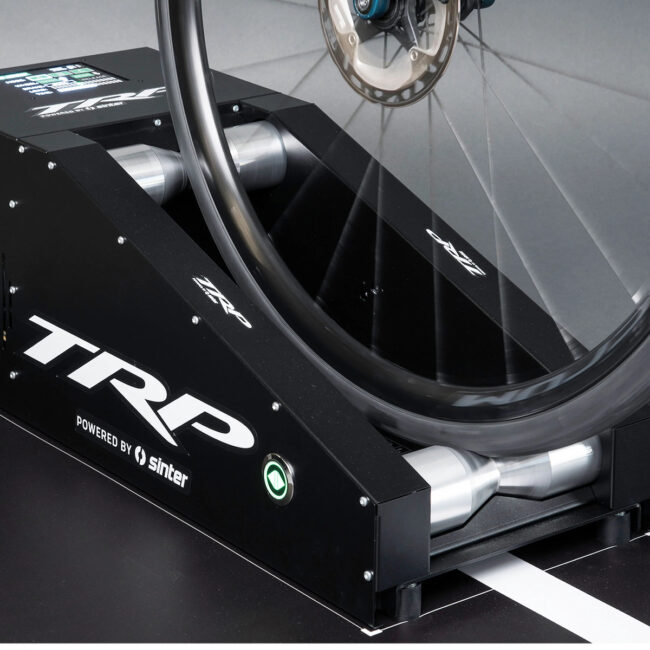
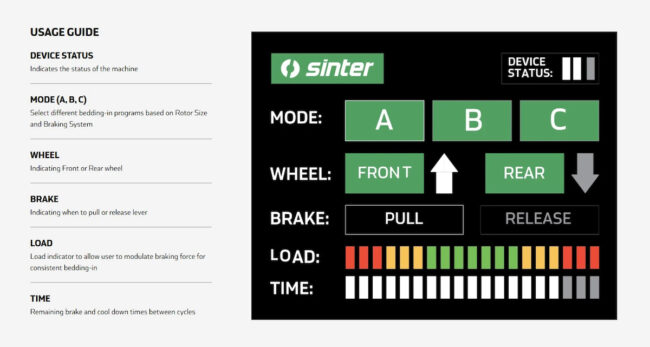
As I was searching for bedding in procedures, I spotted that TRP, another brake maker, has come out with their Sinter Smart Bedding Machine. At a price of $2,750, it’s probably designed for shop use but I thought you’d enjoy seeing it. Here’s a photo and a chart to give you an idea how it works.
Summing up
I hope this answers your questions Andy and that you have the shop bed your brakes in (maybe they have the TRP machine?) or that now can take care of it yourself properly. Readers, if you have more advice for Andy or about bedding in different brands of brakes, please share your tips in a comment. Thanks again for all the help last week!
Jim Langley is RBR’s Technical Editor. A pro mechanic & cycling writer for more than 40 years, he’s the author of Your Home Bicycle Workshop in the RBR eBookstore. Tune in to Jim’s popular YouTube channel for wheel building & bike repair how-to’s. Jim’s also known for his cycling streak that ended in February 2022 with a total of 10,269 consecutive daily rides (28 years, 1 month and 11 days of never missing a ride). Click to read Jim’s full bio.

Is bedding required if replacing only brake pads?
No, only when replacing the rotors do y0u bed in the brakes.
When I bought my last bike, which had disc brakes, the shop told me to do 10-20 accelerations/hard stops before going for a ride. I guess they were indirectly telling me to bed the brakes!
Great video on how to bed in disk brakes. I seriously doubt though that a bike shop will do all of that, but a person needs to ask the shop if they did bed in the brakes and how did they do it. If they reply by stopping a couple of times, or they sound ignorant about it, well then you need to take the bike somewhere and do as this video shows.
It is NOT necessary to bed in the brakes IF you are ONLY replacing the pads; only when replacing the rotor is it necessary to bed in the brakes.