How To Run a Top-Notch All-Volunteer Non-Profit Bicycle Shop

By Stan Purdum
For a few years while I lived in New Jersey, it was my privilege to work as a volunteer mechanic in a non-profit shop called the Bike Exchange (BEX) where we refurbished used bicycles and sold them at modest prices to benefit the Plainfield, NJ, branch of Boys and Girls Clubs of America. That organization provides young people with social, enrichment and recreational activities during non-school hours. They focus on improving youth outcomes in education, developing social and emotional competency and leadership skills, as well as teaching youth to develop healthy lifestyles through physical activity and nutrition.
At the time, I wrote about the value of that experience. Later, I also wrote about the demise of that shop.
As we were shuttering our shop, we arranged to give our remaining inventory of bikes and tools to another Bike Exchange operation, one that serves the Trenton, NJ, area. Getting to know about that shop as compared to ours was an eye-opening vision of what an all-volunteer run non-profit bike shop, at its best, could be.
Recently, I had a chance to speak with Ira Saltiel, the volunteer director of that BEX shop. I first met Ira in New Jersey when I was distributing some copies of one of my books to some area bike clubs. For the Princeton Free Wheelers, I found that Ira was the person to speak to. He welcomed both me and my books and invited me to attend a ride with the club, which I did. I soon discovered that you couldn’t be around Ira for long without hearing something about the BEX he directs, of which he is rightly proud. Ira is quick to praise the whole crew of volunteers for the shop’s operational success, but it’s clear to me that his passion for the project is an important contribution to that outcome. So I interviewed Ira for RBR:
SP: What’s the elevator speech synopsis of your BEX?
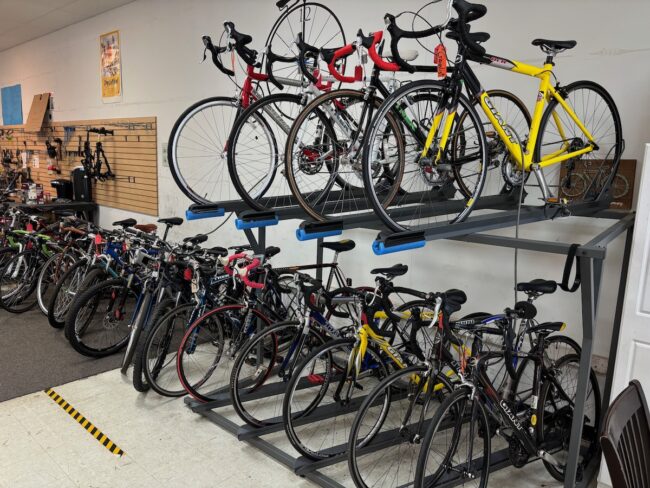
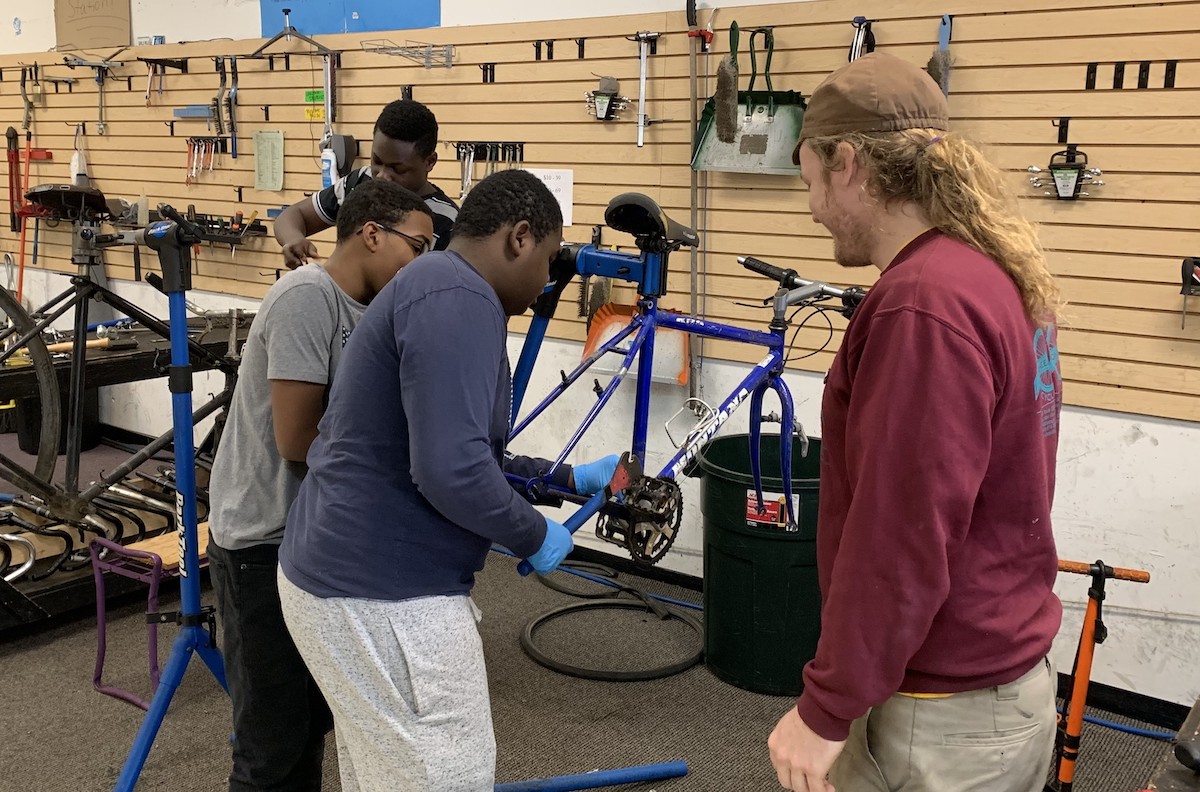
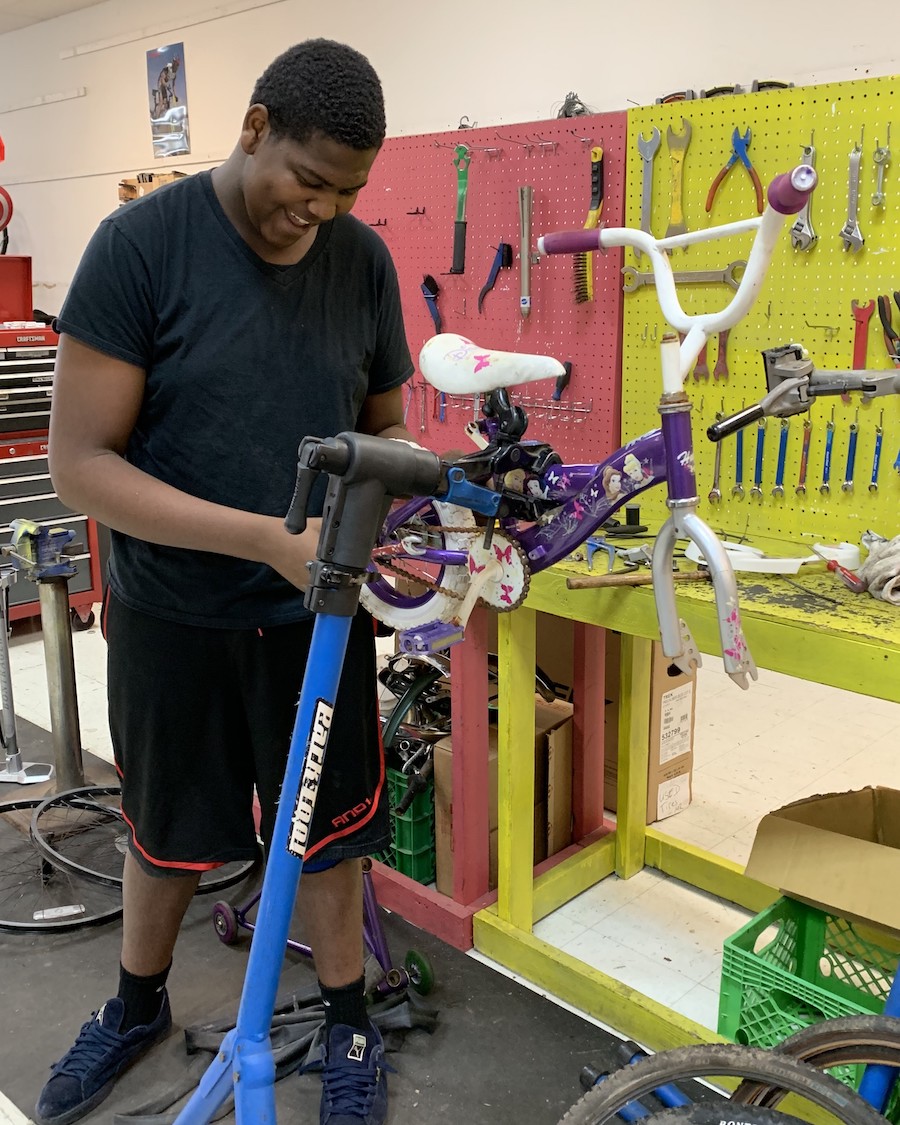
IS: The Boys and Girls Club Bike Exchange is an all-volunteer run organization that collects, refurbishes and sells bikes at moderate prices to the local community in Trenton, NJ. Bikes are sold at our store in Ewing, NJ, on the Trenton border. Since its founding in 2009, we’ve sold over 27,000 bikes and raised over $1,700,000 (after expenses) for the Greater Mercer County Boys and Girls Club. We also donate 300-400 bikes annually to deserving youth and adults throughout New Jersey. And we train interns from the Boys and Girls Club in bike repair and other aspects of running the store.
SP: Those are impressive numbers. How many volunteers do you have to rehab that many bikes, operate the shop and train interns?
IS: It takes about 50 volunteers to run the whole program. They come from all walks of life; most are avid cyclists, and many are members of a local bike club, the Princeton Free Wheelers. Tasks include bike repair, managing, selling, planning bike drives, organizing parts and accessories, transporting bikes, harvesting parts from unrepairable bikes, ordering accessories and maintaining our internal reports.
SP: How did the BEX come to be?
IS: The founding director was Russ White. Russ retired from a successful career and started a regular bike shop in Yardley, Pa. He noticed that many customers wanted to know how to get rid of or donate their old bikes, or bikes they no longer use. Except for recycling centers, there was no place in the area to donate bikes at that time. That inspired Russ to research ways to rehab and sell bikes to support a local charity.
In 2009, he approached the Boys and Girls Club. They liked the idea, and they worked together to develop the concept. Previously empty space in a local mall was secured, paying rent below market rate. Russ approached the Princeton Free Wheelers, which had 700 members, asking for volunteers. About 20 signed up and they were off and running. Very little startup money was required as the project was always supported via cash flow. It was successful from day one.
I took over from Russ eight years ago. Most volunteers still come from the bike club, but others are customers who are impressed with the operation and mission and ask how to volunteer. I also encourage people I cycle with to check out the shop and possibly volunteer. Some new volunteers just come a few times and don’t return, but most stay and work regularly. Volunteers have become friends and look forward to working in the shop. It’s become as much a social experience as a “job.”
The shop has evolved and become more efficient over time. For years, we allowed customers to rummage through the parts area and purchase parts. Volunteer Jim Richardson realized this was not productive and persuaded us to reserve the parts — which Jim has now neatly organized — to use for repairing bikes. This made a huge impact on our ability to repair bikes efficiently and attract a repair crew. Hundreds of parts are neatly organized and readily accessible; all are harvested from bikes that aren’t worth fixing.
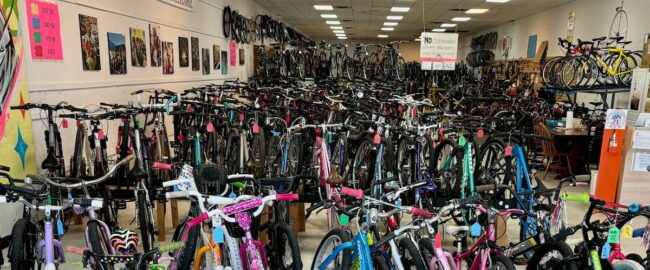
SP: Where do you get your inventory of bikes? Are they mostly from individuals?
IS: Some are, but many are collected through bike drives — done by local companies, houses of worship, community organizations and even the local park system. Others are given to us by local recycling centers and collected by area bike shops that support our program. All these bikes are kept out of scrap yards and given new life while raising funds for the Boys and Girls Club.
All revenue goes directly to the Boys and Girls Club, but we keep detailed records of sales and donations. We seldom purchase parts because of the extensive inventory of parts harvested from bikes. Cables, handlebar tape, cable ends and brake pads are the few exceptions.
SP: So interns obviously benefit by learning to repair their own bikes, but how else?
IS: One former intern — an exceptional young man who is well versed in all aspects of the Bike Exchange — now oversees the intern program and works in the bike department of a major sporting goods store. Another is the chief mechanic at a local bike shop.
Several of our volunteers also train inmates at a local Department of Corrections facility. The department appreciates the work we do for them and has dedicated space for us to store several hundred bikes in their facility. At any point in time, we have an inventory of 500 to 700 bikes stored in the shop and at the corrections facility.
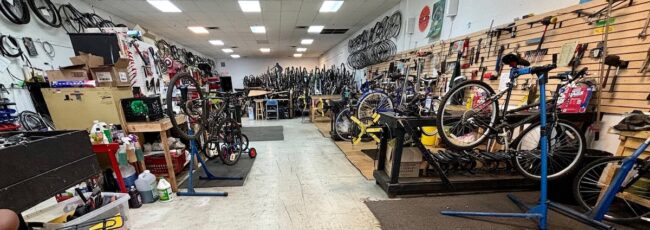
SP: In addition to rehabbing bikes, do you also accept walk-in repairs? At our Plainfield shop, we did, but with seldom more than two workers in the shop, I often saw that handling the repairs, whether we worked on them immediately or accepted them to work on later, delayed us from the task of getting the donated bikes rehabbed. Thus, we’d have potential buyers come in and we’d have nothing in the type of bike they wanted ready to sell. Since we were the only bike shop in the town, we were providing a needed service for the walk-ins, but it made it hard to stay on our main mission.
IS: We do not do repairs for similar reasons, and we don’t have the space to store them. We do offer a one-month warranty; the customer can return the bike for any reason for a full refund, repair or exchange. It gives the customers confidence in their purchase. Fewer than 1% of the bikes are returned.
We refer repair requests to local bike shops who support us or to a Trenton program called the “Community Outreach Garage” which will do repairs for little or no cost. It’s run by one of our volunteers.

SP: What do you consider to be the best reward when volunteering for BEX?
IS: There is no greater joy than watching a child receive a new bike. One day, I came in with my wife off-hours to check on things (we’re only open for sales 12 hours weekly). A woman knocked on the door — it was her son’s birthday, and he wanted a bike. We let her in, and she bought a very nice bike for her son. His smile and joy said it all. My wife just smiled and realized why we enjoy working at the shop.
During covid, we were approached by a Trenton High School teacher who asked if we could help some students get bikes. He explained that schools were generally closed but were open for children whose parents were first-line workers. The school buses were not operating, and they had no easy way to get to school. We arranged for over 30 students to come in, one dozen at a time, to learn bike maintenance and safety. After the lesson they were taken to the Boys and Girls Club Facility to check out the education programs, after which they returned to our shop to receive a bike, helmet and lock at no cost. (The bikes were paid for by donations from our volunteers.) The volunteers who helped said they’d never seen such happy and appreciative kids. It was a very rewarding experience.
The teacher followed up with this message: “I interviewed one of the students this morning who was the benefactor of a Boys and Girls Club Bike Exchange bike from a grateful donor to a wonderful user. He said, ‘My bike means the world to me, it has saved my life many times over. As I ride my bike to school and work, and if I see any danger or problems in the near distance because I’m on my bike, it’s so easy for me to reroute and go around the problem and get back on track without losing any time. I think God for the Boys and Girls Club Bike Exchange and their wonderful gift of freedom, transportation.”
SP: What suggestions would you offer to someone wanting to start a BEX-type program in their area?
IS: If possible, connect with a local organization to be the backbone of the program and provide a place for revenue to go. Secure enough space to house a repair shop and sales area. Seek volunteers who are interested in cycling and/or who want a way to give back to the community. Rotary Clubs, Lions Clubs, etc. are good places to start. Spread the word about volunteer opportunities, the mission and requests for bikes. It’s surprising how many bikes are available locally to be donated. Social media is a great way to advertise your needs.
SP: What about training the first volunteers to be bike mechanics? I can imagine having willing volunteers who have no idea how to adjust a derailleur.
IS: In our case, most of the first volunteers had a working knowledge of bike repairs. They were all long-time cyclists and had learned bike mechanics by maintaining their own bikes. Those who were adept at repairs trained the others, and subsequent volunteers learned from them. These days, we periodically offer classes to teach rudimentary aspects of repairing bikes and review the common bike repair tools. Most of the training is done “on the job” with our experienced repair crew helping the newcomers.
Stan Purdum has ridden several long-distance bike trips, including an across-America ride recounted in his book Roll Around Heaven All Day, and a trek on U.S. 62, from Niagara Falls, New York, to El Paso, Texas, the subject of his book Playing in Traffic. Stan, a freelance writer and editor, lives in Ohio. See more at www.StanPurdum.com.

Great article! If you live in the Denver, CO area, check out Hope Cycle. It is a similar program, but without a connection to another organization.
I am similarly involved with my community bike shop BikeVentura (California). We are not fully volunteer driven and the biggest challenge is revenue to pay operations/staff. We sell refurbished bikes as well as provide bike ed at schools during the school year (among other smaller revenue streams). We have a very small staff of employees, and no Executive Director at the moment. An ED would certainly fundraise but I would love to know how to better revise our model to increase / stabilize revenue so we can be open longer and have additional staff.
Great Article. Thank you.
I visited this shop about five years ago. I was duly impressed. It is brilliantly managed.
Hello Nina,
Just read your comment below his article. Did you get contacted by someone from the BEX team or others regarding your points?
For some years, I”ve been engaged with the BEX and worekd at other bike shops. If you are interested in a direct exchange with me feel free to get in touch. If it’s not possible via this channel, you should be able to find me on linkedin with my name (the one having not worked at a bank).
Thanks