
Don’t Try This TPU Tube Sealant Hack That Failed Me

By Lars Hundley
Seems like there’s a trend of road riders (and maybe even a few gravel riders) giving up on tubeless. The high pressures and small air volume of road tires mean a puncture can lose too much air before the sealant has time to work. And those aren’t the only headaches. There’s the problem of blowing a tire off the rim while trying to seat it, struggling to get it to seal in the first place, spraying sticky sealant all over your bike and anyone drafting you when you get a puncture, or even discovering too late that the sealant inside your tire has long since dried up and won’t seal at all. Mountain bikers with their high-volume 29er tires and lower pressures have a much easier time getting a quick seal, but on the road these problems can be enough to make you rethink the whole setup.
One of the relatively newer alternatives is the TPU tube. They’re lighter than latex, more puncture resistant than both butyl and latex, and they pack down small enough to carry easily as a spare. Initially they were very expensive per tube, but there are now a lot of low cost TPU brands out there. I switched back from road tubeless to TPU tubes about three years ago and have been happy with the decision. They’ve been light, fast, and reliable over more than 10,000 miles. And easy to change if I do get a flat.
Recently, when I saw a TPU tube with a removable Presta valve core, I started wondering if I could combine the benefits of TPU with the extra flat protection of sealant. The TPU tube is so light that adding a bit of sealant might still keep it near the weight of a butyl tube, but with significantly better chances of preventing a flat on a ride.
I bought some new RideNow TPU tubes, “Race Formula” 700×28–38C, which have a removable Presta valve core. That’s rare for TPU tubes, and I have searched and searched. They also have a metal valve instead of the typical plastic valve that never seems to hold up over time. I figured this combination would make adding sealant easy.
It turns out that I also had a container of Flatout sealant, which a reader had recently recommended as a non-latex sealant option. Typical latex sealant will not seal TPU, if I understand correctly. My plan was to inject Flatout into the RideNow tube for extra flat protection without going tubeless.
Step one didn’t go well. Even with the core removed, something solid halfway down the 65mm valve stopped my thin allen wrench cold. It felt like a molded plug where the upper metal stem joins the lower plastic portion. I thought the sealant might just flow around it, but it didn’t.
I tried squeezing Flatout in with a Stan’s injector. Instead of going into the tube, the sealant built up back pressure and broke the injector’s plastic tube right off the syringe. Now I had sealant in the valve and maybe a little in the tube, but not enough to do anything useful.
I tried flushing it out and even blasting it clear with a floor pump. No luck. The valve was completely clogged, and no air would go in. The brand-new TPU tube was toast before it ever touched a rim.
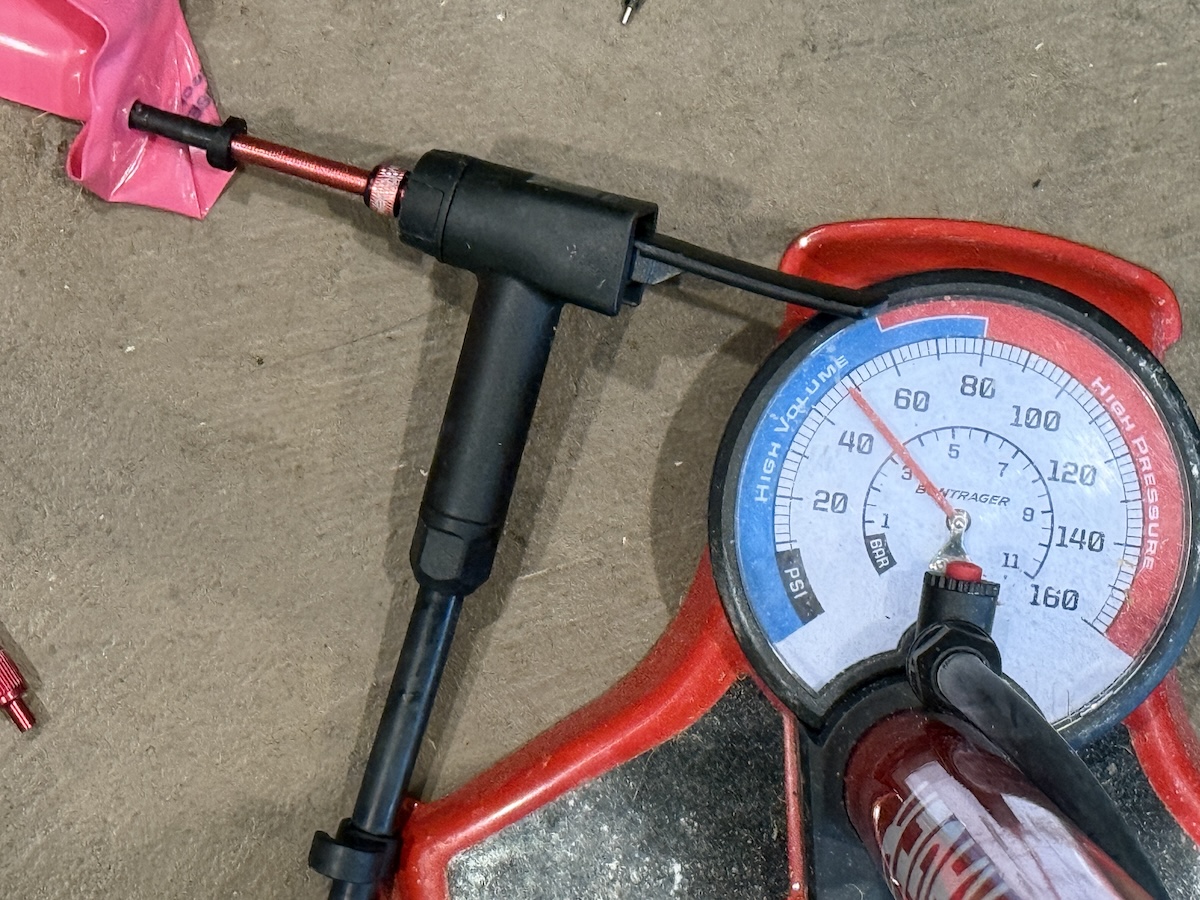
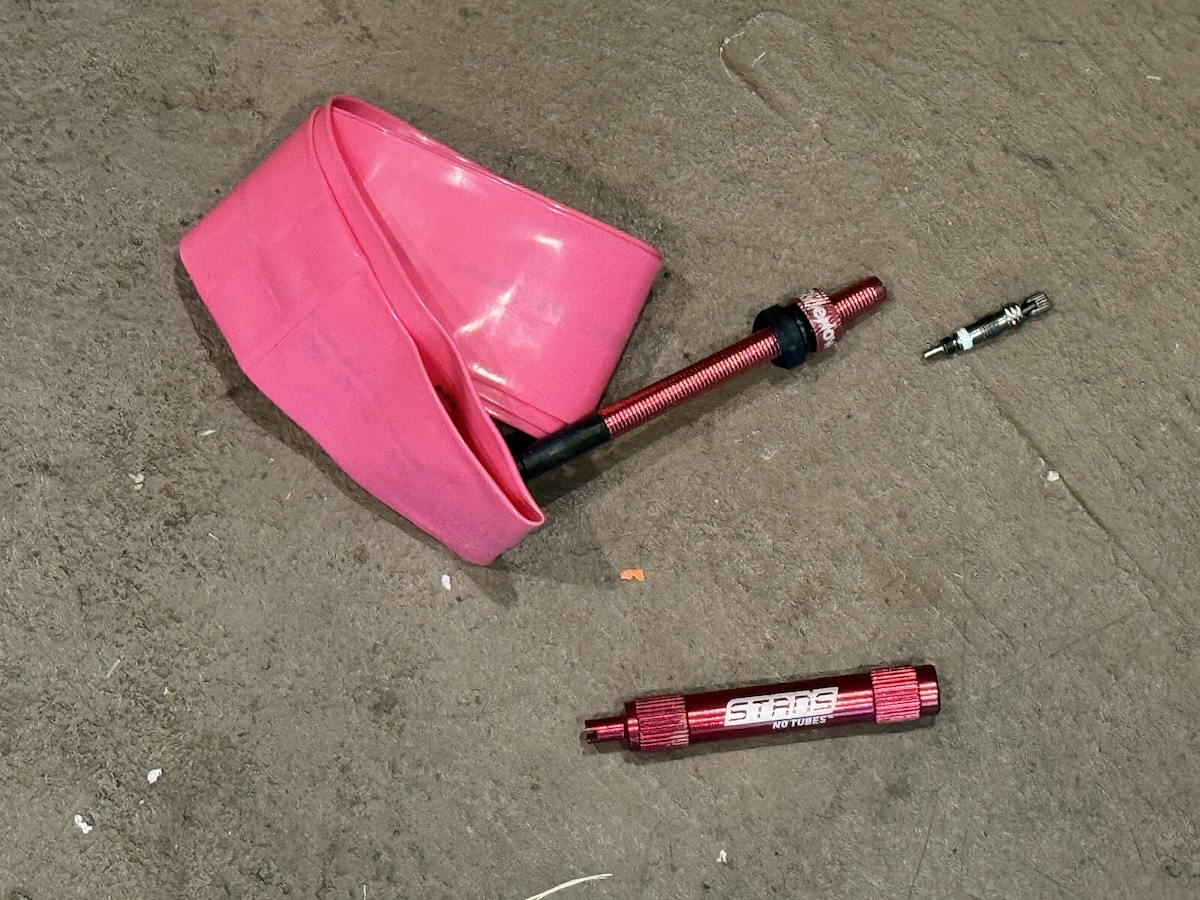
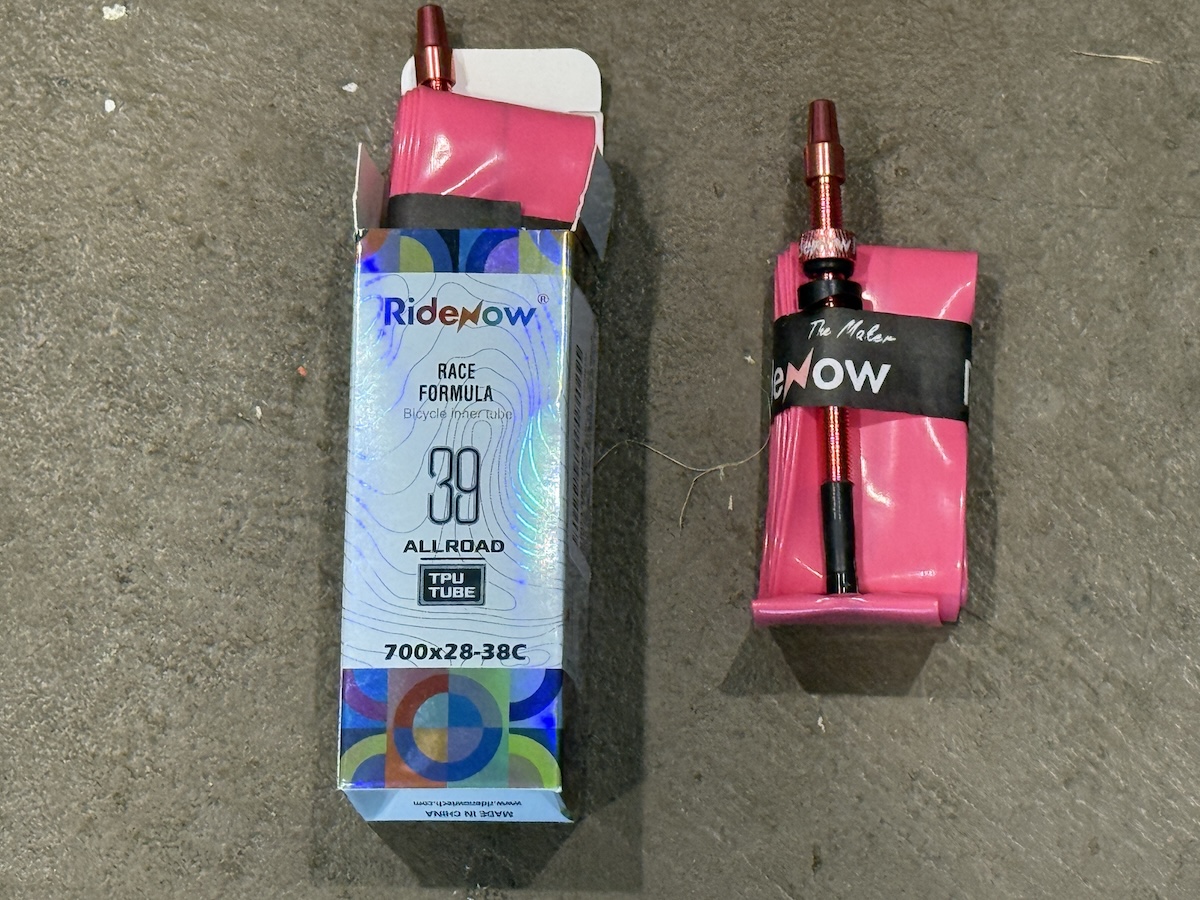
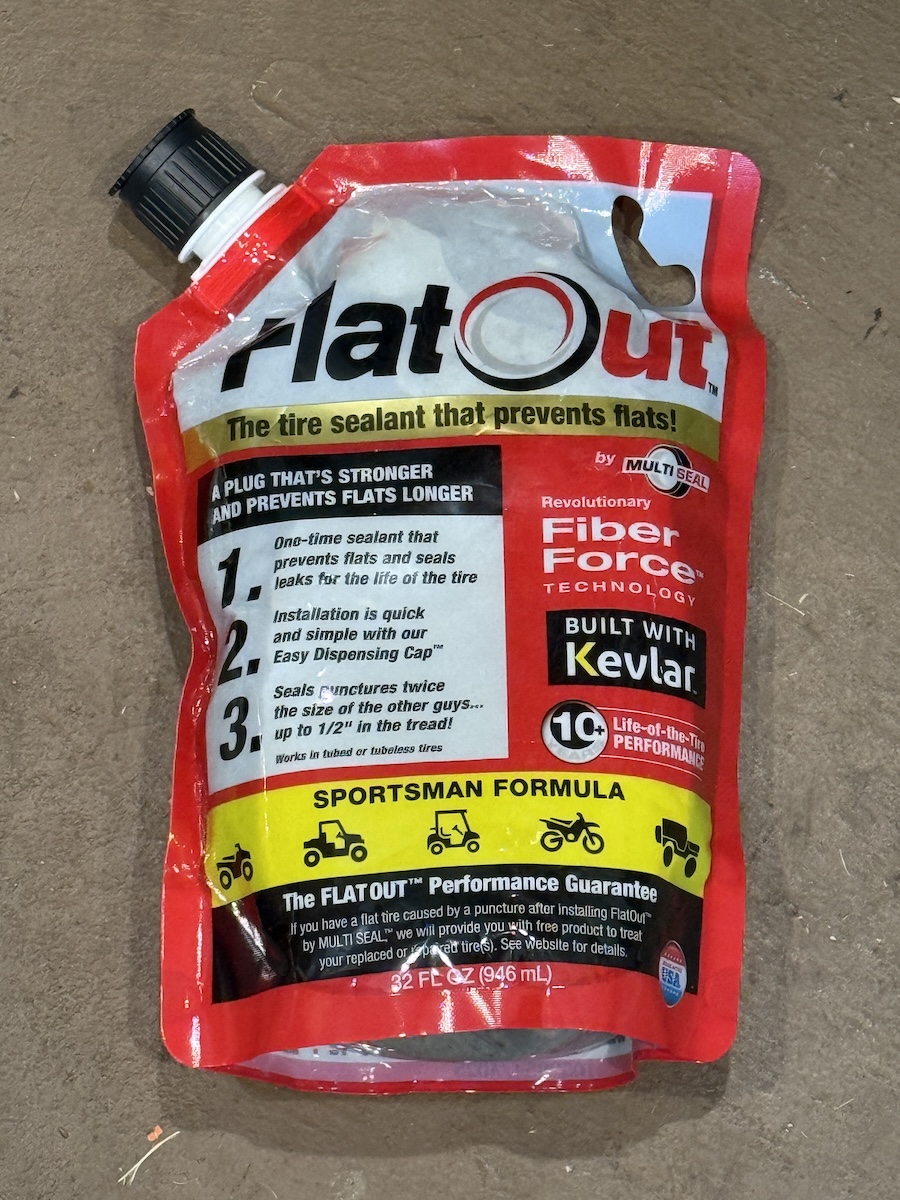
To be clear, Flatout works. And RideNow TPU tubes work too. Just not together. I’ve used RideNow’s regular, non-removable-core TPU tubes in the past with no problems. I also easily used the same container of Flatout on a completely different setup: my Jones Bike with 29er wheels, big butyl tubes, and Schrader valves. In that case, I removed the core, poured in the sealant with no resistance, and now have extra flat protection on a bike where the added weight of the sealant with heavy butyl tubes doesn’t really matter that much to me.
So again, both products work separately, just not in combination in this particular configuration.
In the meantime, I have learned that Rene Herse sells both TPU tubes with metal valves and removable cores and also a TPU specific sealant designed to go into those tubes. My next step will be trying again with this real setup instead of my thrown-together DIY attempt that I came up with on a whim.
Has anyone out there successfully used sealant in a TPU tube? If so, which sealant and which TPU tubes, and how did you get it in there? Is anyone using the Rene Herse tubes and sealant yet?

I’m my experience running high pressure low volume tires tubeless is definately a bad idea. I always recommend a minimum tire size of 28mm for tubeless. We use 32mm tires with about 65psi in the rear and 45psi front. This works very good tubeless.
One day, due to work trucks blocking the party, we had to ride the bridal trail adjacent to the bike path. We accumulated many, many goat heads. It took us 20 minutes to remove the cost heads from our bikes. We topped or the air in our tubeless tires and continued on our way. People with tubes had to walk out to the nearest rode to await rescue.
It’s 32mm tubeless tires for me.
I run road tires 700c x32 with. The cheapest tubes I can buy with removable Presta cores and put stand latex in the tubes. Once or twice I have got a stuck vale but not if I keep the stem at 12 o’clock when checking and adding air. We are in the bad season for flatheads in so cal now. August. And I come home from a ride and check my tires and have found 2-4 thorns in my tires I pull them out and some times I the tire will bubble so I spin the tire and it stops and I’m good to go. My friends with tublelisss and tubes are getting flats front and back and fixing them on the road.
I’ve been using the Rene Herse TPU tubes and sealant this summer and using TPU tubes w/o sealant for longer and I’ve been quite happy. The setup with the sealant was very easy, no mess, and no flats so far. I had one flat last year with the TPU tube and no sealant.
I have run SLIME tubes for years. A little heavier than tubeless, but they have worked very well with out the hassle of tubeless and sealant. I see several green spots on my tubes when I change tires.
I have recently started using TPU tubes as I try to do some TTs, and for training I am trying the sealant from MUC-OFF. It is supposed to be effective, but I have no data points yet!
As for patching, I usually have spare tubeS with me, no biggie with TPU, and the couple of flats I have had, I patched EASILY, one on the bike, the other after I got home. The hardest part was finding the hole. Alcohol wipe, stick the patch on, a bit of pressure for a minute, good to go.
I have used Rene Herse TPU tubes and their sealant. The sealant was easy to get into the tube and. a couple times I had a flat, added sealant with the wheel on the bike and was able to inflate the tire without removing it.. It may just be a bad year but I have had more flats with TPU tubes this year.. So the jury is still out for me.
My question is a bit off-topic, so my apologies. What are riders’ experiences with mixing tubeless sealants made by different brands/companies? I’ve heard conflicting information about whether mixing is ok or problematic. For someone without a lot chemistry background, are there some easy to remember rules of thumb about mixing brands or types/formulations? Do you know if anyone has developed a chart of compatible and incompatible brands? Many thanks.