Tech Q & A: Standard Tire Availability?

Jim’s Tech Talk
By Jim Langley
An interesting question came in the other day. The answer might seem obvious to you. But I think there’s more to the question, and I believe others probably have the same or similar queries.
I’ll answer and after reading my take, if you’d like to add your tips, please do so in a comment. Tires are always a hot topic and together we’ll help other roadies with these questions.
Stan’s question:
“Is it still possible to purchase tires made for tubes rather than tubeless? And if so, how do you identify them?”
My answer
Yes, there are still tires made for tube use only Stan. And don’t worry, this type of tire won’t go away because the vast majority of bicycles in the universe still use tubed tires.
This is because, unlike the motor vehicle industry which long ago went tubeless, the bike industry hasn’t “perfected” tubeless tire technology yet.
And because it’s not perfect, it won’t take over for bicycles as the predominant tire type. Tubeless tires on motor vehicles are near perfect. They remain airtight and rarely flat too.
The problem with bicycle tubeless tires
In comparison, the majority of bike tubeless tires require sealant in order to remain airtight and prevent flats. And, unfortunately, all it takes is a large enough cut in a tubeless bike tire and you’re stopped cold because the sealant can’t fix oversize holes.
Now there are tubeless bike tires that work just like car tubeless tires – no sealant required. But, with these tubeless tires, punctures are even more problematic because there’s no sealant inside to even help slow the leak should you flat.
The other problem with tubeless bike tires is the sealant. It dries up over time and when that happens it can’t prevent flats anymore. This means having to put more sealant in. If car tires had these issues, they’d probably still be running tubes too.
The beauty of tubes
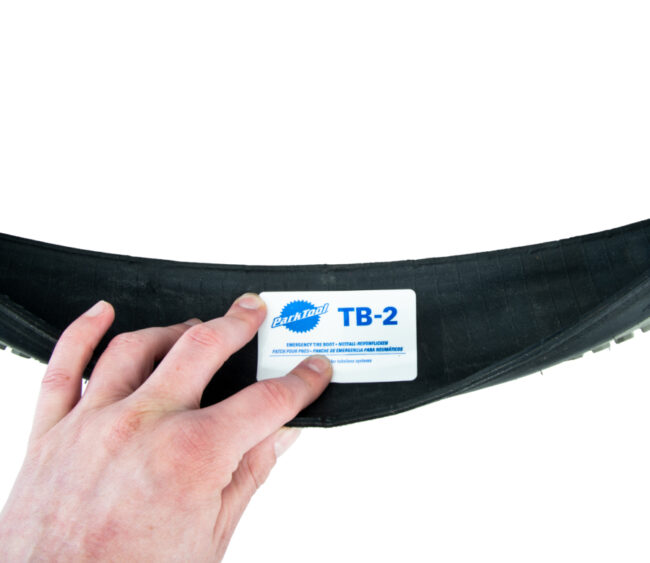
The wonderful thing about tubed tires is that you can usually fix the problem and keep riding when you get even an oversize cut in a tire. All it takes is what’s called “booting” the cut in the tire and installing a new tube. You can purchase tire boots for this purpose and carry them with you, such as the one Park Tool sells https://www.parktool.com/en-us/product/emergency-tire-boot-tb-2 or make your own.
Some popular boot choices I’ve seen and used include: cash; a piece of tire casing cut from a worn out tire; boots cut from Tyvek (similar to what FedX envelopes are made of); and I’ve even seen them made from an aluminum can found on the side of the road. Basically, anything strong enough to keep the tube from pushing through the hole in the tire will do the job.
Note that the tire is usually ruined by a large cut like this. The boot is to get you home where you’ll want to replace the tire with a new one ASAP.
How to identify tubed tires
As far as identifying what type a tire is, I rely on the sort functions when searching for tires. I often buy tires on www.biketiresdirect.com On their website, you can sort by tire type. The choices under road tires for type are clincher and tubeless-ready. Clicking on the former will bring up the standard tires.
But that’s where their nomenclature gets confusing. Both types of tires are actually clincher tires. And tubeless-ready tires can accept tubes just fine. So if you want to use tubeless-ready tires with tubes you can.
The difference between tubeless-ready and standard tires
You probably would not want to purchase tubeless-ready tires for use with tubes though, because tubeless-ready tires usually cost more and weigh more. This is mostly because there’s more material in the tire casing to reinforce it and prevent air seepage. There’s no tube inside to hold the air so the tire has to do all the work.
With a standard tire, since a tube is holding the air, the tire can be lighter and more supple too, which can provide better performance and additional comfort. Plus, when you use them with modern superlight TPU (Thermoplastic Urethane) tubes, you’ll save even more weight over tubeless-ready setups.
SIDENOTE: Speaking of TPU tubes, I recently heard that Rene Herse just came out with a tire specifically for use with TPU tubes. Read all about it here: Rene Herse TPU Set.
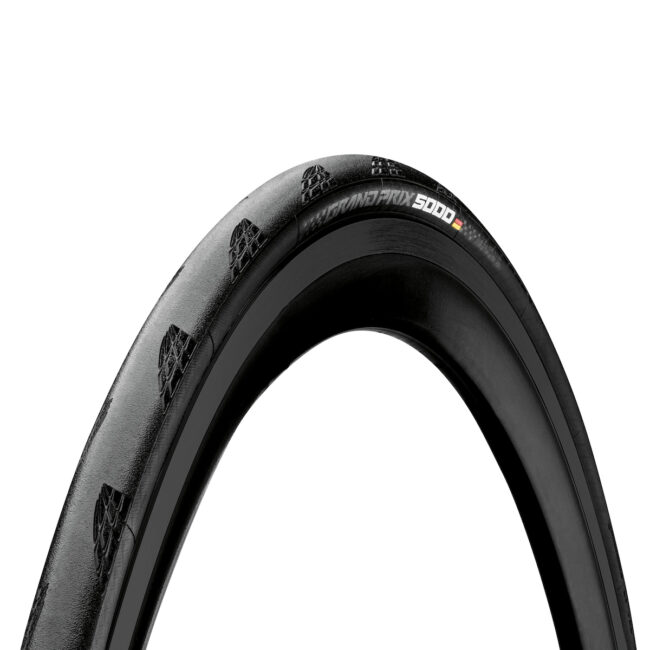
As an example of how standard and tubeless-ready compare, if we look at two popular Continental road tires on BikeTiresDirect’s website, the Continental Grand Prix 5000 S TR (for Tubeless Ready) versus the Grand Prix 5000, the MSRPs are $108.95 and $92.95 respectively (note that BikeTiresDirect often discounts different tires including these). The weights are 250 grams versus 220 grams.
Where it gets tricky
The issue I’ve run into is that the tires themselves aren’t always marked saying that they’re tubeless. So if you get a tire out of a box you might not be able to figure out whether it’s tubeless-ready or not without doing some research.
And this means that you might end up running a tubeless-ready tire when you wanted a standard tire. But as long as you don’t mind the extra weight of the tire, you’ll probably be perfectly happy with the tubeless-ready tire.
The one issue with tubeless-ready tires to beware of is that they can be more difficult to install and remove, which can be frustrating if you do flat on a ride. So you might want to do your homework when shopping for tires to make sure you get a standard not tubeless or tubeless-ready tire.
If all of these tips only confused you more Stan, shopping at a bike shop where you can talk to experts is probably the very best way to ensure you get the right tire.
Jim Langley is RBR’s Technical Editor. A pro mechanic & cycling writer for more than 40 years, he’s the author of Your Home Bicycle Workshop in the RBR eBookstore. Tune in to Jim’s popular YouTube channel for wheel building & bike repair how-to’s. Jim’s also known for his cycling streak that ended in February 2022 with a total of 10,269 consecutive daily rides (28 years, 1 month and 11 days of never missing a ride). Click to read Jim’s full bio.
One other option for “booting” a tire that has a gash in it–empty gel packets such as what Gu and other gels come in. Consume the gel to give yourself energy to remove the tire, place the now-empty gel packet over the gash, insert the tube, reinstall the tire, and inflate!
The Big Giant Bike Company has a series of “TLR” tires and rims. They are sold with inner tubes. I was on a large “tour”, and several companions had those, and they had flats. The TLR tire-rim combination has the tire bead lock tightly to the rim, When you add a tube to that – well, I was the only one in the group with tools (Silca) strong and tiny enough to even begin to break the bead free from the rim.
I run slime in my tubes to stop the annoying leaks. Like when a trail pushes you on a heavily traveled truck route, picking up small metal pieces. Has saved me countless number of tubes and big time savings.
Good information, Jim!
Thanks Stan!
I agree 1000 percent! But you go on forums and you’ll catch a lot of flak coming against the great tubeless revolution, I know because I was a victim of their wrath when I spoke out against them; go to a bike shop and it’s like you’re talking politics, something you don’t do, so I don’t talk about tubeless tires.
I do have a couple of tubeless tires on a couple of my bikes, but they all have tubes in them, so a person can buy tubeless tires and put tubes into them. I buy all my tires on closeout sales, and I got those tubeless tires on a very steep discount so I grabbed them.
That segues nicely to a problem I had yesterday in trying to fix a puncture – I had difficulty inserting a brake lever between the tyre and the wheel rim to free the tyre and replace the tube. It seemed to have formed a seal. It took quite some time and effort to break that seal. The wheel is supposedly designed as a two-way fit – for tubed tyres as well as tubeless, though I have never used tubeless.
Thanks, and a day late. I just ordered new tires and out of ignorance ordered tr tires for a tubed installation. Will do better next time because of your column.
Also a new bike purchase came with Schrader valves. Any issues with using an adapter ring with Presta valve tubes ?
I’m happy the article was helpful Tom. As long as the adapter fits both the rim’s Schrader hole and the Presta valve it should work fine. The adapter needs to stay in place in the rim and prevent the valve from moving around t00.
If you find one you like and can share a link to it or the name, others can check it out if they need some.
Thank you,
Jim Langley
I love tubes, 15mm inner rim width and rim brakes. All easily fixed on the road, by me, the untrained mechanic. I have been on too many rides where the tubeless guys had flats that took a half hour to fix, or they called for a ride home and the disc brakes squealing for blocks was annoying to me. A flat tire is the slowest tire. I am not averaging 25mph so the 5 watts supposedly gained by all this nonsense is rather useless. Per Continental Tire scientists, “we know that on smooth roads, narrower and more pressure is faster because of our work with track riders.” I usually don’t hit the gravel too much, but the old 23 (which usually measure 24) handle it fine. Tom Boonen won PR four times using 27mm tires. With tubes. I try to avoid the cobbles, is I can. I did ride the Paris finale route of the 2000 Tour on 23mm tires. Seemed to do fine on the cobbles. Cheers.