First Impressions On Using Silca’s Chain Waxing System

Jim’s Tech Talk
By Jim Langley
In February I told you about what many consider a game-changing chain hot-waxing system from Silca. I said I’d give you a report after I had a chance to try it. Sorry I was so slow to follow through on this, but it took a while before I could order all three parts of the system (the melter machine and two waxes).
Silca’s system is mainly for hot waxing new chains straight out of the box.
The thing is that with hot waxing, chains have to be clean in order for the wax to adhere to the chain and perform optimally. Unfortunately, almost all new chains come with some type of factory lube on them, which often looks and feels like a coat of Vaseline. You have to completely remove this before hot waxing, which takes time, materials and effort.
Even if you’re prepared for chain cleaning, such as with degreasers or other solvents, or maybe you have a solvent tank, or what many consider the gold standard, an ultrasonic cleaner, you still have to perform the cleaning step.
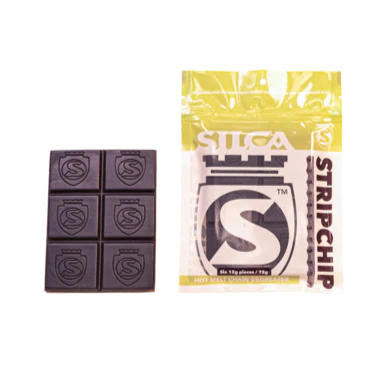
That’s where the game-changing part comes in. Silca studied these factory lubes and came up with what they call StripChips. You get six per package for $24, enough for six new chains. At the correct temperature, these chips turn the factory lube into a wax-compatible substance, which means that it’s completely unnecessary to clean new chains.
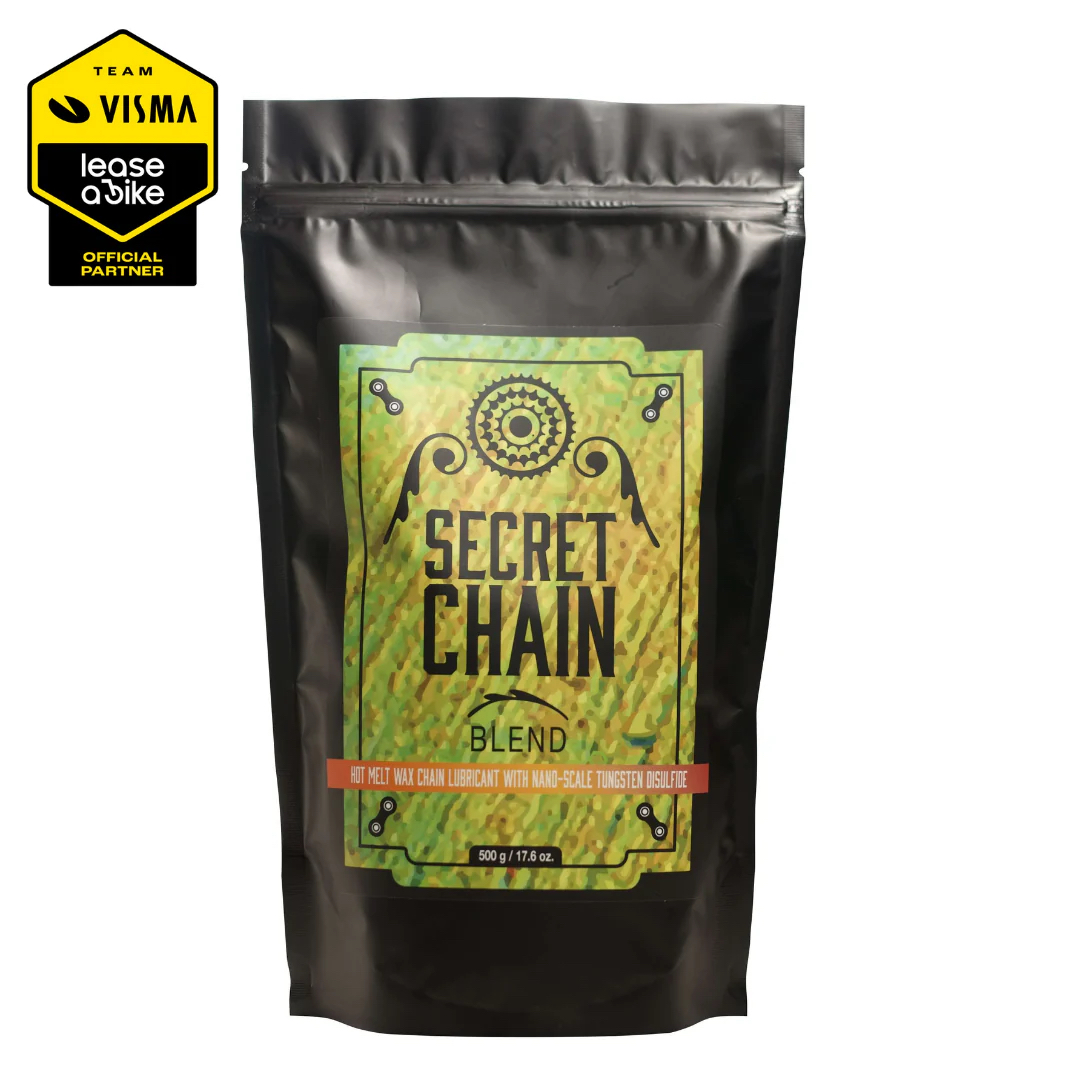
The three parts of the Silca system are the StripChips I already mentioned, their Secret Chain Blend hot wax ($40), and their Chain Waxing System ($99.99). I bought all three ($163.99).
While the StripChips are what make the system so special, the melter machine has features that make the waxing easier too. It’s preset to two temperatures: 125 and 75 degrees Celsius. After putting in the Secret Chain Wax, the machine turns on and gradually heats to 125. As the wax begins to melt a StripChip is added. When everything’s fully melted and the temperature reaches 125, the chain is put into the pot.
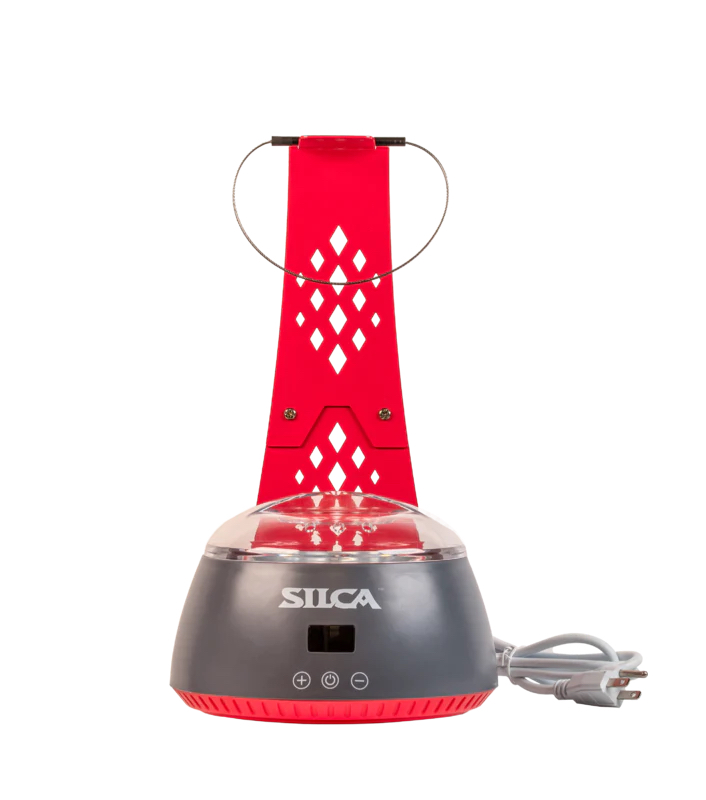
You then slightly agitate the chain in the wax for 30 seconds to get it in between all the working parts. Next you let the chain sit in the wax at 125 degrees for 10 minutes. After that you agitate the chain again and change the temperature to 75 (preset on the melter) and wait for it to get there.
When it hits 75 you remove the chain and hang it on the built in support on the melter machine. Silca provides a little cable with a handle you feed through the chain to hold onto the chain without touching it since the wax is hot.
That’s a short overview of the system. Overall it made hot waxing a new chain significantly quicker and easier. And the chain dried with a thick wax coating on the inside and outside with the links all temporarily welded together.
The only thing that I thought could be improved is the cable chain holder. It held the chain nicely but when the chain was submerged, the holder wanted to keep flopping and landing in the pot of hot wax, meaning I had to fish it out. The other thing that needs to be pointed out is that it takes longer to hot wax a chain than Silca says it does. Because you have to wait for the wax to melt, wait while the chain “cooks” for 10 minutes at 125 degrees, wait for the temperature to drop to 75 degrees and wait for the chain to dry. Because of all the waiting it’s more like an hour to hot wax a chain, not a matter of minutes. But, it’s still much faster than hot waxing plus chain cleaning and all you’re doing is waiting.
You could use that time to clean the cassette, which should also be spic and span for the wax to perform at its best. Though I think what a lot of people will do with the Silca system is use it with a new chain and a new cassette to start out fresh with a new drivetrain. You’ll still want to clean dirty chainrings but they’re easier to clean than cassettes and they don’t wear out as fast either.
So that you can compare hot waxing with cleaning versus hot waxing without, I asked a fellow mechanic, my friend “Tony,” who works at REI to film the process. It’s actually his chain we wax which is for one of his customers at REI. I’m still using the Simplyfast hot wax I wrote about in June. I will try the Silca wax on a chain after that.
Speaking of the Simplyfast hot wax, I want to add that I heard from them after the review ran. Watching the video they said that I may not have gotten the chain fully dry before putting it in the crock pot. They gave me a few more tips that might be useful for you too if you hot wax. They said:
- rinse the chain in water and let it dry before “cooking.” This is because most of the chain cleaners have solvents that keep the wax from grabbing onto the chain as firmly as possible. If it is petroleum-based solvent it will not form a good bond between the wax and metal unless you get all traces of it off the chain
- stir the chain around in the crock pot and flip it over 2 times – this lets the SIMPLYFAST get in between the link plates and into rollers. The movement of the links opens up the links
- rinse the chain off with a hose every couple of rides – this helps keep the accumulation of grit out of the system so it doesn’t abrade the wax off faster
Here’s the video with more details on how Silca’s system works:
Jim Langley is RBR’s Technical Editor. A pro mechanic & cycling writer for more than 40 years, he’s the author of Your Home Bicycle Workshop in the RBR eBookstore. Tune in to Jim’s popular YouTube channel for wheel building & bike repair how-to’s. Jim’s also known for his cycling streak that ended in February 2022 with a total of 10,269 consecutive daily rides (28 years, 1 month and 11 days of never missing a ride). Click to read Jim’s full bio.

I am going to try Squirt first.
In scientific testing Squirt scored on the low side compared to many alternatives. As for hot wax bathing, there’s no contest, not by a long shot.
For confirmation check the following link: https://zerofrictioncycling.com.au/lubetesting/
What scientific testing? I tested chains and lubes for Shimano for 4 years and SQUIRT came in second place behind SMOOVE. Waxing came in LAST place.
Thanks Dave. I’ve used Squirt -a drip wax chain lube – a ton and it performs very well. Here’s a link https://amzn.to/3Aj6RQ4
You’ll want to clean your chain before the first application for it to adhere well.
Thanks!
Jim
I live in Florida where it’s really hot and wet. How resistant to water is the Silca wax?
Some people just did it all in hot water and then clean the chain with a microfiber cloth. It works.
For me I believe that a hot wax bath would usually need to be reapplied if your chain was rained on hard for some time. It’s very easy if you have the right set-up. I did this yesterday due to being caught in a heavy shower. I was busy doing other things most of the time. What I had to do was plug my temperature controlled wax melter pot in and set the temperature (10 seconds), disconnect the chain (10 seconds), thread the chain onto my chain holder (45 seconds), do something else while the wax melted (15 minutes but this shouldn’t count), place the chain into the wax/wax pot and swish it all (25 seconds), wait 15 minutes for the chained wax to melt, swish the chain (30 seconds), wait 10 more minutes (optional), hang the chain (30 seconds), wait to cool and then place onto drivetrain (last part took me 2 to 3 minutes.
Hi Fritz,
As pointed out in the video hot waxes aren’t as durable as oil-based lubes when it comes to riding in the rain for long periods of time, as in many hours or double century and longer brevets/rides.
Hope this helps,
Jim
I’m not going through all that BS just to put wax on my chains, I used to do that years ago except for the ultrasonic cleaning because they weren’t out yet, but it was a pain back then and will be a pain today. If that’s how some people want to occupy their time then go for it, I’m not trying to convince anyone not to use it, but for me, it’s a waste of time. I have always been the type of person who will keep my bike maintained, but I also realize doing some things is just a waste of time…for me. After 50 years of riding I figured out what those things are, and cleaning a chain to perfection, and then doing the hot wax routine, is just mundane work, and I discovered that hot chain wax made my chains last a shorter period of time vs using drip. Now maybe a combination of Silca hot wax and Silca drip-on wax as a follow-up, is better, but I don’t care. The cost of replacing a chain every 8,000 miles, which is how long mine last, is cheaper than even if all the hot wax stuff was done and say the chain lasted 9,000 miles. The hot wax stuff is expensive for what it offers.
I have decided however to try Silca Super Secret drip on wax lube to see how it goes, I bought a large bottle of it so I can give it a fair trial period. I was using Dumonde Tech, and it held up extremely well in rain, it lasted about 500 miles between applications after the first 5 or 6 treatments, but I noticed my gears were wearing out fast?! According to tests, the Silca Super Secret drip-on came in 2nd place for anti-wear on gears, no tests were done for the Dumonde Tech which I would think would have come in near the bottom! The gear wear surprised me with the Dumonde Tech, the chain always ran quiet, wiped the chain down after every ride, and they said only reapply if you start to hear chain noise, whatever, but for some reason, it wore out my gears fast.
And there is this controversy, and common sense about chain waxing: https://www.youtube.com/watch?v=G9ejcYBTJtk
Thanks for the link to the video Fred. Bike Radar did a great job showing the automatic waxing machines at the Tour, which I couldn’t learn much about during the race. I don’t see much “controversy,” though. BR pretty clearly explains why some teams are waxing and some aren’t and recommends drip waxing at the end for those who don’t want to hot wax.
Thanks again,
Jim
Why bother?
New Shimano bike chains are available on Amazon and ebay for $35 all day long.
Use your favorite chain lube.
My chains last 1500 to 2500 miles, cassettes at least double that in the wet and gritty environment here near Seattle.
Run your chain through a Park cyclone,, let it dry, apply Triflow, go ride.
Why do we need all these “systems” for simply waxing a chain? All you need is a cheap crockpot, paraffin wax, and a little beeswax.I spent less than $20. I’ve been waxing this way for over a decade, long before it became a fad again. No fuss no muss!
Hi there! I am the sales rep at Dumonde Tech serving the bicycle market in the U.S.
These wax treatments are a cool trend for those who enjoy doing so many steps.
I wanted to address the “Dumonde Tech wears gears” quickly comment that you made. Youi mentioned riding in wet conditions, so I’m assuming you’re commuting and/or riding in mud – either way exposing your drivetrain to a lot of grime and grit. Dumonde Tech will help your drivetrain last longer, but at some point, the grime and grit, especially if you don’t wipe your chain off regularly, may cause undue wear.
Thank you!
What is the bottom line?
Does hot wax lubricant enhance speed over other options?
Apparently, though it doesn’t last very long compared to liquid lubes.
After reading the article, I’m more convinced then ever that I will not be waxing my chain. Routine maintenance and a good lube out of many good lubes on the market have met my needs for several decades. If there is added benefit in this process it seems minor – an expensive solution in dollars and time begging for a problem.
Even if waxing didn’t extend the life of chainrings, cogs, and chain and didn’t decrease frictional losses I’d still be waxing because it is so dang clean. No oily residue or buildup and no solvents needed to clean the chain before re-lubing. I recently finished a ride in the Manistee National Forest renowned for its sandy two-track trails and I swear there was hardly a grain of sand on my drive train. Dirt just does not stick or get inside the critical internal surfaces of the chain. I wiped some dirty surface wax off the chain with quick spin through a microfiber cloth and done. I’m not using the fancy waxes. Plain old paraffin and a pinch of PTFE has been working great.
PTFE is a “forever” chemical. Probably not the best thing to have flaking off your chain as you ride.
What’s your solution?
Phillip, I’ve been using a combination of PTFE and MoS2 (molybdenum disulfide) in my home brew wet lube (based on the Friction Facts wax lube formula), but I read recently that PTFE really doesn’t do much in chain lubes, so I’ll probably stop using it.
It seems that all of the “secret” wax formulas are using MoS2 or in the case of Silca, S2Ti (titanium disulfide). I looked up the properties of both and it appears to my layman’s eyes that the only advantage of S2Ti is lower friction at loads and temperatures that far exceed anything that would occur on a bike, unless it’s being ridden by a gorilla that’s on fire. 😉 It’s also pretty toxic stuff, which makes me wonder if it’s as bad or worse for the environment than PTFE.
MoS2 powder is available on Amazon and it’s pretty cheap. It’s a dark grey color and you definitely want to wear gloves when using it in order to prevent staining your hands.