Saddle Sore Solutions from Lon Haldeman & PAC Tour

Jim’s Tech Talk
By Jim Langley
A few Tech Talks ago, we shared Race Across America legend, PAC Tour founder and humanitarian, Lon Haldeman’s tips for dealing with hot foot issues. As a multi-time long distance champion and PAC Tour organizer and leader, he has experienced and dealt with just about every overuse injury riders can suffer.
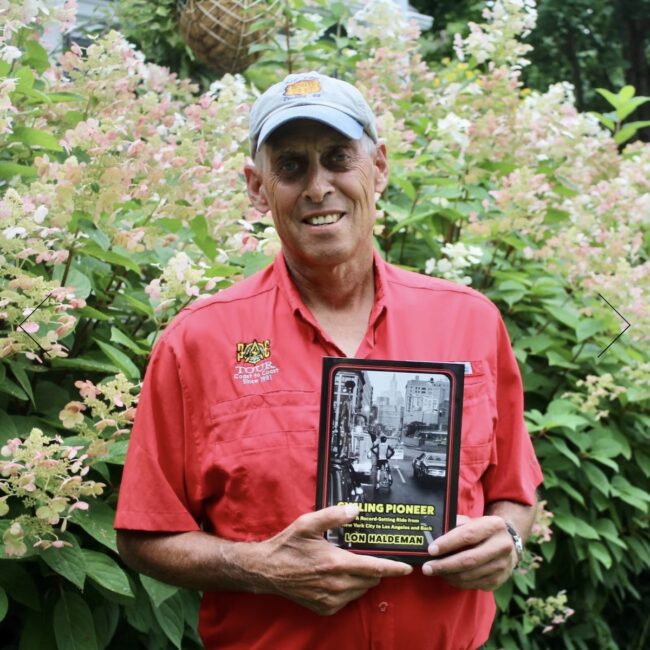
Here’s that article if you missed it: Lon Haldeman’s Cleats Tip for Curing Hot Foot Problems. We also recently reviewed Lon’s new book CYCLING PIONEER A Record-Setting Ride from New York City to Los Angeles and Back here: Cycling Pioneer, a book by Lon Haldeman. The book can be purchased in the PAC Tour store: https://www.pactour.com/store/p/cycling-pioneer If you’re looking for an inspirational read, I think you’ll love Lon’s first-person account of his double crossing.
The story about solving hot foot issues must have struck a nerve (the good kind) because it was one of our most-read articles that week. So, Lon was kind enough to dig into his PAC Tour library and share another gem, a thorough look at the saddle sore issues cyclists deal with, their causes and cures. If you’re having trouble getting comfortable when saddled-up, there’s a good chance you’ll find relief in some of these PAC Tour tips.
Preventing and Dealing with Saddle Sores
by Lon Haldeman
As you increase your training miles and time sitting on a bike seat, you will increase your chances for saddle problems. Riding 10 miles a week on the indoor trainer is not the same as increasing your training time to over 200-300 miles per week outside. Every time you increase your daily distance you will face a new challenge for preventing saddle sores.
Saddle soreness is caused by three main problems
1. Pressure Points – Bruising
2. Friction – Chafing, Abrasions
3. Internal – Pimples, Boils & Cysts
1. Pressure Points
A. Bruising can occur at specific areas of contact. Adding padding isn’t always the solution. Sometimes a thin plastic saddle shell that conforms to your shape helps distribute the pressure points over a larger area and is better than a foam saddle pad. Using a leather saddle that fits you can also distribute your body weight the way a well worn pair of cowboy boots supports a foot. Finding the correct saddle is not as easy as just using what works for other riders. Saddle preference is very personal and it might take trying a dozen different saddles of drastically different designs before you find one that works for you.
B. When riding long distances on consecutive days it is a good idea to change saddles each day. A rider can use several favorite saddles that are pre-mounted to seatposts and can be installed into the frame easily. Even if a rider is using the same style of leather saddle, each leather saddle will be different enough to offer new pressure points and allow abused areas to recover for a few hours. During a PAC Tour Transcontinental tour, many riders bring two different saddles mounted to a seatpost and change saddles every day.
2. Chafing
Similar to abrasions caused by friction that leads to blister type irritations. Your skin needs to be able to slide over the saddle during thousands of pedal strokes each day (20,000 strokes per 100 miles). There are several different ways to limit friction. Some riders might use a combination of all these solutions during a long ride.
A. Use tight fitting shorts without sitting on wrinkles or seams. The chamois padding should stay against your skin and any friction should be between the outside of the shorts and the saddle.
B. If chamois irritation does occur, then adding a lubrication between the chamois and skin can help. A wet lube such as a skin cream, (Chamois Butt’r https://www.chamoisbuttr.com/) or Vaseline type lubes can help the chamois slide against your skin without friction. Assos brand makes an antibacterial cream that is a lubricant and also stops infection. Sometimes using a dry lube such as baby powder can work as well by keeping the skin slippery.
C. Using a Lycra saddle cover can help make your shorts slide easier against the saddle.
D. A good suggestion from cross country riders is to use rubbing alcohol with 91% Isopropyl. Use it as a crotch wipe with a wash cloth or cotton ball before and after each ride. The alcohol will disinfect the area and also toughen the skin. It will tend to sting the first times it is applied but it will feel better after several applications. A 16 oz bottle costs $3.00 from Walgreens which is enough for about 50 wipe downs.
E. Another way of keeping yourself clean is by wiping your crotch with a lather of antibacterial Chlorhexidine Wash or Betadine soap before and after each ride. Pat dry with a towel and leave some of the soap residue on your skin. Even antibacterial Dial soap is helpful to keep bacteria from having a place to start infections.
F. If open abrasions do appear you can apply a layer of Calmoseptic ointment. It will protect and sooth the open skin and promote healing. A 4 oz. tube costs about $10 at Walgreens and will last for a season of cycling. The cream has a zinc oxide base that is sticky enough not to wipe off when applied and worn inside bike shorts.
G. Using Mepilex AG pads or Second Skin is another way to protect the outer surface of your skin. You can find these products at Walgreen’s or other major pharmacies.
3. Internal Pimples, Boils and Cysts
The worst type of saddle sores are caused by infections that get under the skin. These infections usually start as minor abrasions and then become inflamed.
A. If a pimple type sore appears, it can be drained (popped) and treated with topical antibacterial cream. It is important to keep the area clean so infections under the skin cannot form.
B. A boil tends to be deeper under the skin usually starting from infected pimples. A boil feels like a small marble. Sitting in a hot bath will sometimes help the infected area to come to the surface. Sometimes it can be drained by squeezing. If it will not drain then it might be a cyst.
C. A cyst is the worst type of sore because it is made of fibrous material that will not drain. A cyst can be treated with antibiotics and the cyst will gradually dissolve in 2-3 weeks without riding. Riders who have had a cyst surgically removed describe the cyst looking like a piece of raw shrimp. The doctor needed several stitches to close the incision. The rider needed six weeks off the bike to let the area heal. The good thing is time spent off the bike will increase your desire for cycling because as they say “abscess makes the heart grow fonder.”
To Recap:
It is best to avoid serious saddle problems by preventing bruising and abrasions that cause open sores allowing infections to get under the skin. Hopefully these suggestions will help you recognize and prevent saddle soreness.
*For riders joining a PAC Tour ride, note that on PAC Tour you are responsible to bring your own ointments, soaps and first aid supplies. If you develop problems during the tour our route will pass local pharmacies each day where you can buy more of the products you need to attend to your sensitive areas.
Jim Langley is RBR’s Technical Editor. A pro mechanic & cycling writer for more than 40 years, he’s the author of Your Home Bicycle Workshop in the RBR eBookstore. Tune in to Jim’s popular YouTube channel for wheel building & bike repair how-to’s. Jim’s also known for his cycling streak that ended in February 2022 with a total of 10,269 consecutive daily rides (28 years, 1 month and 11 days of never missing a ride). Click to read Jim’s full bio.


I had a cyst that survived two rounds of antibiotics, so it had to be surgically removed, which resulted in quite a deep hole in my butt because the surgeon found the cyst was being fed by its own reservoir beneath the cyst. It took quite a few weeks for that hole to heal and refill with healthy tissue.
My personal routine is that I shower before a ride (unless it’s a short trainer session) and put a thin layer of triple antibiotic ointment on the perineum. I don’t use any additional creams. Before that saddle sores weren’t uncommon for me, but I haven’t had a saddle sore for years and years. The other recs for proper bike fit and well fitting (and clean) bib shorts are also part of that. I think the key is preemptively reducing the skin bacterial count which can infect hair follicles or areas of chafing.
Just reposting “abscess makes the heart grow fonder.” because
best line in the article
“abscess makes the heart grow fonder.” n What a carbuncle!
I’m obsessed with abscesses…
I wipe the contact area with witchhazel before and immediately after each ride to keep everything clean. Had pimple issues that stopped with this routine.
When I travel I always carry a gel saddle cover. It has saved my behind and friends who have developed soreness in the middle of a tour.
A number of years ago I developed a pea sized lump beneath the skin one of my sit bone areas that was asymptomatic, so I planned t0 get it taken care of after biking season ended. While driving home from a snowbirding trip to Florida it blew up into an abcess. It took two surgical drainages and finally an excision over a couple of years. It was a sebaceous cyst that became infected eventually. Just because something is not symptomatic doesn’t mean that it shouldn’t be dealt with promptly. A painful lesson learned.
I have had to abscess many painful situations myself.