
Can You Help Stan Purdum With His Puzzling Ebike Problem?

Jim’s Tech Talk
By Jim Langley
Readers, please read the email thread below. It’s self-explanatory. It’s a conversation between contributing RBR editor Stan Purdum and myself concerning a strange issue he’s experiencing with his Specialized Turbo Creo ebike. Stan reviewed the bike in his column here: Specialized Turbo Creo SL Comp E5 Road Ebike, an Owner’s Review.
I have heard from four readers that have this same ebike so I know it’s a popular choice. Stan and I thought if we shared our exchange here, we might get some help from other Creo riders.
Stan Purdum wrote
Hi Jim,
I’ve developed a problem with my ebike that has me puzzled, and I wondered if you might be able to point me in the right direction.
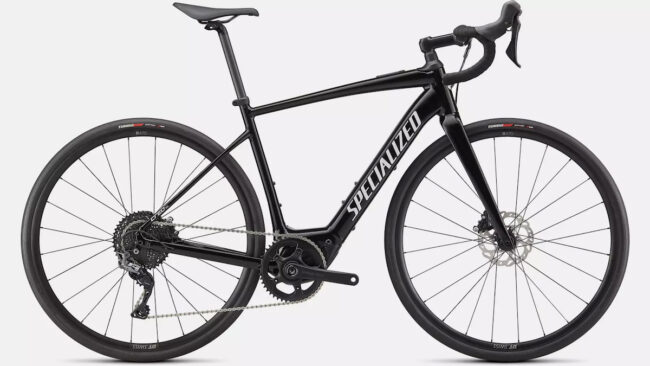
My ebike is a Specialized Turbo Creo SL Comp E5 Road model (photo), though I don’t think the problem is specific to that model.
When riding with assist turned on, the bike performs beautifully. But sometimes, I want to ride without the assist, and when I do, it feels like the crank is out of sync with the drivechain.
Specifically, with each rotation of the crank, it feels like the drivetrain is completing the rotation before the crank itself does, so that during the last 10 or 20% of the rotation, the crank feels like it falls to catch up with the spin of the drivetrain. And when it falls (if that’s what it’s actually doing) there is a noticeable and annoying clunk sound.
This did not happen when the bike was new, but has developed since, though I’m not sure when, since most of the time, I do use the assist. The chain has 3,500 miles on it, but my chain-stretch tool tells me it’s not even to the .75 stretch point left (chains seem to last a lot longer when there’s a single chainring versus three).
Anyway, I’m unsure what else to investigate, so I thought I’d ask.
BTW, feel free to use this question as the basis for a Jim’s Tech Talk column, if you wish.
Thanks,
Stan
My reply
That’s an interesting question Stan. I don’t have an answer as I’m not expert enough about fixing ebikes. But, if it’s making a clunk sound when it wasn’t making one before, what I would look for is something that’s come loose or is coming loose.
Pedal assist systems drive via a motor that turns the crank via the bottom bracket spindle. So maybe something has changed in that system, such as a loose crankarm(s) or a loose chainring. That shouldn’t happen but looseness is often the cause of clunking.
I guess it might also be an issue with the cassette on the rear wheel too. If the cogs came loose or if the freehub body on the hub has developed a defect inside – a bad pawl or a worn drive ring or ? – that would definitely cause some issue and could clunk too. That might be the first thing to check.
Jim
Stan’s reply
Hi Jim,
With the bike in the workstand, I took the chain off and checked the crank, both with assist off and then on. Found it solid with nothing loose. Did not hear the clunk, so I’m guessing the bike has to be under load to make the noise. I found no crankset play and no bolts loose holding the chainring to the spider.
I removed the rear wheel and checked the cassette — found no looseness there. While the wheel was off, I examined the derailleur and found nothing out of order. Found no loose bolts either.
I looked for some videos and forums online, and found some stuff that was tangentially related, but nothing specific to this problem.
I finally called the bike shop where I bought the bike, and spoke with the owner. He agreed that clunks are usually due to something being loose, and said he’d found some loose motor mounts on a couple of ebikes. He suggested I bring the bike in to the shop, which I decided to do. He’s given me good service in the past. So I’m now waiting for his call to let me know what he’s found.
I’ll let you know.
Stan
Stan’s report on what the bike shop found
Hi Jim,
Just got my ebike back from the bike shop, and I think we have figured out what is going on.
Jeff, the LBS owner, had checked over everything, including opening the motor cavity, and found nothing significantly loose anywhere. When I arrived today, he and I took the bike into the parking lot, where I showed him what was happening. Only thing was, when he test rode the bike he could not duplicate the problem.
So we put it back in the stand and I spun the crank with the assist off until I heard the sound. Jeff heard it as well, but said it was a normal sound when you pause in spinning and then resume and the crank catches up. With the assist turned on, the sound and the “falling pedal” sensation wasn’t there.
That got me to thinking that there was something different in the way I was pedaling when unassisted from the way Jeff was pedaling. He’s at least 20 years younger than I am and no doubt more vigorous, so I am guessing he was pedaling with more force.
So I took the bike home and rode it this afternoon, but paid close attention to my pedaling. I found that if I concentrated on keeping the chainring spinning when not using assist, I could eliminate the problem as well, especially if I stayed in the smallest cogs. But if dawdled a bit, the sound and sensation returned. So I think it’s something endemic to the ebike.
Jeff didn’t even charge me for the work.
I look forward to hearing thoughts and observations from readers with ebikes who might have experienced this clunking sound/sensation.
Jim Langley is RBR’s Technical Editor. A pro mechanic & cycling writer for more than 40 years, he’s the author of Your Home Bicycle Workshop in the RBR eBookstore. Tune in to Jim’s popular YouTube channel for wheel building & bike repair how-to’s. Jim’s also known for his cycling streak that ended in February 2022 with a total of 10,269 consecutive daily rides (28 years, 1 month and 11 days of never missing a ride). Click to read Jim’s full bio.
It sounds like the rear wheel hub is periodically freewheeling, which would only happen if you had zero torque somewhere in your pedaling. My guess is that the motor is getting into the action a little bit and unevenly even when assist is supposedly turned off. And then, when it backs off, and you feel less resistance, you start to pedal faster. Before that, though, the hub ratchet disengages momentarily and when it reengages, you hear and feel the clunk. This wouldn’t happen if you pedaled harder, perhaps.
To test this theory, see if the problem goes away if you go up a gentle incline, where you have to pedal reasonably hard all the time to keep moving. Or, try disconnecting the battery to the motor entirely (if that’s even possible) to see if the problem goes away when the motor is entirely removed from the system.
I’m just guessing here. I don’t have experience with this bike, but if it were me, it’s what I’d look at.
I have the same bike. The bike operates without issue with smooth circular spinning.
Check the speed sensor that has a wire that runs from the motor thru the right chainstay. The sensor lies in/on the chainstay & senses the rotation of the magnet on the rear wheel. If the wire that connects to the motor has an intermittent short at the motor connection end, the assist will start & stop & clunk. Check if it throws an error code.
maybe one of the hall sensors is malfunctioning and the motor is off for part of every cycle
I had that issue, or a very similar one, with my Creo. I upgraded the DT Swiss hub ratchet from 18 teeth to 36 and that noticeably helped. Subsequent to that I upgraded the wheels to Roval C38 and I also used Roval Terra CLX II and haven’t noticed the problem with the Roval wheels. The Creo takes a Boost wheel and the Rovals Boost wheels were hard to find. Both were purchased from a large Specialized retailer in CA: https://tinyurl.com/mrx23ps5
Best of luck!
I forgot to mention that I think it may also be possible to upgrade to a 54 tooth DT Swiss ratchet to reduce/eliminate the perceived dead spot and the clunking engagement sound.
Stan, sounds like a hitch in your gait/stroke when pedaling easily that might be emphasized by some slight resistance in the motor drive system. I’ll bet you will find a bit of a hesitation spot when pedaling one legged easily on one side or the other.
William, You may be right. That could explain why the bike shop owner didn’t have the problem when he rode the bike and I did. With a lot of concentration on my pedaling, I can keep the pedal fall from happening while pedaling without assist turned on, but as soon as I stop concentrating, it resumes. Thanks.
I own and ride a 2023 Orbea Gain M20i with the X20 hub motor and use the assist feature about half the time, mostly windy days and/or hilly terrain. I have not experienced any perceptible difference with the drive system operation or feel while in assist or non assist mode. I ride a steady 90+ rpm cadence and avoid gears where I’m unable to maintain proper pedaling form. After 40 years of serious bike enthusiasm I’m now 71 and my priority is endurance and aerobic fitness over power. The ‘just enough’ assist the hub motor provides me is ideal for my life circumstances and riding style.
Mahle has made big strides refining their X motor platform; improved power efficiency, smaller form factor, quieter operation, natural, no lag, transition out of assist mode above 20mph. (this was a huge nuisance with my previous X35 Gain where at the speed threshold the increase pedaling force required put me in the red zone), The Mahle app in maintenance mode allows me to program power output in each of the three assist levels and get up to 100 miles between battery charges. The comment is not intended as an advertisement for a particular brand, I’m just sharing my own personal experience riding an road ebike with hub rather than the Specialized proprietary midline motor.
Stan, I have a new Vado, 500 miles, which I believe has the same drivetrain as your bike. I love the bike. I can’t quite understand what you describe as “the crank fails to catch up with the spin of the drivetrain.” But this is my issue. After riding while using the assist and, when I ride after turning off the assist, the crank feels like the motor is hindering the rotation of the crank. It feels like a brake pad is dragging. (I checked the brakes and there is no dragging). The issue does not occur all of the time when I am not using assist, only after I turn off the assist. But maybe we are describing the same thing? If it continues, I will discuss with my LBS. At times, I hear a “click” when I am pedaling. My LBS checked the tightness of the bolts and everything was fine. I guess it is just an inherent condition.
1. The Creo SL Uses a Motor-Integrated Freewheel (aka Sprag Clutch)
Unlike traditional bicycles where the freewheel is located in the rear hub, the Creo SL has a motorized bottom bracket with an internal freewheel. This allows the crank to spin independently of the drivetrain when coasting or when the motor provides assistance.
When you stop pedaling suddenly, the motor-driven freewheel may still have residual momentum, momentarily keeping the drivetrain engaged.
This results in the chain continuing to move even though the cranks have stopped.
Since this freewheel is not in the rear hub, the usual “instant disengagement” feel of a mechanical freehub isn’t present.
2. The “Falling Crank” and Clunk Issue
The described sensation of the crank lagging behind the drivetrain and then “falling” into place with a clunk suggests:
Backlash or play in the internal freewheel (common in motorized drivetrains).
Resistance change from the motor drive unit when power engagement or disengagement happens.
Worn or dry internal bearings/gears, especially if this has become more noticeable over time.
Possible Fixes & Checks
Firmware Update: Some of these behaviors can be improved via a Specialized firmware update, as they may tweak the motor’s response to load and freewheeling behavior.
Chainline & Tension: A poorly aligned chainline or slight drivetrain misalignment might exacerbate the issue.
Bottom Bracket Play: Some users have had loose bottom brackets that contributed to this type of sensation.
Check Sprag Clutch & Freehub Grease: If your bike has significant mileage, the internal sprag clutch might need lubrication or inspection for wear.
Does It Affect Performance?
This behavior is usually a quirk rather than a serious issue. However:
If the clunk is increasing in intensity, it may indicate wear in the motor’s internal drivetrain.
If there’s inconsistent power delivery or jerky transitions, it’s worth having a Specialized dealer check it out.
Also, don’t wait for the chain to get to .75. The creo uses an 11 speed chain and that chain should not go past .5, even a little less. You WILL damage things and make your riding a lot less safe if you go past .5 on an 11 speed chain.
Exactly what I was gonna say….
Stan,
I have a 2020 first-generation Creo Expert with C38 wheels and DT hubs. My bike has 20,000 miles on it and I’ve never experienced your issues while riding it with, or without, the power assist power turned on or turned off.
As other responders have noted, I urge you to check the rear hub ratcheting system as the potential cause for such skipping/engagement issues. Ride safe!
Perhaps something about your bike fit is a bit off (likely the saddle position), causing your pedal stroke to be a bit choppy?
I am not a pro bike mechanic, but I am a professionally registered mechanical engineer. This sounds like backlash between a worm gear and worm pinion, or between a right angle miter gear pair. These are mechanisms that convert rotation in one axis into rotation in another axis, like a transfer case or differential in your car. Worm gears in particular a very very sensitive to wear, and increased wear can cause backlash. Any backlash in a drivetrain can mean a trailing part has to “catch up” if the downstream components keep going and the upstream components quit getting drive input. On a coasting bike, the wheels back drive the drivetrain components, So the drive input – pedaling or motor – must not have any hesitation or the gear lash up can switch back and forth. Back and forth may be pictured like this: The output side of a driving gear tooth touching input side of the driven gear tooth when the drive force is pushing. Then when the drive force backs off, the back of the driving gear tooth touches the front of the tooth behind it of the driven gear. There must be a tiny gap for a gear pair to work. Otherwise the driving tooth would touch two gears at a time and there would be grinding. But the backlash gap must minimal to avoid the back and forth action. Automotive mechanics achieve this in differential and other right angle gear boxes with very tight cut & try shimming. Industrial gearbox millwrights have to pay very close attention to adjusting the worm gear “pitch distance” to prevent excessive gear backlash.
Maybe I have misunderstood the mechanical setup and assumed a motor in the seat tube driving the bottom bracket assembly at right angles. Is the motor in the seat tube? The reason I ask is because back lash is more sensitive to wear in right angle gears, especially worm drives than it is to parallel gears.
If the motor is within the bottom bracket itself, rotating concentric to the crank axle, then you do not have a right angle worm drive. But straight cut gears can have the same effect with too much wear, or with fixed mounting that does not have tight enough tolerances.
The motor is within the bottom bracket. Thanks for the full explanation.
Thanks for all the thoughtful suggestions. You’ve given me a lot to investigate.