Neck Pain After Long Rides: What’s Going On?

Question: I’m a 45-year-old cyclist who regularly does 20-30 mile rides without issues. However, when I push to 50 miles or longer, my neck is often sore for several days afterward. On shorter rides under two hours, I feel fine. What could be causing this, and how can I prevent it? — Mark T.
RBR Replies: That experience isn’t uncommon among cyclists. The neck and upper back are put in an unnatural position during cycling, and this can lead to neck pain, especially on longer rides.
In extreme cases, cyclists can develop a condition known as “Shermer’s Neck,” named after an ultra-distance cyclist who experienced it during the Race Across America. This rare condition occurs when neck muscles become so fatigued that they can no longer support the head, typically after days of non-stop riding. While you’re unlikely to experience this on a 50-mile ride, it illustrates the importance of proper neck conditioning for cyclists.
The key difference between your shorter and longer rides is likely the accumulated time your neck spends in a hyperextended position. On rides under two hours, your muscles can generally cope with the stress. But as you push beyond that, fatigue sets in, potentially leading to muscle strain and trigger points.
Here are some strategies to help prevent this issue:
Bike Fit: Make sure your bike is properly fitted. A handlebar that’s too low or a reach that’s too long can exacerbate neck strain. Consider raising your handlebars slightly or using a shorter stem to reduce neck hyperextension. Many local bike shops and individual fitters offer a professional bike fit service that can help you determine if fit is your main problem.
Riding Technique: Make a conscious effort to change hand positions frequently during your ride. Shift from the drops to brake hoods to the top of the bar to lessen the stress of remaining in a fixed position. Also, try to keep your arms slightly bent and relaxed to reduce shock transmission to the neck and shoulders.
Strengthening Exercises: Off the bike, work on strengthening your neck and upper back muscles. Try exercises like lateral raises, where you use light dumbbells to raise your arms out to the sides until parallel with the floor. Shoulder presses are also effective; press light dumbbells overhead from shoulder height. Another good exercise is trunk raises: lie face down and lift your upper body off the floor, holding for 5-10 seconds. For each of these exercises, aim for 2-3 sets of 15-20 repetitions. Consistently performing these exercises can help build the strength and endurance needed to support your neck during longer rides.
On-Bike Movement: During your ride, regularly move your head through different ranges of motion. Turn your head to the right and left, tilt it to each side, and try touching your chin to your chest and extending your head backward. This helps maintain your cervical range of motion and reduces the risk of stiffness.
By implementing these strategies, you should be able to enjoy your longer rides with less post-ride discomfort. Keep in mind that it may take some time for your body to adapt, so be patient and consistent with your approach.


Also use lightest possible helmet. I like Laser Z1 Kineticore
Your own posture could be causing you neck pain.
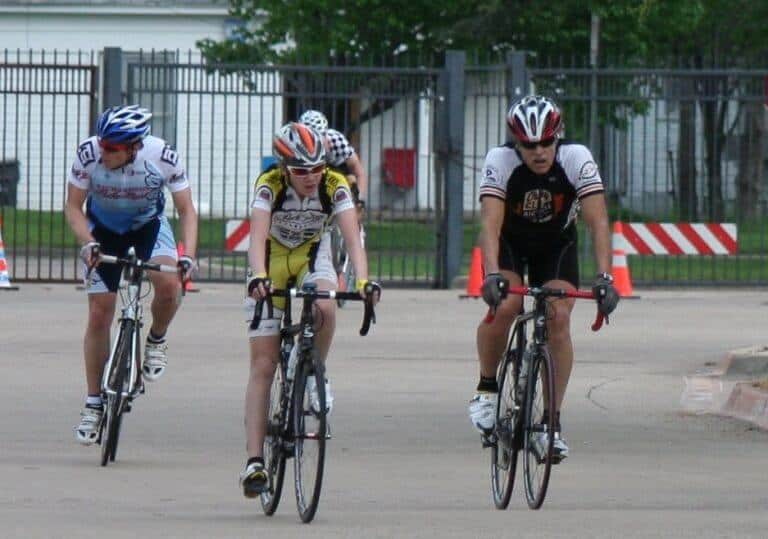
First, look at the picture for the link below and determine which of the 3 riders has a sore post ride neck. Then, read the article.
Coach Darryl
https://selleanatomica.com/blogs/homepage-blog/bike-shorts-the-easiest-way-to-prevent-neck-pain-when-cycling
One thing to consider is how much your helmet weighs. I switched to helmets that weigh around 200 grams, and that helped me. As well, I think one can train one’s body (neck) to gradually accommodate longer and longer rides…and of course massages help tremendously . . .
I had Shermer’s in 2003 at Paris-Brest-Paris, on the way back. I had done eight years of Rando events by then, but never over 600k. Same bike, same neck! Another rider caught me at dusk. He forgot to get new batteries and had no lights. I had an excellent dyno light (Litespin). But I couldn’t see ahead of me because I couldn’t hold my head up for more than a few seconds. I could only stare at the top tube and road. The other guy could see fine but needed my headlight. It gets extremely dark in rural France. So he couldn’t pass me in the dark. That was fine with me because I required his eyes to navigate, particularly on long descents with turns at the bottom! We went on like that all night between Carhaix and Loudeac. Our reluctant relation got a little stressful. He was glad when dawn came when we got to the next control where I could DNF and he rushed on. He did make it. It seems comical in retrospect.
I ride a Trek Madone and it puts me in an extended position which is great for racing, but not the best for touring. While riding on the hoods, my head is facing down. I can look at the road, but not the scenery. In order to see what’s ahead, I must look up, which involves craning my neck and that can lead to neck pain after a ride. I asked my bike fitter for a more upright position, but she says this is the best we can do with the Madone, which is after all a road racing bike, not a touring or endurance bike. I don’t know if she’s 100% correct about that, but I will say that her fitting improved my comfort on the bike and eliminated my hand numbness.
Stress (shrugging shoulders) can cause neck and shoulder pain by
-Enlarging the blood vessels in your large muscle groups to allow faster oxygen delivery
-Causing you to clench and tighten muscles in the neck, jaw and shoulders
-Increasing tension in the trapezius muscles that run across the top of the back
-Restricting neck and shoulder movement
-Heightening your perception of pain and making existing pain feel worse
-Triggering your body’s fight or flight response, leading to the release of various hormones that cause our muscles, including those in our neck, to tense up as a protective measure.
I find I can make small shifts in my posture on the bike. Try this: roll your shoulders up and out, opening your chest while not kinking your ribs forward. Do this enough and you can look upward while your arms stay in the same position on the bars.
I would like to warn people
after I retired I started writing bicycles again I joined a bike club and made quite a few friends we would ride 2 to 300 miles a week as we had this kind of time I had experienced leg pains for years and finally my doctor sent me to pain management because they couldn’t really find out what was going on
after one appointment the interview nurse practitioner told me that it was my lower back I had surgery on L3,4 and 5
after a few months so he’s back in my bike having no problems at all but around 5 years later I started losing hand strength in my left hand felt like somebody smacked it with a hammer and it would go numb on all my rides after an MRI and meeting with the surgeon he said that I needed lower back surgery again but then he said that was not his main concern he zoomed up on the X-ray to my neck and told me he only helped he could get me into surgery before I was paralyzed after the surgerys of my neck and 6 weeks later my lower back I’m doing better I’m just writing this to warn people they’re very well could be more deeper complex reasons for your pains and these things should be checked out
I’ve had neck pain on longer rides for last couple years. Started using KT kinesiology tape on my neck and it prevents my neck pain. If I forget to apply it I will have really sore neck pain before the ride is over. I also have pain in my left shoulder rotator cuff and use the KT tape on my shoulder and get the same pain relief. Like I said if I forget to apply the tape I will regret it.
It could also be statin drugs. Check your meds!