
Amazing New Daniel Rebour Archive

Jim’s Tech Talk
By Jim Langley
If you receive the magazine Bicycle Quarterly from the bike components, tire and accessories company René Herse Cycles , you may have already heard about the exciting new resource I’m sharing today. If so, feel free to pedal on to the next article.
What I want to tell the rest of you about is what I consider an incredible new archive of Daniel Rebour cycling illustrations. If you don’t know who Rebour was, he was a celebrated French technical illustrator (1908-1987) who focused on bicycles. His exquisite and technically accurate black & white line drawings were featured in French cycling publications and French bicycle and component catalogs.
Rebour wasn’t just an artist, he was a cyclist and innovator too. One of his most celebrated creations was a way to soften leather saddles, which the company Ideale used on some of their best saddles. On the top was stamped “rodée main salon D Rebour” (my rough translation: hand broken-in according to the Rebour technique).
I knew of Rebour early in my cycling career because I read every magazine I could get and his illustrations were so much better than anything else that you couldn’t help but be drawn in by them. The Var tool company used them in their catalog too, which we used to get at the bike shop every year. And, he had lovely illustrations of the different bike models in a René Herse bicycle catalog a friend showed me once. That catalog was unique in that each illustration could be removed and displayed.

Later around 1989, Gary Fisher gave me The Data Book (photos). It was a valuable collectible at the time (Thanks Gary!) A lot of the drawings inside are by Rebour. Unfortunately there’s no explanation of what the drawings show. They’re beautiful on their own but the details raise so many questions it’s frustrating not to have the answers. There are books on Rebour that hold some of the facts and I have one. But, I always wanted to find a more thorough resource on Rebour.
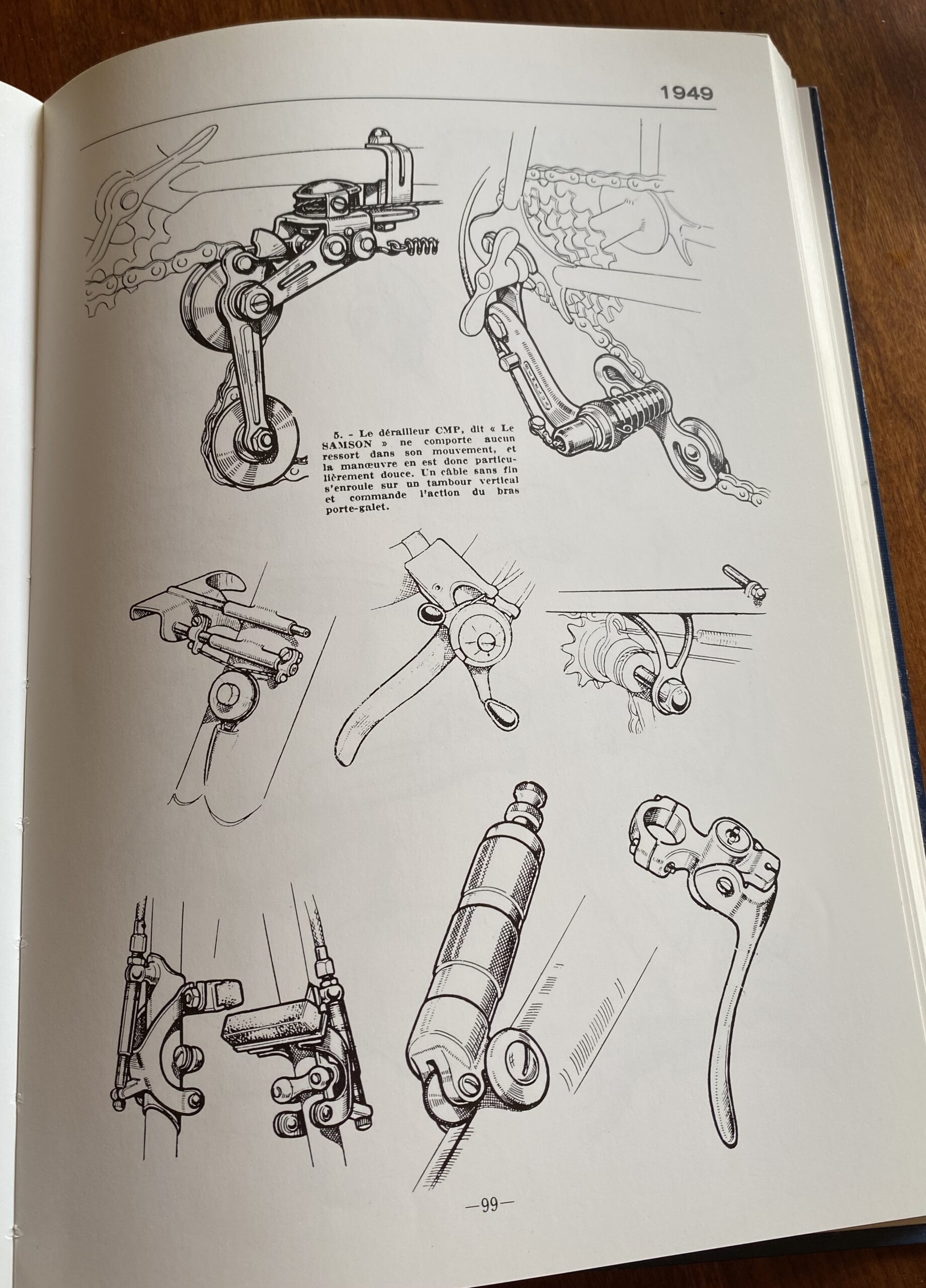
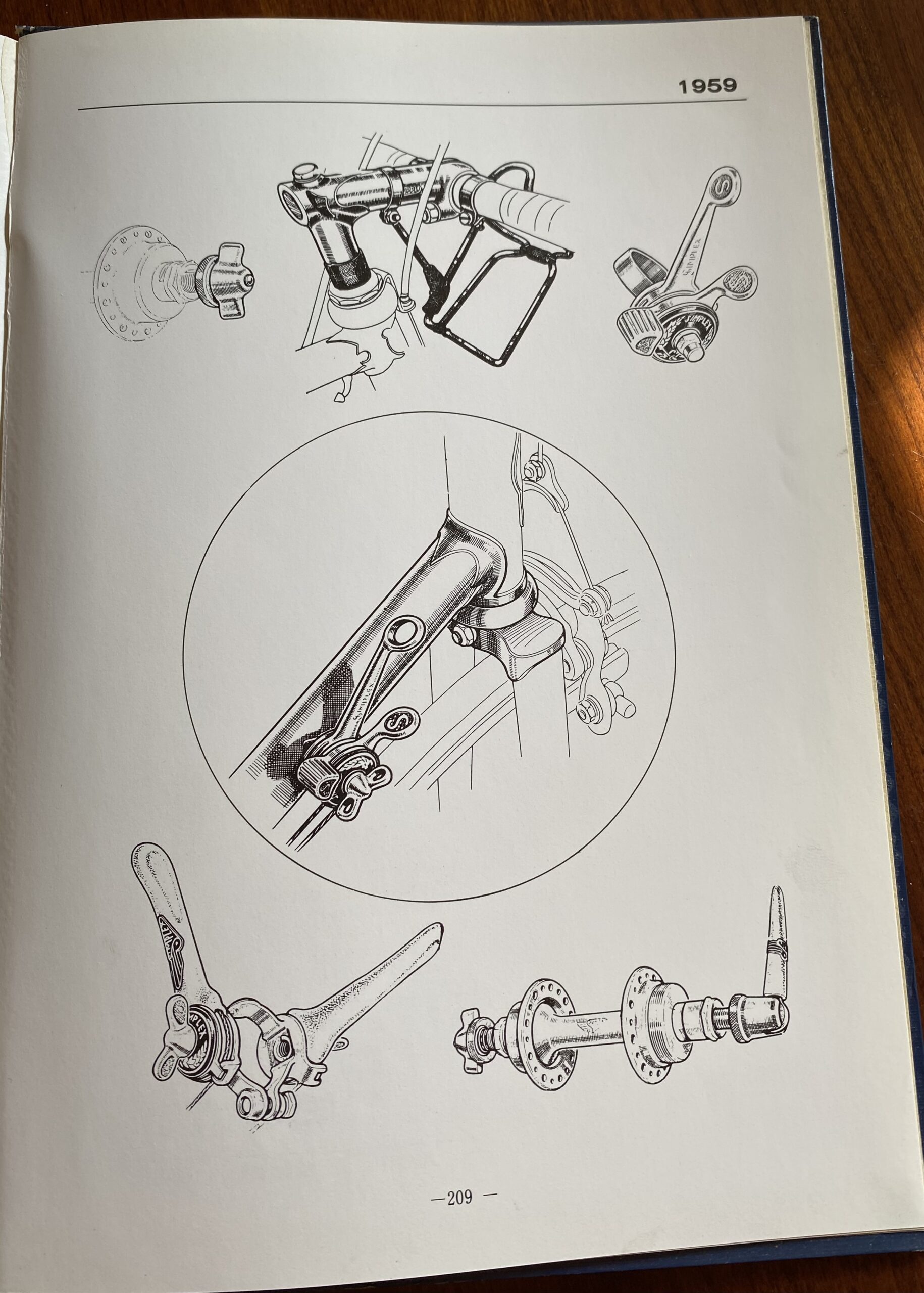
Now, thanks to Rebour researcher Heiko Strömer, who scanned nearly all of his bicycle-related illustrations, anyone with internet access can view them. And for me – and anyone else like me looking for complete details of what the drawings depict, there are complete explanations in French and in English in Rebour’s own words!
I could hardly get this column done because I’m back studying the drawings and finally learning the whole story behind them. You can join me at The Daniel Rebour Files. It’s a flickr album.
To find the French and English text accompanying the illustrations, first click on a drawing to open it. Once it’s open the text appears in a panel on the right. The original French appears at the top. Scroll down to find the English text.
Jim Langley is RBR’s Technical Editor. A pro mechanic & cycling writer for more than 40 years, he’s the author of Your Home Bicycle Workshop in the RBR eBookstore. Tune in to Jim’s popular YouTube channel for wheel building & bike repair how-to’s. Jim’s also known for his cycling streak that ended in February 2022 with a total of 10,269 consecutive daily rides (28 years, 1 month and 11 days of never missing a ride). Click to read Jim’s full bio.
Hi Jim,
Thanks for mentioning me here.
I would like to add two more things. Rebour lived from 1908 to 1987, not 1991. Unfortunately, the incorrect year is everywhere on the internet because it is based on information from a well-known book.
Flickr is a bit complex. The album containing the scans spans 15 pages, each of which has 100 files that you can click through individually.
If you search for ‘Rebour scans’ online, you should find a link to one of my forum posts among the first hits. In that post, I have created a separate link for each of the 15 pages of the album, with details of the period covered by the 100 scans on each page.
This makes the whole thing easier.
The René Herse catalog that a friend showed you can be found scanned on my Flickr page, together with all the other Herse catalogs, as well as catalogs featuring Rebour drawings by Singer, Pitard and Goeland.
As I said, Flickr is a bit confusing.
All the best
Heiko
Thanks so much for the additional information Heiko! I’ll see if we can change this article to show 1987 instead of 1991, appreciate you pointing out that mistake.
Also, many many thanks for this wonderful new resource! Now that I can read Rebour’s comments (since you translated them to English), I realize more than ever that everything that’s new has been done before – and usually better too. He really cared about, understood and appreciated bicycles and cyclists. I assumed as much but it really comes across in his writing.
Jim
The latest issue of BQ is indeed filled with treasures! We owe a LOT to Heiko for his “definitive history” of Rebour, which BQ published in 2 parts. Jan has published extensively about Rebour over the years. Here’s a 2012 article online about Rebour which was published in “Vintage Bicycle Quarterly” (the predecessor to BQ), Vol. 2, No. 4.: https://www.renehersecycles.com/daniel-rebour/
Heiko’s 1st 20 pg. article about Rebour appeared in the Winter 2024 issue:
https://www.renehersecycles.com/winter-2024-bicycle-quarterly/
Thanks a lot for sharing these links Tim! Appreciate it!
Jim
Thank you very much Mr. Strömer – what a valuable resource!