
Bikey Wipes – Quick Review


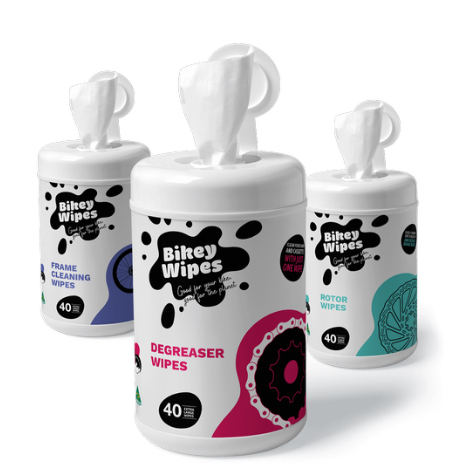
Price: $29.95/tub of 40 wipes
Wipes: Three different products, one for each part of the bike ― Degreaser, Frame, and Rotor
Compostable: Yes, it takes about 6 weeks to break down
Availability: Online
How obtained: Company sample
RBR advertiser: No
No More Excuses for a Dirty Bike
Wandering the aisles of this year’s CABDA Midwest show, I came across an Australian company started by a husband and wife team, Greg and Susanne Griffith. Greg was working the booth and shared that, as cyclists, they started Bikey Wipes to develop quality bicycle cleaning products that were also environmentally friendly.
I took a tub of each cleaning wipe – degreaser, frame, and rotor – to test for myself. Each tub, made from recycled plastic, contains 40 wipes and costs $29.95. The company’s website offers a discount when bundling two or more products.
Putting the Wipes to the Test
When temperatures in Chicago reach 50 or higher, I typically wash my bikes using a bucket of Dawn dish soap, a soft brush, and a garden hose. I opt for a special cleaner for the cassette and chain, and the rotors get a quick wipe with a paper towel and isopropyl alcohol.
Honestly, I don’t clean my bikes after each ride or as frequently as I should. However, the convenience of Bikey Wipes makes it much easier to give my bike a quick post-ride once over before storing it away.
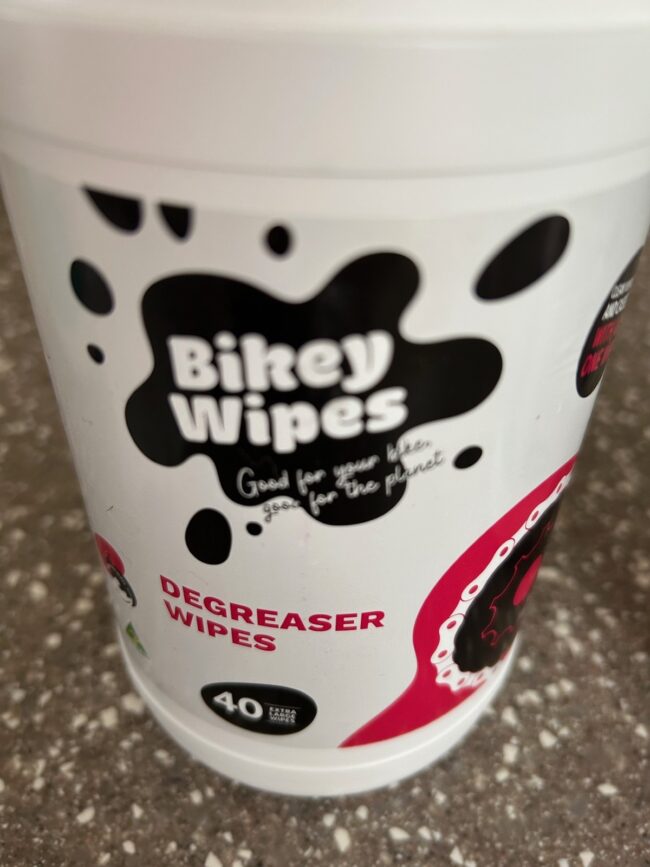
The Degreaser Wipes did an excellent job cleaning my chain and cassette. A single large wipe was sufficient for a one-time clean. Grease did not penetrate the wipe, so my hands remained clean. I don’t wear gloves because it is hard to grip items.
Usually, I use a rag when cleaning my chain and cassette. So, I noticed the wipes provided little protection for my fingers. As a result, I doubled up the wipe for added protection.
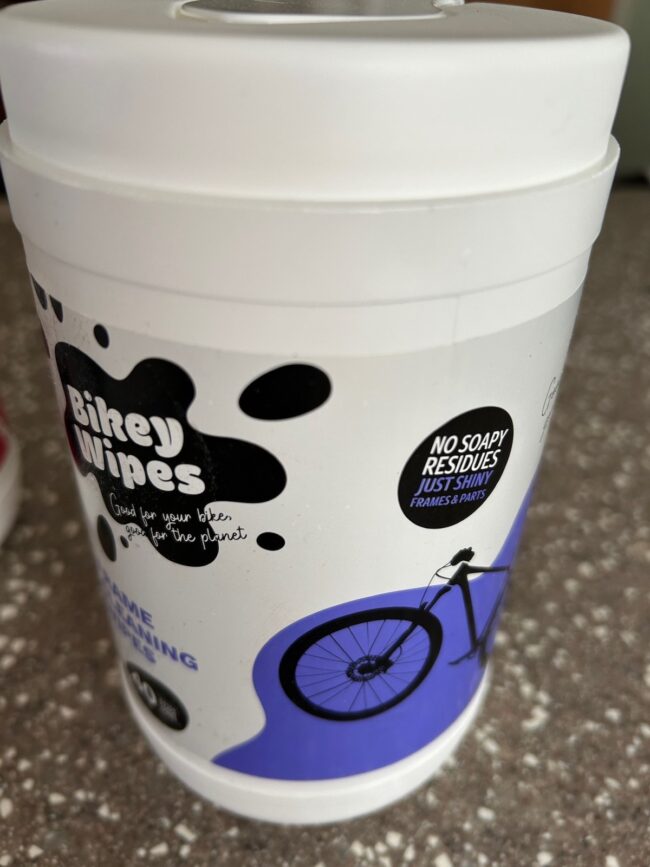
Whether you have a matte or gloss frame, the Frame Wipes work great. It was easy to remove grit and dirt from the frame, wheels, and spokes without leaving any residue.
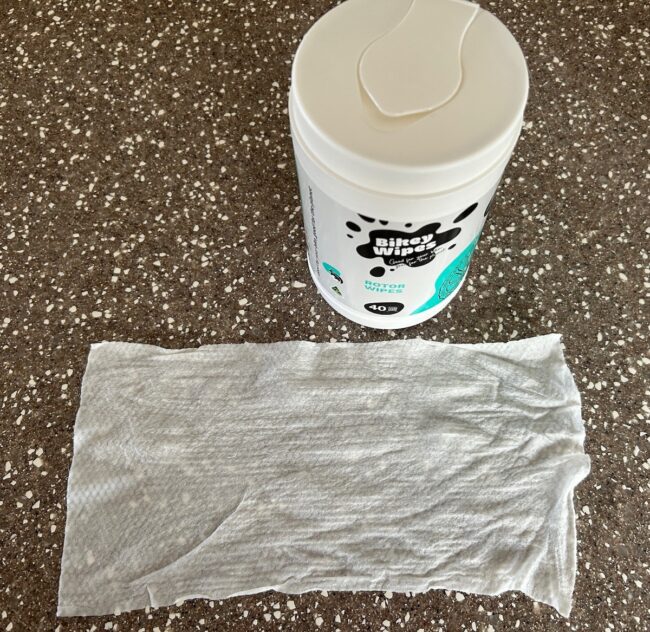
The Rotor Wipes clean debris from the brake rotors, using isopropyl alcohol and water, without leaving lint or contaminants behind. According to the company’s website, it will help eliminate squeaky disc breaks.
Environmentally Friendly
Bikey Wipes are made from 100% viscose and are compostable, taking approximately 6 weeks to break down. According to the company, their product’s certifications include:
- Biodegradable plant-based fabrics meet the composting standards of EN13432 and ASTM D6400 (USA). They suggest always checking with your local authority for what can be placed into your green bin.
- FSC-certified fabrics are used to produce Bikey Wipes, which support responsible forestry.
- Fabrics certified to OEKO-TEX Standard 100 – ensure no harmful substances in their wipes.
- REACH Compliance – low risk to human health and the environment from the chemical treatments used in the fabrics of their wipes.
- Australian Certified Organic ingredients and local native extracts are used in their wipes.
Bottom Line
Now, you have no excuse for a dirty bike, even in the dead of winter. Bikey Wipes offers a convenient solution to keep your bike’s frame, rotors, chain, and cassette clean. Maintaining a pristine ride has never been easier with each wipe tailored to a specific part of your bike.
Sheri Rosenbaum regularly contributes articles and reviews products for RBR. She’s an avid recreational roadie who lives in the Chicago area and a major advocate for women’s cycling, serving on the board of directors and volunteering with the Dare2tri Paratriathlon Club. Click to read Sheri’s full bio or visit her web site sunflowersandpedals.com.
Silca makes a product with similar attributes and is *much* cheaper.
good product but I have been using Clorox wipes to do my weekly cleaning of my chain – much cheaper option and very very effective. Hope this helps
Been doing the frame, wheels, and tires on my Emonda with baby wipes for quite some time and works great. Pack of 72 costs less than two bucks.
The price of these is pretty ridiculous.
For a quick drivetrain wipe-down, I’ll stick with using a rag and a few cents worth of odorless mineral spirits.
Rotors get wiped with denatured alcohol on a paper towel, to avoid contamination. This costs a penny or two at most.
Unless I’m washing the bike, I just use a damp rag or perhaps a spritz of a spray cleaner to remove dirt. If it’s grimy enough, I do a full wash using a citrus-based cleaner..