Bike Size Chart: Road, Mountain, Gravel & Kids Bikes by Height and Inseam
updated May 2026
Trying to figure out the right bike size? This guide covers road bikes, gravel bikes, mountain bikes, hybrid bikes, and kids’ bikes — with size charts for each, a guide to measuring your inseam correctly, and notes on how major brands like Trek, Specialized, Giant, and Cannondale size their frames.
The best way to confirm your size is always a test ride at a local bike shop. But when you’re buying online or just want to narrow the field before you go, these charts will get you to the right ballpark fast.
Quick Reference: Road Bike Size by Height
| Rider Height | Frame Size | Size Label |
|---|---|---|
| Under 5’4” (163 cm) | 48–50 cm | XS |
| 5’4” to 5’7” (163–170 cm) | 50–54 cm | S |
| 5’7” to 5’10” (170–178 cm) | 54–56 cm | M |
| 5’10” to 6’1” (178–185 cm) | 56–58 cm | L |
| 6’1” to 6’4” (185–193 cm) | 58–62 cm | XL |
| Over 6’4” (over 193 cm) | 62 cm+ | XXL |
This is a starting point. Your inseam matters too — see the full chart below. Bike geometry varies by brand and model, so always check the manufacturer’s specific size chart for the bike you’re considering.
How to Measure Your Inseam for Bike Sizing
The inseam measurement used for bike sizing is not the same as your trouser inseam, which is typically 1–2 inches shorter than your actual inside leg length. Here’s how to get the right number:
- Remove your shoes and any bulky trousers.
- Stand with your feet about 8 inches apart.
- Place a hardcover book (spine up) between your legs and press it firmly up into your crotch — simulating saddle pressure.
- Keep the book parallel to the floor.
- Measure from the top of the book straight down to the floor.
- Repeat two or three times and average the results.
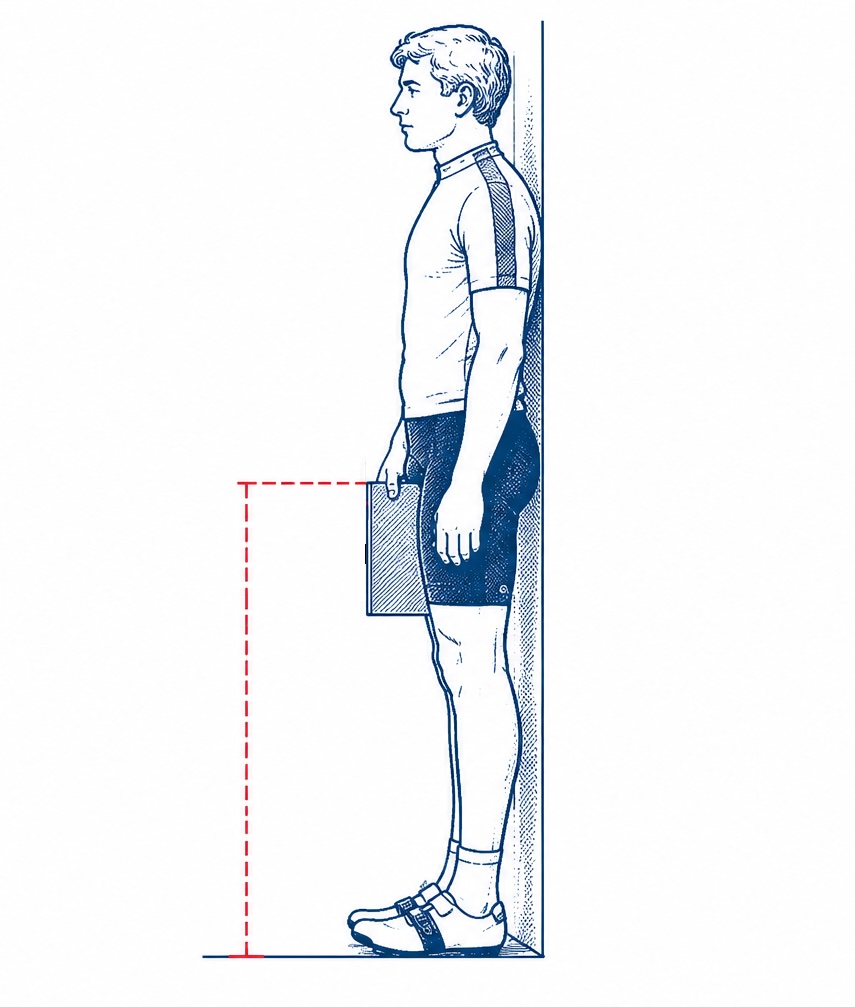
Your inseam combined with your height gives you the most accurate starting point for frame size selection.
Road Bike Size Chart
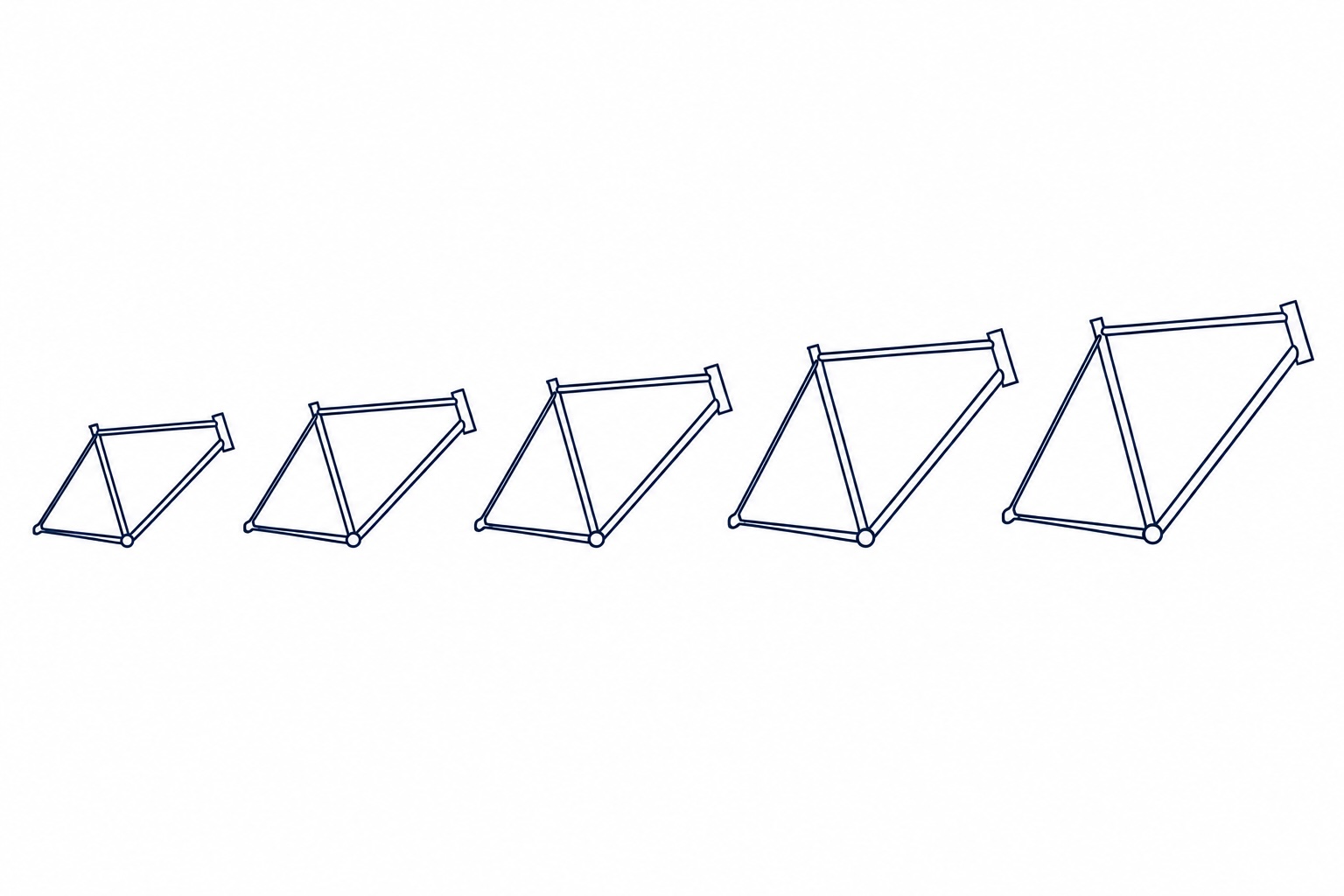
Road bike frames are measured in centimeters, from the center of the bottom bracket to the top of the seat tube. Manufacturers vary slightly in how they measure, so treat these as guidelines and always check the brand’s specific chart.
| Rider Height | Inseam | Frame Size | Size Label |
|---|---|---|---|
| 5’0” to 5’4” (152–163 cm) | Under 27” (under 69 cm) | 47–50 cm | XS |
| 5’4” to 5’7” (163–170 cm) | 27”–29” (69–74 cm) | 50–54 cm | S |
| 5’7” to 5’10” (170–178 cm) | 29”–31” (74–79 cm) | 54–56 cm | M |
| 5’10” to 6’1” (178–185 cm) | 31”–33” (79–84 cm) | 56–58 cm | L |
| 6’1” to 6’4” (185–193 cm) | 33”–35” (84–89 cm) | 58–62 cm | XL |
| Over 6’4” (over 193 cm) | Over 35” (over 89 cm) | 62 cm+ | XXL |
Gravel / Adventure Bike Size Chart
Gravel bikes use the same centimeter system as road bikes, and sizing is very similar. The geometry is typically more relaxed — with a taller stack and shorter reach — so riders who are borderline between two sizes often prefer the smaller size on a gravel bike for a more upright, comfortable position.
| Rider Height | Inseam | Frame Size | Size Label |
|---|---|---|---|
| 5’0” to 5’4” (152–163 cm) | Under 27” (under 69 cm) | 47–49 cm | XS |
| 5’4” to 5’7” (163–170 cm) | 27”–29” (69–74 cm) | 50–53 cm | S |
| 5’7” to 5’10” (170–178 cm) | 29”–31” (74–79 cm) | 54–56 cm | M |
| 5’10” to 6’1” (178–185 cm) | 31”–33” (79–84 cm) | 57–59 cm | L |
| 6’1” to 6’4” (185–193 cm) | 33”–35” (84–89 cm) | 60–62 cm | XL |
| Over 6’4” (over 193 cm) | Over 35” (over 89 cm) | 63 cm+ | XXL |
Mountain Bike Size Chart
Mountain bike frames are traditionally measured in inches, though many modern brands now use S/M/L/XL labels. Wheel size also affects fit: riders at the shorter end of a size range may prefer sizing down when riding 29ers, since the larger wheels effectively raise the bike slightly.
| Rider Height | Inseam | Frame Size (inches) | Size Label |
|---|---|---|---|
| Under 5’3” (under 160 cm) | Under 27” (under 69 cm) | 13–14” | XS |
| 5’3” to 5’7” (160–170 cm) | 27”–29” (69–74 cm) | 15–16” | S |
| 5’7” to 5’11” (170–180 cm) | 29”–31” (74–79 cm) | 17–18” | M |
| 5’11” to 6’2” (180–188 cm) | 31”–33” (79–84 cm) | 19–20” | L |
| 6’2” to 6’4” (188–193 cm) | 33”–35” (84–89 cm) | 21–22” | XL |
| Over 6’4” (over 193 cm) | Over 35” (over 89 cm) | 23”+ | XXL |
Hybrid / City Bike Size Chart
Hybrid bikes are typically measured in inches but designed for a more upright, comfortable riding position. The more relaxed geometry makes sizing more forgiving — many riders are comfortable across a wider range of frame sizes than on a road bike.
| Rider Height | Inseam | Frame Size (inches) | Size Label |
|---|---|---|---|
| 5’0” to 5’4” (152–163 cm) | Under 27” (under 69 cm) | 13–15” | XS / S |
| 5’4” to 5’8” (163–173 cm) | 27”–29” (69–74 cm) | 15–17” | S / M |
| 5’8” to 5’10” (173–178 cm) | 29”–31” (74–79 cm) | 17–19” | M |
| 5’10” to 6’1” (178–185 cm) | 31”–33” (79–84 cm) | 19–21” | L |
| 6’1” to 6’4” (185–193 cm) | 33”–35” (84–89 cm) | 21–23” | XL |
| Over 6’4” (over 193 cm) | Over 35” (over 89 cm) | 23”+ | XXL |
Kids Bike Size Chart
Kids’ bikes are sized by wheel diameter, not frame size. Age is a rough guide, but your child’s height is the more reliable measurement — kids the same age can vary significantly in size. When in doubt, size up slightly so the bike lasts longer, but make sure your child can still touch the ground with both feet while seated.
| Wheel Size | Child’s Height | Approximate Age | Notes |
|---|---|---|---|
| 12” | 30”–39” (76–99 cm) | 2–3 years | Balance bikes often this size; no pedals needed |
| 14” | 36”–44” (91–112 cm) | 3–5 years | First pedal bikes |
| 16” | 40”–48” (102–122 cm) | 4–6 years | Most common first pedal size |
| 18” | 44”–52” (112–132 cm) | 5–8 years | Transitional size; not all brands offer it |
| 20” | 48”–56” (122–142 cm) | 6–9 years | Popular size; includes BMX-style bikes |
| 24” | 52”–62” (132–157 cm) | 8–12 years | Junior road and mountain bikes |
| 26” | 60”+ (152+ cm) | 10+ years | Some kids move directly to adult frames at this stage |
How Major Brands Size Their Road Bikes
One of the most confusing things about bike shopping is that brands don’t all use the same sizing system. A “medium” from one brand is not the same as a “medium” from another — and even within a brand, different models can have different geometries. Here’s a rough guide to how major brands label their road bike sizes:
| Brand | Size Labels | Typical Medium Equivalent | Notes |
|---|---|---|---|
| Trek | Centimeters (50, 52, 54, 56, 58, 60, 62) | 54–56 cm | Uses H1/H2 fit designations on some endurance models |
| Specialized | Centimeters (44, 49, 52, 54, 56, 58, 61) | 54–56 cm | Body Geometry fit system; check model-specific chart |
| Giant | Letters (XS, S, M, L, XL) | M | Provides cm equivalents; consistent across most models |
| Cannondale | Mix of letters or cm depending on model | M or 54–56 cm | Varies by model; always check the specific geometry chart |
| Scott | Centimeters (47, 49, 52, 54, 56, 58) | 54–56 cm | Consistent cm labeling across road range |
| Cervélo | Centimeters (48, 51, 54, 56, 58, 61) | 54–56 cm | Longer top tubes than average; many riders size down one |
Important: Even within a single brand, different models fit differently. A Trek Émonda (performance climbing bike) and a Trek Domane (endurance bike) in the same frame size will feel different because of their geometry. Always check the geometry chart — specifically the stack and reach numbers — for the exact model you’re buying.
Frame Size vs. Bike Fit: What’s the Difference?
Getting the right frame size is the first step, not the final answer. Frame size determines whether a bike is in the right ballpark for your body — it rules out bikes that are clearly too small or too large. But a correctly sized frame can still feel terrible if the fine-tuning is off.
Bike fit refers to the adjustments made after you have the right size frame: saddle height, saddle fore/aft position, stem length, handlebar height, and cleat position. These adjustments make the difference between a comfortable four-hour ride and chronic knee pain. If you plan to ride more than an hour at a time regularly, a professional bike fit is worth the investment. RBR has covered this in depth — see our guides on the top 3 bike fit problems and the difference between sizing and fitting.
Should You Size Up or Size Down?
When you fall between two sizes, the right choice depends on your body proportions and riding style. If you have a longer torso relative to your legs, you may be more comfortable sizing up. If you have a shorter torso or proportionally longer legs, the smaller size often works better. Riders who prioritize comfort and an upright position for endurance or long-distance touring often prefer sizing up. Riders who want a more aggressive, aerodynamic position for performance riding tend to size down.
A frame that’s too large is harder to correct with components than one that’s too small — you can compensate for a slightly small frame with a longer stem, but you can’t easily fix one that stretches you out too much. When genuinely unsure, err toward the smaller size and dial in the fit from there.
Frequently Asked Questions
What size bike do I need for my height?
Height alone gives you a solid starting point — see the quick reference table at the top of this page. But your inseam matters too, especially for road bikes. Two riders of the same height can have different inseam measurements, which changes how a frame fits. Use both your height and inseam with the full charts above for the most accurate result.
What does 54cm mean on a road bike?
The centimeter number on a road bike refers to the frame size — traditionally the distance from the center of the bottom bracket to the top of the seat tube. A 54cm frame is a medium, suited for riders roughly 5’7” to 5’10” depending on the brand. Note that some manufacturers measure to the center of the top tube junction rather than the very top, so sizes aren’t perfectly comparable across brands.
Is it better to size up or size down on a bike?
Most experienced cyclists recommend sizing down when in doubt. A slightly small frame can be adjusted with a longer stem and raised bars. A frame that’s too large is very difficult to compensate for. That said, the best answer is always to test ride both sizes if possible — individual proportions vary too much for a universal rule.
How do I know if a bike is too big?
Common signs include: feeling stretched out with arms nearly fully extended, difficulty controlling the front wheel, instability at low speeds, inability to comfortably touch the ground while seated, and fatigue in the lower back and shoulders from reaching. A bike that’s too large also makes climbing and accelerating out of the saddle noticeably harder.
What’s the difference between bike sizing and bike fitting?
Bike sizing is choosing the right frame size before you buy — making sure the bike is in the right ballpark for your body. Bike fitting happens after purchase and involves fine-tuning saddle height and position, stem length, cleat placement, and handlebar height to optimize comfort, efficiency, and injury prevention. You need the right size frame first; then fitting dials everything in precisely.
Thank you!
Inches as measurements on one column and centimeters on the other column
It says for 6 foot tall I need 58 cm
58 cm says I need a bike that’s one foot. 10 inches tall
You’re a moron
In the United States, people typically know their height in feet and inches.
Bicycle frame sizes are measured in centimeters. This means the recommended FRAME size would be 58 centimeters for a 6 foot tall person.
If you only know your height in centimeters because you are outside the United States, then first convert your height in centimeters into feet and inches. You can do this with a Google search like “how tall is 183 cm in feet” and get your height. Then look for a bicycle frame size that is correct for that height.
A 58 centimeter sized bicycle frame would be appropriate for a six foot tall person. If you are 58 centimeters tall, then we cannot help you find a bicycle unfortunately and you should check the toy store instead.
I love it toy store it is lol I can’t stop laughing
OMG best line ever from Road Bike Rider and I just randomly found this post! Poor Jr… I guess we’ll see him at the toy store in the kids isle for bikes! LOL!
Jr is not Canadian.. just a moron
one of the best lines ever.. kudos to road bike rider
The general 24 inch bike height requirement is 5’4” or lower, although this does not apply to every person. Taller people could have difficulty cycling on them because their bodies and feet are typically longer and bigger than the bike.
I am 160 cm tall is XL ram and 28 inch bike tooo big or will it be fine? Please answer quick
Good information, but I have to ask, what about those researching and looking to find a good indoor bike for cardio? What would be a good size for those with height questions? Just curious…
Whether you’re using your bike on a trainer or riding it outside, it should be the same size if it fits you. If you are talking about the size of a dedicated indoor bicycle, most of those only come in one size and you just adjust the seat height to make it comfortable.
This is a very informative article for anyone who looking to buy an inch bike. A 28-inch bike should be for adults only, aged 18 and up. Kid bikes only have a wheel size from 12 inches to 26 inches, and it’s for their safety.
Why the hell when you measure a person’s height in feet and inches, would you give the bike size in freakin centimeters?
Because bike companies sell them measured by centimeters. If you go to a bike shop, you’ll need to understand how you fit on a bike measured that way whether you like the metric system or not.
Bikes are sold all over the world and most of the world is on the metric system, so that’s why bikes are measured that way in the US even though we don’t really use the metric system for most things except for liter bottles of Coke, etc.
That’s why the chart gives a persons, height and inseam for length leg. I am only 5 foot nine but I have a 33 inch inseam.
Any suggestions for a person with painful hands? I cannot put any pressure leaning forward on my hands, but I love biking.
Thank you for the great information. I always thought a bike was a bike. Short for kids, tall for adults. Now, thanks to you I can make an educated decision when I look for my tricycle.
Again, thanks so very much.
I am 5ft 10″. I am 30/31 inside leg.
I have a long body, but reasonably short legs.
I am wondering what size of bike would suit me.
Thank you.
Barry Reeves