
New Valve Technology Part 2

Jim’s Tech Talk
By Jim Langley
Last week we introduced a couple of new tire valves from Schwalbe and Muc-Off said to make tire inflation easier. Muc-Off’s is for sealant-filled tubeless tires. We asked whether you thought new valves like these were interesting or a solution looking for a problem. If you didn’t get to weigh in, you can read the article here: New Valve Technology From Schwalbe and Muc-Off.
Fellow RBR editor, coach and pro bike fitter, Richard Schultz succinctly summed up the tenor of most of the replies we received.
He said, “We need more valve options like we need more bottom bracket options.”
In case the reference doesn’t mean anything to you, “bottom brackets” (also known as BBs) are the component in the frame that the crank is attached to and that lets it spin. It’s also been the source of massive frustration because with the advent of carbon bikes, so many companies created a myriad of different proprietary BBs that are incompatible with other frames.
There were two comments about another new valve type I didn’t know about and a couple of remarks I’d like to reply to. So I’ll share these here.
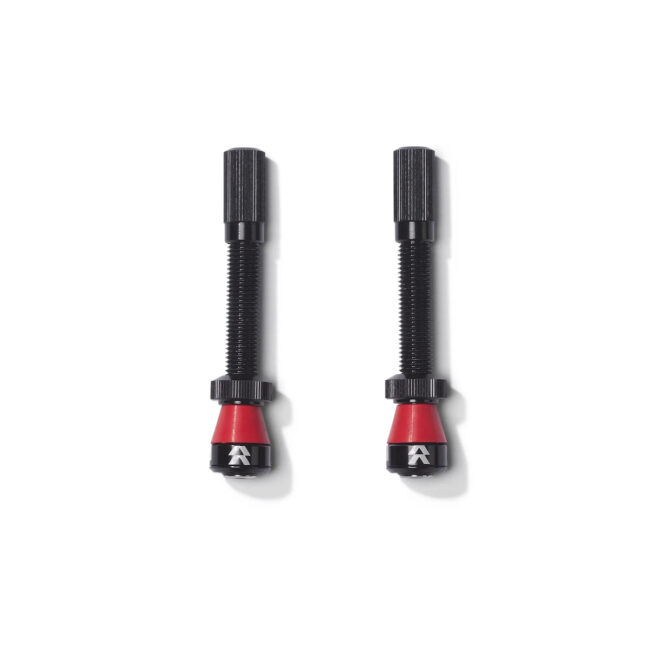
Fillmore Reserve Valves
Readers named D L and Jim Mabry like their Fillmore Reserve Valves.
D L wrote, “For tubeless tires with sealant the Fillmore Reserve valves are the way to go. No more clogged stems. They are more expensive but for me running tubeless with sealant in my mtn, and gravel bikes where the sealant clogs the stem, these are a godsend. Check them out: Fillmore Valves.
And Jim Mabry agrees, “I have used the Reserve valves for 2-3 years and with sealant they are much better as they never clog. They are also much easier to use than Presta valves. I use them for both gravel and road tubeless setups.”
Thanks for the recommendation D L and Jim!
Side-lever Pump Chucks
Meanwhile, Roy Bloomfield implies that new valve types aren’t needed. Instead he says, “Purchase and install a HIRAME pump head, and never look back.”
In case you’re not familiar with the HIRAME pump head, it’s different than almost all other pump heads (pump heads are also called “chucks”) because it closes from the side. The majority of pumps use thumb lock heads that are pressed onto the valve and then the lever is either pressed down to lock it or pulled up to lock it. Either way, since Presta valves have a tip that lets air out if you touch it, pressing down or pulling up tends to let air out. It can also press the valve down and into the tire if it doesn’t have a valve nut on it.
Also, heads with levers on top take up more space making it difficult to impossible to inflate certain wheels, such as aero disc triathlon wheels for example. They also have difficulty attaching to too short valves.
Side locking pump heads avoid all these issues. The lever is on the side so these heads fit into small spaces easily. And they do not press down on the valve tip when the lever is closed since they close from the side. This makes them a huge upgrade for any pump (I have them on my favorite pumps including this one: Silca SuperPista Digital Floor Pump Review.) But they do run about $60 – $75 or more depending on the source. There is the Arundel Hansel that’s less at about $30.
To learn more, including the pump head that competes with the HIRAME, Silca’s Hiro, please go back to 2018 and read my articles on them: SILCA HIRO Side-Lever Locking Presta Chuck Review and Comparing the Super Chucks: Silca Hiro vs. Hirame HP-20 Pump Head.
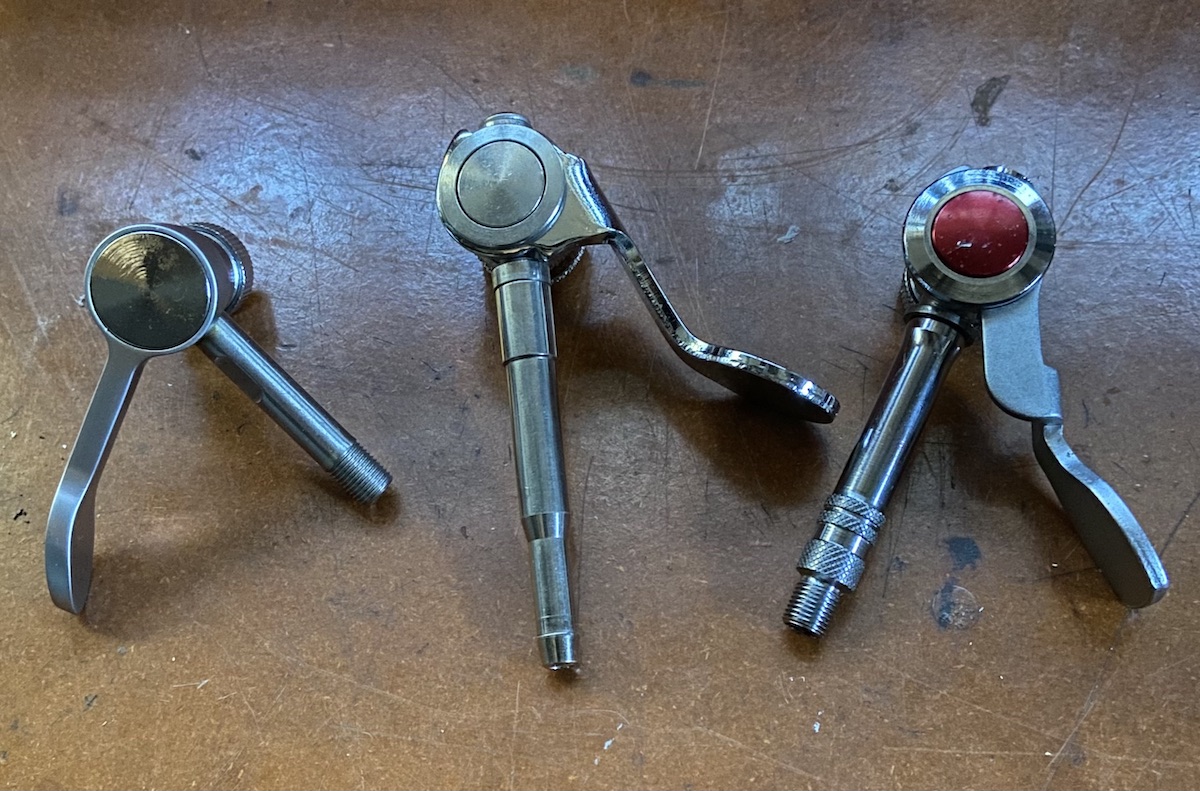
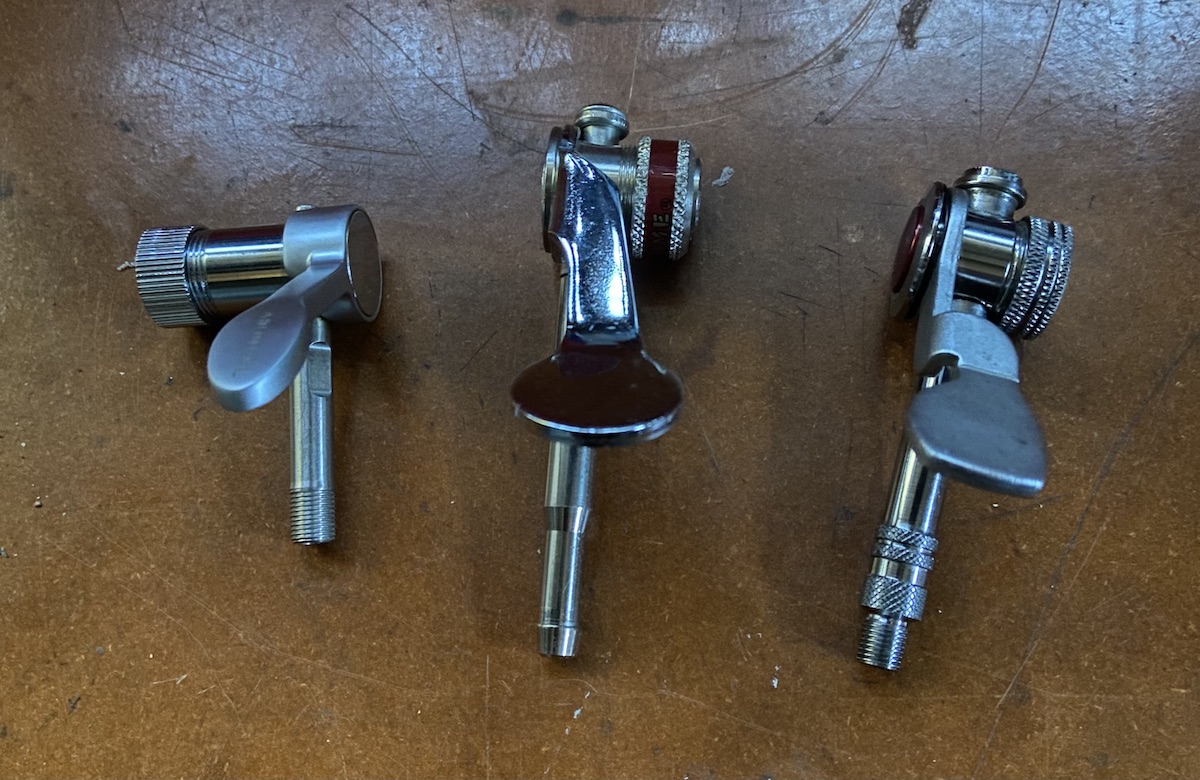
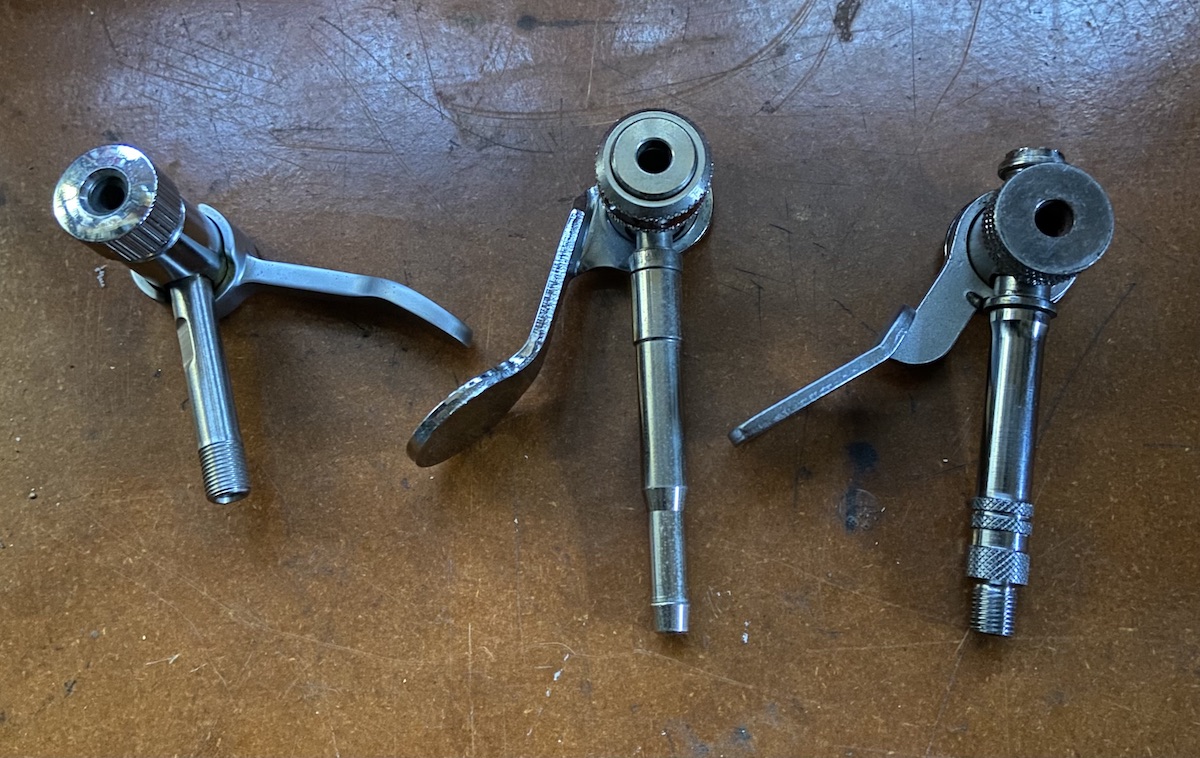
In case you don’t want to go back, here are a few photos showing how high tech these pump heads are. In all three shots, the Silca Hiro is on the far right, the HIRAME is in the middle and the other one is from Arundel. Silca Hiro https://amzn.to/3Cq1NKs, HIRAME https://amzn.to/3Cdnj5j, Arundel Hansel https://www.arundelbike.com/product/hansel-pump-head/.
TPU Tubes Recommendation?
Lastly, an RBRer named Brad asked, “What brand of TPU tubes? How about a review?”
Thanks for asking about this popular new tube type Brad! “TPU” stands for thermoplastic urethane tubes. These are among the lightest tubes available today, they hold air about like butyl tubes and they roll up so small they take up almost no space in a seatbag or pocket.
Here’s my review of one of the first TPU tubes to become available, the Schwalbe Aerothan, complete with a video so you can see all the details: Schwalbe Aerothan Super Tubes Review.
Note that since Schwalbe came out with their TPUs a few years ago, quite a few Chinese companies have started making and selling their own. I have no experience with this brand but readers here have recommended the RideNow brand, which are available here: https://amzn.to/3Atyo1s.
An Interesting Question for YOU Readers to Answer Please
I could offer some ideas but I thought it would be more helpful for you readers to provide help for Chuck who asked,
“I like the idea that less air is lost when disconnecting. Which brings up a question I have always had – how much air is lost with a typical Presta valve and floor pump setup during the disconnect? It seems like there is a big air release – but is most of that from the pump? Or are you losing a few PSI during the disconnect? When filling a Schrader valve the loss seems less, due I suppose to the spring-loaded valve.
I’ve never had a Presta pressure gauge – so never checked. But doing so would lose some more air right?
Thanks for sharing your experience readers!
Jim Langley is RBR’s Technical Editor. A pro mechanic & cycling writer for more than 40 years, he’s the author of Your Home Bicycle Workshop in the RBR eBookstore. Tune in to Jim’s popular YouTube channel for wheel building & bike repair how-to’s. Jim’s also known for his cycling streak that ended in February 2022 with a total of 10,269 consecutive daily rides (28 years, 1 month and 11 days of never missing a ride). Click to read Jim’s full bio.

I’ve never had a problem with sealant clogging presta stems. Yes, I fill and refill sealant through the valve stem. I also store my bikes with the valve stem between 5 & 7 o’clock so any liquid sealant that may have entered the stem can drain out.
If correctly disconnected then no air is lost with presta stems since the air pressure in the tire is closing the valve. The valve is already closed when disconnecting and the hiss of air is just the pump hose draining.
The opposite is true with Schrader valves since the pump head must depress the spring loaded valve stem. A little air is lost as the open valve is closed upon disconnect.
As for losing air disconnecting a presta head… I have forked fingers over the pump head and pull it away as I move the disconnect lever. Sadly, more often than not, I tend to lose quite a bit of air trying to use my pressure gauge, so I’ve given up checking…
This is a good reason to have a pressure gauge on the pump. For example, the Topeak Road Morph has a gauge at the head, so you just get to your desired pressure, pop off the head, and go. 🙂
I have Lezyne pumps with screw on chucks. They get rid of potential lever problems. You do have have to be sure removable valve cores are tight so you don’t pull them out when you unscrew the chuck. The resulting whooshing sound is very disheartening to hear after you’ve just pumped up your tire.
I concur with your experience using Lezyne pumps. Lezyne offers an inline pressure gauge as well as a pressure relief valve in the hose which helps. They work well on the road/trail given range of accuracy of the gauge…certainly enough for casual rider as opposed to Elite level pressure requirements to the 0.5 psi range.
Removable valve cores should be checked/tightened before packing into seat pack as spare and when installed in the workshop. This is best done by first running 2 knurled valve nuts against each other (acting as a jam nut) then hold the ‘jam nut’ with pliers while first loosening then tightening the valve core; this prevents ‘torqueing” the valve stem against the rubber seal/tube at its base. Use a very small tool to tighten the valve core example: https://www.parktool.com/en-us/product/valve-core-tool-vc-1. Finger tight is enough.
I don’t have any issues with losing air when disconnecting a presta valve. With a decent pump head, that shouldn’t happen.
$50 valves and $45 pump heads. Sigh! To quote from Fillmore’s website, that’s “a game-changing leap forward.”
Hey Chuck: buy a quality pressure gauge and see for yourself the pressure after removing the pump head.
Thanks everyone for the great comments and tips for Chuck, appreciate it!
Jim
The Silca side-locking pump head is on sale right now for $35. https://silca.cc/collections/inflation/products/hiro-locking-presta-chuck