A Great Day At Enduro Bearings

Jim’s Tech Talk
By Jim Langley
A little over a month ago I had the good fortune to get invited to tour the company Enduro Bearings in Oakland, California, which is only about an hour away from me by car. I had met the cofounder, engineer and head of the bicycle bearing division Matt Harvey at their booth at the Sea Otter Classic and he asked if I’d like to see their operation and learn more about their products.
I’m quite familiar with some of Enduro’s bearings and tools for working with bearings because I spent six years as an associate engineer at Praxis, where Enduro bearings were used in our bottom brackets and where I also used Enduro tools. So I was excited at the chance to learn more.
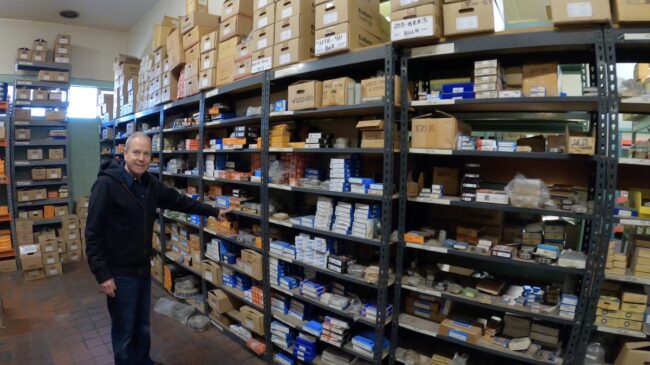
Enduro has been in business since 1996. It was founded by Matt and Mike Alders who heads up the industrial bearing side of the business. I got to tour both operations and meet Mike.
Mike and Matt actually met while working together at The Handlebar Bike Shop. Matt worked at Bianchi, White Industries and Fisher before starting Enduro. Meanwhile Mike was already working on designing and making massive bearings for his dad’s forklift business. Seeing those impressive bearings and with his experience working on bikes, Matt realized the technology could cross over and that was the beginning.
As a journalist visiting a company you aren’t always allowed to leave the camera running but Matt gave me the thumbs up to let it roll. I ended up with about four hours of video, which I whittled down to just over an hour. The link is below. Note that there are chapters at the bottom of the video that let you quickly see every section and click on it to jump around and watch whatever interests you most.
In no particular order, here are some quick bullets of the things that I learned and enjoyed a lot (most of this is in the video too).
- Matt Harvey is a vintage bicycle collector and the Enduro offices are decorated with spectacular bicycles and memorabilia. Especially impressive were Matt’s early Bianchis.
- The bicycle and industrial divisions are housed in two buildings adjacent to each other that used to be (and still retain some of the original paint and decor of) a 7UP bottling and distribution plant.
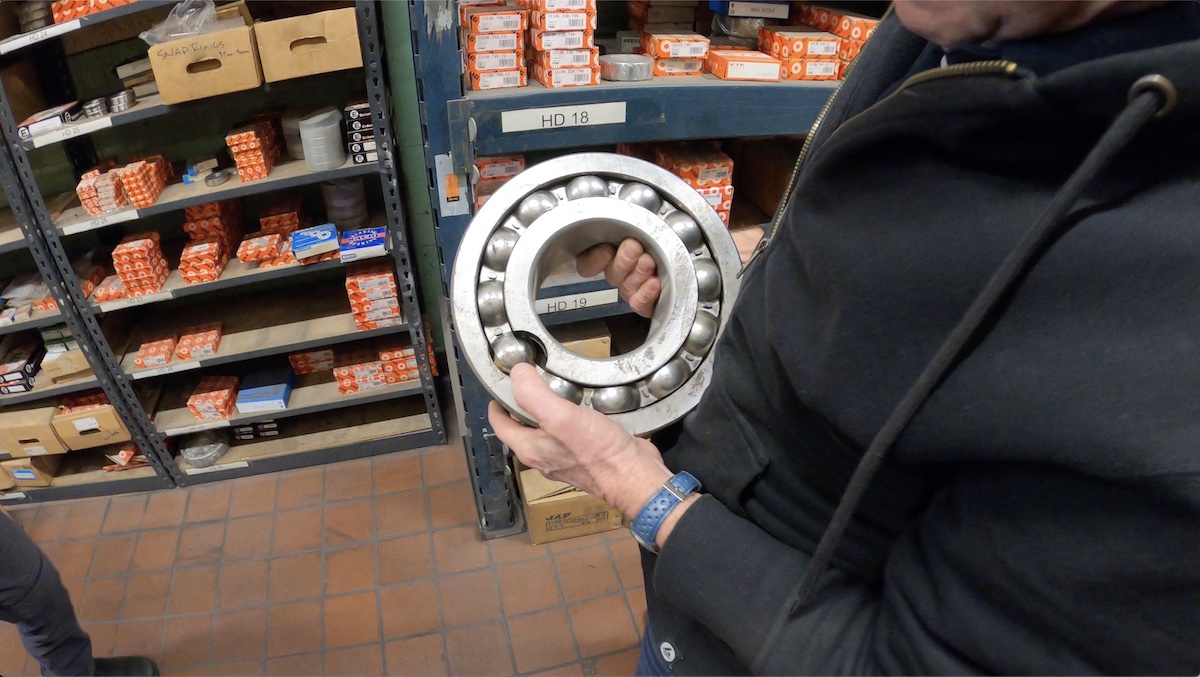
- Some of the bearings Matt and Mike showed me that are made for industrial applications are so large, they need to be lifted by a forklift.
- Enduro is not a fan of oversized derailleur pulleys. They say that if oversized pulleys were truly an advantage, Shimano and SRAM would use them. Also, that the longer cages required are typically made of CNC’d aluminum which means more flex. And, oversized pulleys mean a longer chain which adds friction and drivetrain noise too.
- For these reasons, Enduro’s Directline Pulleys, which feature their bearings, are standard size. Plus, thanks to a special bearing in the bottom pulley, it can move with the chain as the chain moves up and down the cassette cogs. This ensures proper alignment regardless of chain angle and reduced noise. As far as I know this is the only derailleur pulley that can do this (they gave me a pair, which I’ll review when I can).
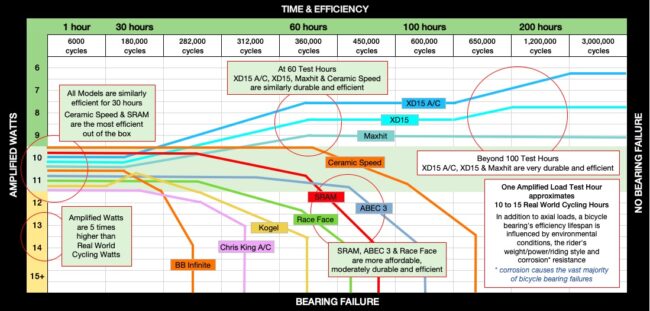
- Matt invented and has been refining the Enduro bearing testing machine for over 20 years. On it, he has tested their bearings and from many manufacturers too. In the video, he shows how he uses it to torture bearings.
- A key point Matt made is that it’s very difficult to measure bearing drag. I found this interesting because you often hear people talk about how smoothly bearings spin or see someone spin a derailleur pulley to show how effortless it spins. But in reality, there has to be a lot of force on the bearing to actually measure the difference between bearings and it’s often insignificant.
- Matt said that 95% of bearing failures are the result of corrosion from the weather, overzealous bike washing with too aggressive sprayers and detergents and sports drinks that run down the frame tubes and make it into the bearings.
- To make bearings basically impervious to corrosion, in their guaranteed for life XD-15 bearings, Enduro uses a high-tech stainless steel that comes from the French aircraft company Airbus. Airbus uses it on their wings since it can withstand anything. Interestingly, the ceramic bearings used in the XD-15 are so strong they would eventually dent standard stainless steel, so besides corrosion protection Airbus’ stainless prevents wear and tear on the XD-15s too.
- One of the things that creates drag in cartridge bearings are the seals. At Enduro, each seal on every bearing is specifically designed for that bearing’s purpose on the bike. In other words, the bearing seals are not the same from bearing to bearing or on either side of the bearing.

In closing, one of the purposes of inviting me to visit was to set up my Trek SL-5 gravel bike with Enduro XD-15 bearings, which they did while I was there, except for the derailleur pulleys and headset bearings which I’ll install when I can. I’m looking forward to the peace of mind of not worrying about bearings anymore. I’d like to thank the entire Enduro team for the great day and bearing education.
Jim Langley is RBR’s Technical Editor. A pro mechanic & cycling writer for more than 40 years, he’s the author of Your Home Bicycle Workshop in the RBR eBookstore. Tune in to Jim’s popular YouTube channel for wheel building & bike repair how-to’s. Jim’s also known for his cycling streak that ended in February 2022 with a total of 10,269 consecutive daily rides (28 years, 1 month and 11 days of never missing a ride). Click to read Jim’s full bio.