Wet Weather Road Tire Recommendations for Phil

Jim’s Tech Talk
By Jim Langley
This week’s tech Q & A has to do with riding in the rain, a timely issue now that winter’s almost upon us. Read Phil’s question and my response and then, if you’re a wet weather warrior, please share your favorite treads in the comments.
Phil wrote
“I’ve been riding Continental 4000 and 5000 tires for years, and am now using the 32c width version of the 5000s, and I love them. But, I am getting my right knee replaced in several weeks, which is a very good thing (left knee was replaced 7 years ago; all those years of running). However, I live in Houston and we ride often when country roads are wet or worse, slick, as it rains often here.
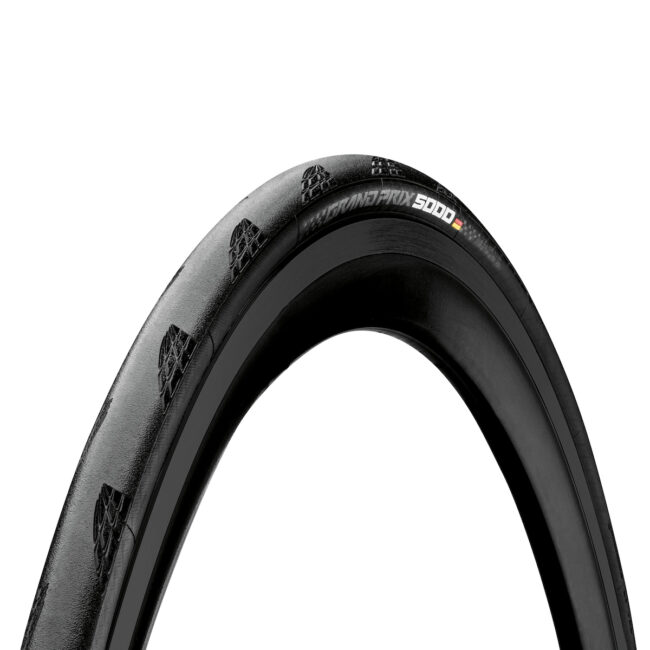
So, my surgeon – who is a biker – said he wants me for the next 6 months to a year on tires with a bit better wet/slick road traction. Can you recommend a tire that is: (1) 30mm wide up to 34mm wide and (2) does a little better from a traction perspective? I have no preference either way for tubeless/tubed as I have used both in the past.
I have scoured all the online bike part ads but they tell me nothing about the traction of road (not gravel, not XC) tires. Thought you might have some real world experience on this issue.”
My reply
Thanks for the great question, Phil. I haven’t ridden a lot in the rain for many years, so I can’t offer much real-world experience except to tell you that getting more rubber in contact with the ground is the time-tested roadie approach to riding on wet roads. The contact patch of a road tire is tiny — I’ve heard it described as “about the size of a postage stamp” — so anything that can be done to increase it helps improve traction.
The rubber compound affects the grip too. Harder rubber can’t conform to the pavement the way softer treads can, and more compliant sidewalls help too.
For more width, it’s easy enough to size up (as long as the wider tires will fit in the frame). But you’re already on 32mm wide tires, so I think you’re good there.
The other way to increase the contact patch is to reduce the pressure you’re running in the tires. That will work on skinny tires too. The standard practice when I raced in the rain was for everyone to lower their pressure about 10 to 20 psi, but back then the pressures we ran were much higher than today. So, you wouldn’t want to lower it beyond a recommended safe pressure.
You could use an online tire pressure calculator to ensure you aren’t overinflating the tires and then drop it slightly from there. Silca’s calculator is here: https://silca.cc/pages/pro-tire-pressure-calculator and Rene Herse’s is here: https://www.renehersecycles.com/tire-pressure-calculator/.
From what you wrote, it sounds like your surgeon is concerned about your Continental 5000 tires. Fortunately, there is a resource that is testing tires now for rolling resistance in dry and wet conditions, so I was able to discover that your tires actually perform well in the rain.
The source is Bicycle Rolling Resistance. When you open this page, go down to their #4 Wet Test Only. They only mention a few tires on their free website. But the GP 5000s that you’re riding actually fare okay. So you are probably already running tires perfectly fine for your recovery riding — even in the rain.
If you wanted to pay for their full results access, you might be able to find out about more tire models, as they say they have tested 40 common road tires so far.
If you watch the comments section, Phil, some readers may share their real-world experiences and what rubber they recommend.
Lastly, in case you’re interested, here’s a Bicycle Rolling Resistance tire test. It’s not very exciting but does show what they’re doing.
Jim Langley is RBR’s Technical Editor. A pro mechanic & cycling writer for more than 40 years, he’s the author of Your Home Bicycle Workshop in the RBR eBookstore. Tune in to Jim’s popular YouTube channel for wheel building & bike repair how-to’s. Jim’s also known for his cycling streak that ended in February 2022 with a total of 10,269 consecutive daily rides (28 years, 1 month and 11 days of never missing a ride). Click to read Jim’s full bio.